
The dangers of misremembering the Kindertransport over 80 years on
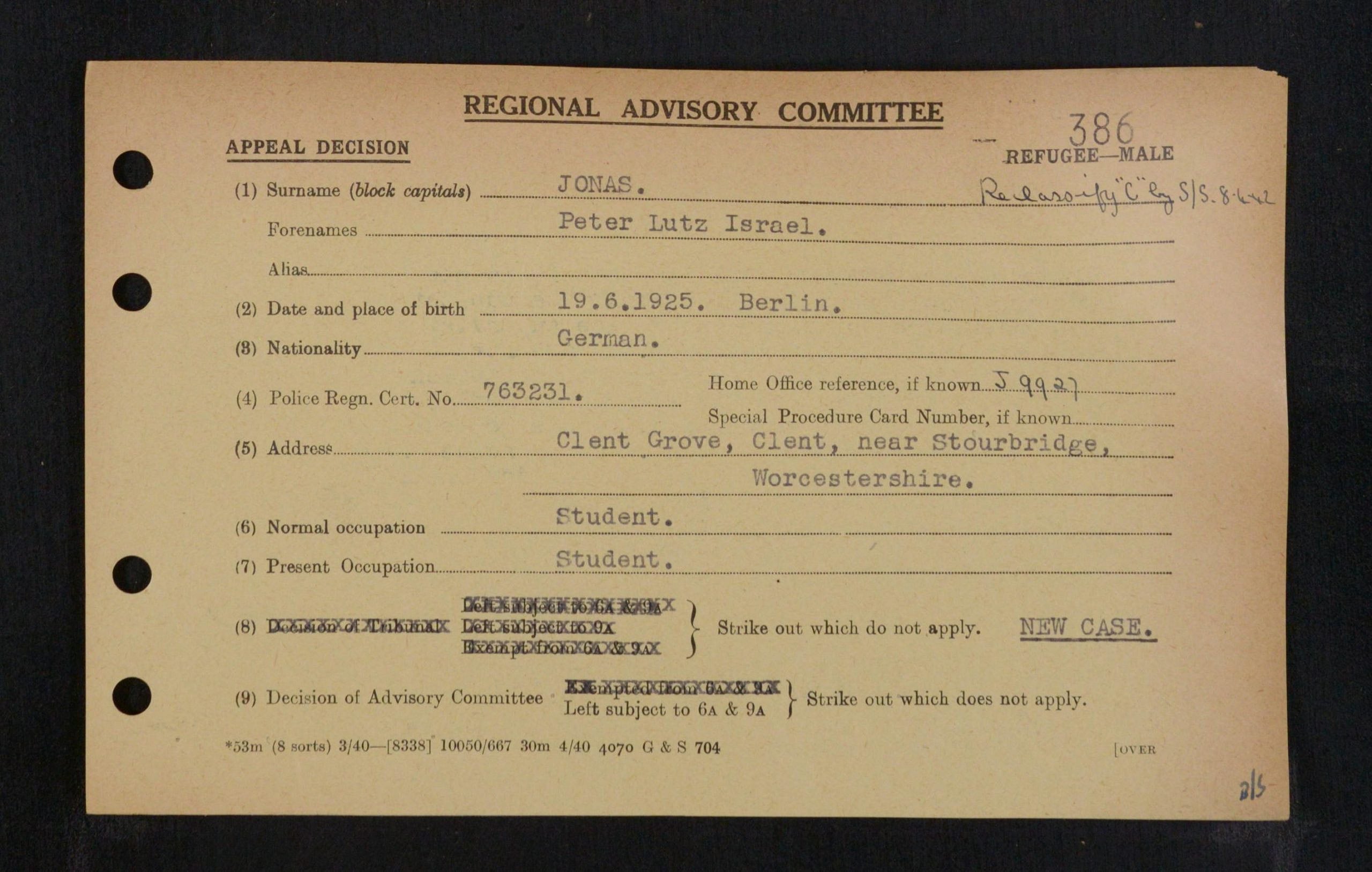
Despite the Kinder’s own diverse experiences being more widely known in the UK and the fact that some of the Kinder’s voices have even been heard in parliament, and although scholars are continuously dispelling myths about the Kindertransport, some politicians often still paint a rosy picture of the Kindertransport, particularly under the influence of their views about the current refugee crisis. The Kinder were not privileged refugees who were afforded full governmental funding upon arrival; rather, they were viewed as transmigrants who would not remain in the UK. The ignorance around the history of the Kindertransport seems to be conditioned by the UK’s long-standing self-congratulatory narrative of rescue, welcome, and adaptation. Over 80 years on, it is important to leave assumptions at the door and follow the historical record.
The Hansard on 21st November 1938 states that the Prime Minister of Holland “was prepared to give a temporary refuge to children and trans-migrants of this kind, provided there was a hope of [the UK] receiving them”. On 24th November 1938, we read that Jewish refugee children will be “permitted to remain in this country for purely educational or training purposes until they have completed their education or training, on condition that they are not placed in ordinary employment”. After Kristallnacht, the Kinder came to the UK essentially as schoolchildren, as did those children who came over from Nazi Germany before them between 1936 and 1938. Their numbers are retrospectively included in the Kindertransport number by the refugee committee in July 1939.
On 8th December 1938, the Home Secretary was asked whether the UK could “eventually [take in] 50,000 Jewish children”. Later that month on 21st December 1938 the Secretary of State for the Colonies was asked about whether 10,000 Jewish refugee children could be sent to British Mandate Palestine. Today we rightfully commend ourselves for rescuing the Kinder from the horrors of 1938 and later the Holocaust, but despite the more critical scholarship, there is still a tendency to not fully reflect upon the shortcomings of the Kindertransport. Do we understand that the Kindertransports to the UK were interlinked with the rescue of Jewish children to British Mandate Palestine? This matters because the Kindertransport did not happen in a vacuum, and the policies around the Kindertransport impacted and connected with other rescue schemes.
Diane Abbott recently tweeted about the UK government’s decision to consider a new law where asylum seekers could pay around £10,000 to cover their state-funded living costs or be denied settled status in the UK. Abbott suggested that this was “a tax on refugees”. She asked those on X to “imagine applying to the Kindertransport children fleeing Nazi Germany, and withholding refugee status they are entitled to. Still chasing Farage down a dead end”. The Home Office has suggested that the charge could be adjusted though. Even so, this tweet exposes the misrepresentation of the Kindertransport.
Many different communities (Jewish, Christian, and non-practicing) and the public had to advocate for a large-scale rescue of Jewish children from Nazism. The Kindertransport was only made possible because they implored the government to allow the children temporary shelter. Those within the British Jewish community were aware of the desperate situation well before Kristallnacht: as a document in the Wiener Holocaust Library shows they were discussing a large-scale movement of Jewish children in October 1938. The Kindertransport was government-backed but to begin with it received no governmental funding.
In today’s money the Kindertransport cost around £3,000,000. This was just the cost of travel – the train tickets to the border with the Netherlands, the train through the Netherlands, the ferry tickets, and the train through to Liverpool Street, London. The German railway gave the Jewish communities quotes for the travel, and this was then paid for by Jewish and Christian communities across the UK and the Kinder’s homelands as well as by parents and foster families. The Kindertransport was not solely funded by private donations from Anglo-Jewry as it was a transnational scheme which was paid for by many different people in many different countries. Many of the funds went through the Gildemeester Fund, for example. The funds were sometimes paid into Barclays Bank. There was also the now well-known requirement of the £50 bond to guarantee that the children would not be a burden on British society and that they would re-emigrate further, for example, to America or British Mandate Palestine. There was to a degree a “one in, one out” policy at first, which suggested that more children could have been rescued if others moved on. But this was scrapped in the summer of 1939.
To gain a place on the Kindertransport was an incredibly bureaucratic and arduous process. The paperwork took weeks to be certified and mailed backwards and forwards across Europe. The children had to have medical checks, passport photos taken, letters of permission from parents to leave, school and behavioural reports, and the correct travel documents. They were also given lists about what they could take with them, information about how to behave on the journey, how much money they were allowed to take (for example, 1 Reichsmark for the tea carriage), and their parents had to collect their tags when they dropped the luggage at the train station the day before departure. There was a system in place which families had to follow. The Nazis also checked what the children were taking with them by going through their belongings, and taxed Jews who were trying to flee. To take more than one suitcase on the Kindertransport was an extra 10 Reichsmarks.
The £50 bond is about £4,000-5,000 in today’s money. This was on top of about £400-£500 in today’s money for travel fees. Suggesting that the Kinder, who are not referred to as having Jewish heritage in Abbott’s post, were somehow fortunate because they were not taxed shows a total lack of awareness of what Jewish families were suffering at the time because not everyone could afford to send their child on a Kindertransport. So many more children could have been saved if it were not so expensive. Moreover, if the Kinder’s parents were successful in reaching the UK on a domestic servant visa, for example, they too had to pay their way to come to the UK. No Jewish refugees were let in for free or given funds to be housed. These funds came through the refugee organisations that tirelessly worked to help as many people as they could. Some even asked if the £50 could be stopped because it slowed down the rate of Kinder getting out.
We know from the refugee committee report that over 100 Kinder had re-emigrated by July 1939. The largest re-emigration cost per child at the end of May 1939 from this report was just over £16 which is rather different to the estimated £50. The report states that in “the majority of cases either the whole or a portion of the re-emigration expenses can and will be paid by the party interested in the child, instead of by the Movement. During the month of May, the German Jewish Aid Committee re-emigrated 342 persons at a total cost of £5,996. This works out at £l4. 6s. per person”. It was the British refugee organisations who were working together to relocate the children not the British government. In fact, the government made it difficult for them to leave for British Mandate Palestine.
In terms of the Kinder’s refugee status they soon became enemy aliens when the Second World War was declared. Many Kinder were interned in the UK before being deported to internment camps in Australia and Canada. Some even experienced harassment by the British guards during the crossing. If the child was young, they were not interned but nevertheless they still had to be registered with the police where they were given their police number. Eventually, the Kinder’s status changed to friendly aliens but their release from internment was not always a quick process. After enduring this some of them joined the Allied Forces to fight for their host nations. Several even gave their lives fighting for us and their families. During the war the Kinder’s identities were in limbo. They were becoming British but often at an arm’s length because of British policies. Many were not naturalised until after the war. Many remained stateless into the postwar period.
Abbott is not the first politician to cite the Kindertransport for a particular purpose. The Kindertransport has for a long time now been used in relation to the current refugee crisis. Often this is for good, as referencing this history and memory can champion refugee causes and ensure that there are safe routes for child refugees today. We have even learnt from the Kindertransport because the “Ukrainetransports” was a family reunion scheme where mother and child were given passage to safety. However, the Kindertransport has also been used to bolster the ethical credentials of certain politicians.
As I argued with my co-author, Prof. Bill Niven in our book on “The Transnational Memories of the Kindertransport: Exhibitions, Memorials, and Commemorations”, the UK is at a crossroads because it can continue to incorporate aspects of the transnational turn in Kindertransport studies which presents the event in all its complexity, or it could return to celebrating the British establishment for rescuing the Kinder. I am rather worried that politicians do not fact check our history. They are not historians but there are enough discussions around the Kindertransport in the contemporary Hansard which they could consult before they make an assessment on the past based on their present views.