The Daughters and the Dreamer
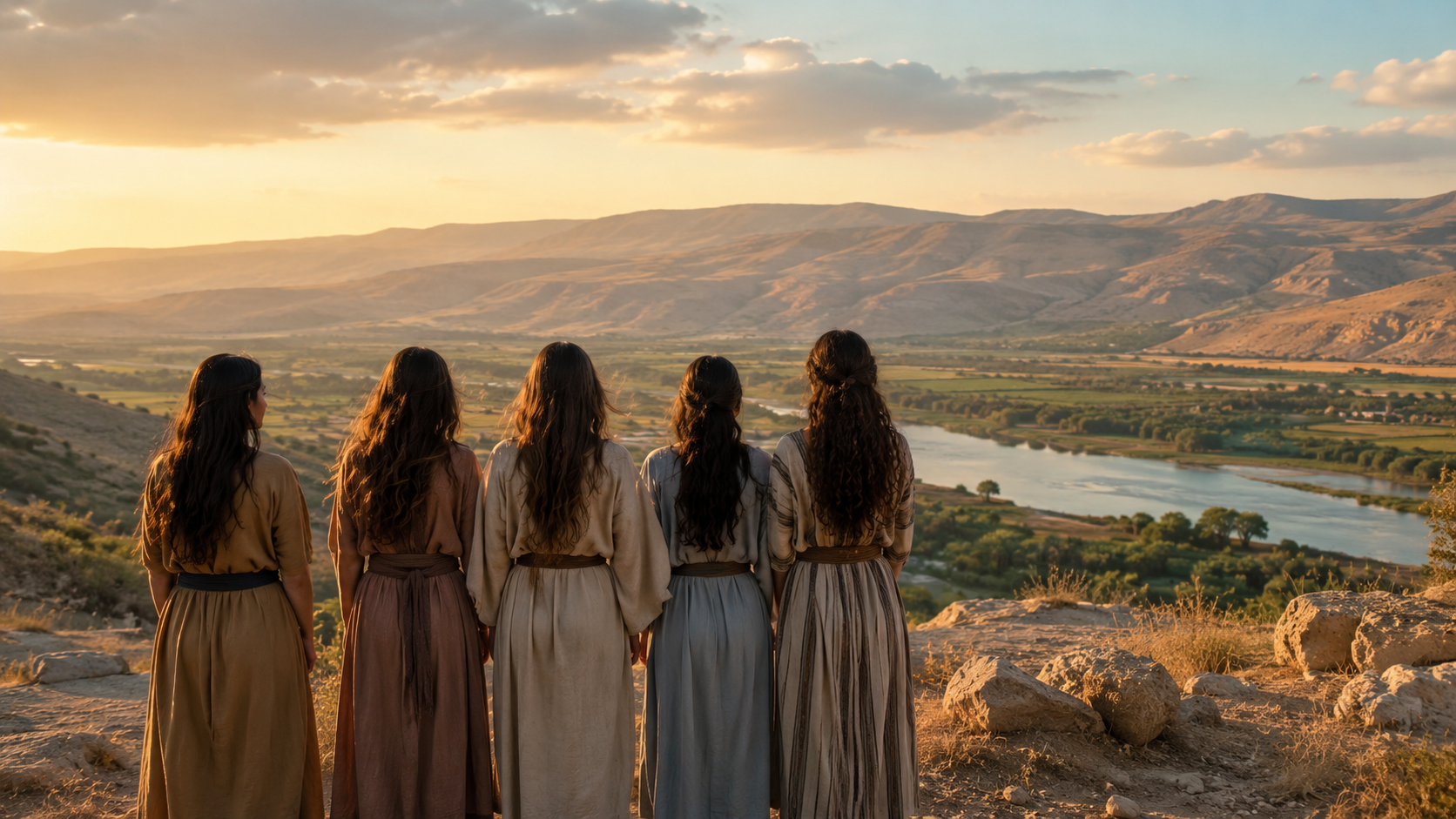
Parashat Pinchas opens with five women standing before Moshe.
The Torah, however, seems interested in a story that began long before they arrived—a dream that refused to die.
As the daughters of Tzelafchad step forward, the Torah carefully traces their ancestry: Machla, Noa, Chogla, Milka, and Tirtza, daughters of Tzelafchad, son of Chefer, son of Gilad, son of Machir, son of Menasheh, son of Yosef.
The genealogy seems unusually long. The Torah could simply have called them the daughters of Tzelafchad. Instead, it deliberately leads us back through the family line until it arrives at a single name:
Yosef.
What does a viceroy of Egypt have to do with five women standing in the wilderness centuries after his death?
The answer lies in the final request Yosef ever made.
As Yosef lay dying in Egypt, surrounded by power, wealth, and honour, he spoke not about his achievements, but about a future redemption he would never live to see.
וְהַעֲלִתֶם אֶת־עַצְמֹתַי מִזֶּה
“And you shall bring my bones up from here.”
Bereishit 50:25
It is one of the most remarkable deathbed requests in the Torah. Yosef had risen to greatness in Egypt. He had saved its people from famine and become second only to Pharaoh. Yet despite everything, his final words pointed elsewhere.
For centuries his coffin remained in Egypt. Empires rose and fell, Pharaohs came and went, and countless lives began and ended in slavery. Yet Yosef’s final wish endured like a whisper carried through time.
The dream outlived the dreamer.
It is against this backdrop that the daughters of Tzelafchad emerge.
The nation stands on the threshold of the Land. The generation of the Exodus has passed away, and a new chapter is about to begin. Their father has died in the wilderness without sons, and under the existing laws his place among the tribes appears destined to disappear.
Yet when the daughters stand before Moshe, they do not begin by speaking about property.
לָמָּה יִגָּרַע שֵׁם אָבִינוּ
“Why should our father’s name be diminished?”
Bamidbar 27:4
Their concern is not ownership but continuity, not possession but belonging.
They were asking the same question Yosef had asked centuries earlier: would the bond between a family and the Land endure beyond a single lifetime?
Chazal describe the daughters of Tzelafchad with an extraordinary threefold praise: they were wise, interpreters of Torah, and righteous. Few figures in Tanach are introduced with such a combination.
They sought only that their father’s place should not vanish from among his people.
While much of the wilderness generation looked back toward Egypt, the daughters looked forward. Their question was not whether they would enter the Land, but whether their family would still have a place within it.
The Torah returns to them again at the end of the wilderness journey, where they willingly marry within the tribe of Menasheh. Years later, they appear once more before Elazar HaKohen and Yehoshua bin Nun after the conquest of the Land.
Yehoshua, too, comes from the House of Yosef. As the daughters stand before him to receive their inheritance, the story that began in Egypt continues to unfold.
There is a quiet irony in this moment. Yosef was torn away from the Land by the actions of his brothers. Now, generations later, a descendant of Yosef stands at the Jordan, leading the descendants of those same brothers home.
The journey that began in Egypt is drawing to its close.
Near the end of Sefer Yehoshua, the story reaches its final scene.
After centuries of waiting, Yosef’s bones are laid to rest in Shechem.
The long wandering is over.
Shechem lay within the territory of Menasheh—the very inheritance that the daughters of Tzelafchad had fought to preserve.
Few people would have understood the significance of that moment more deeply than the daughters of Tzelafchad.
The promise had been kept.
Standing in the Land was a people living the future Yosef had seen long before them.
Yosef planted the dream.
Yehoshua brought the people into the Land.
The daughters secured their family’s place.
And at last, the dream had come home.
שבת שלום
שמואל