
The Day After
There is only one recorded incident of someone joining the Jewish People as they travel through the desert. In this week’s parasha, the Jews are visited by a guest. Yitro, Moshe’s father in law, one of the most thoughtful characters in the Biblical narrative, brings Moshe’s family to be reunited with him.
Yitro, the priest of Midian, Moshe’s father-in-law, heard all that God had done for Moshe and for Israel, His people, for God had brought Israel out of Egypt… Yitro, Moshe’s father-in-law, brought Moshe’s sons and wife to him in the wilderness, where he was encamped at the mountain of God… Moshe went out to meet his father-in-law… Moshe then recounted to his father-in-law everything that God had done to Pharaoh and to the Egyptians for Israel’s sake, all the hardships that had befallen them on the way, and how God had delivered them. And Yitro rejoiced over all the kindness that God had shown Israel when delivering them from the Egyptians. Yitro said “’ברוך ה- Blessed be God! Who delivered you from the Egyptians and from Pharaoh, and Who delivered the people from under the hand of the Egyptians…” (Shemot 18:1-10)
The text speaks for itself. Yitro, amazed and moved by what he hears, blesses God. In fact, Yitro, a gentile, uses the most Jewish of catchphrases: “Barukh Hashem.” Fascinatingly, the four people who use this phrase in the Torah: Noach, Eliezer, Avimelech, and Yitro, are all gentiles. Sometimes, it is easier to see blessings from without than from within. Like a painting whose beauty can only be seen when taking a couple of paces backward, familiarity with the Divine has at times blinded the Jews to His goodness.
This remarkable reunion has an aftermath:
וַיְהִי֙ מִֽמָּחֳרָ֔ת וַיֵּ֥שֶׁב מֹשֶׁ֖ה לִשְׁפֹּ֣ט אֶת־הָעָ֑ם וַיַּעֲמֹ֤ד הָעָם֙ עַל־מֹשֶׁ֔ה מִן־הַבֹּ֖קֶר עַד־הָעָֽרֶב: (שמות יח:יג)
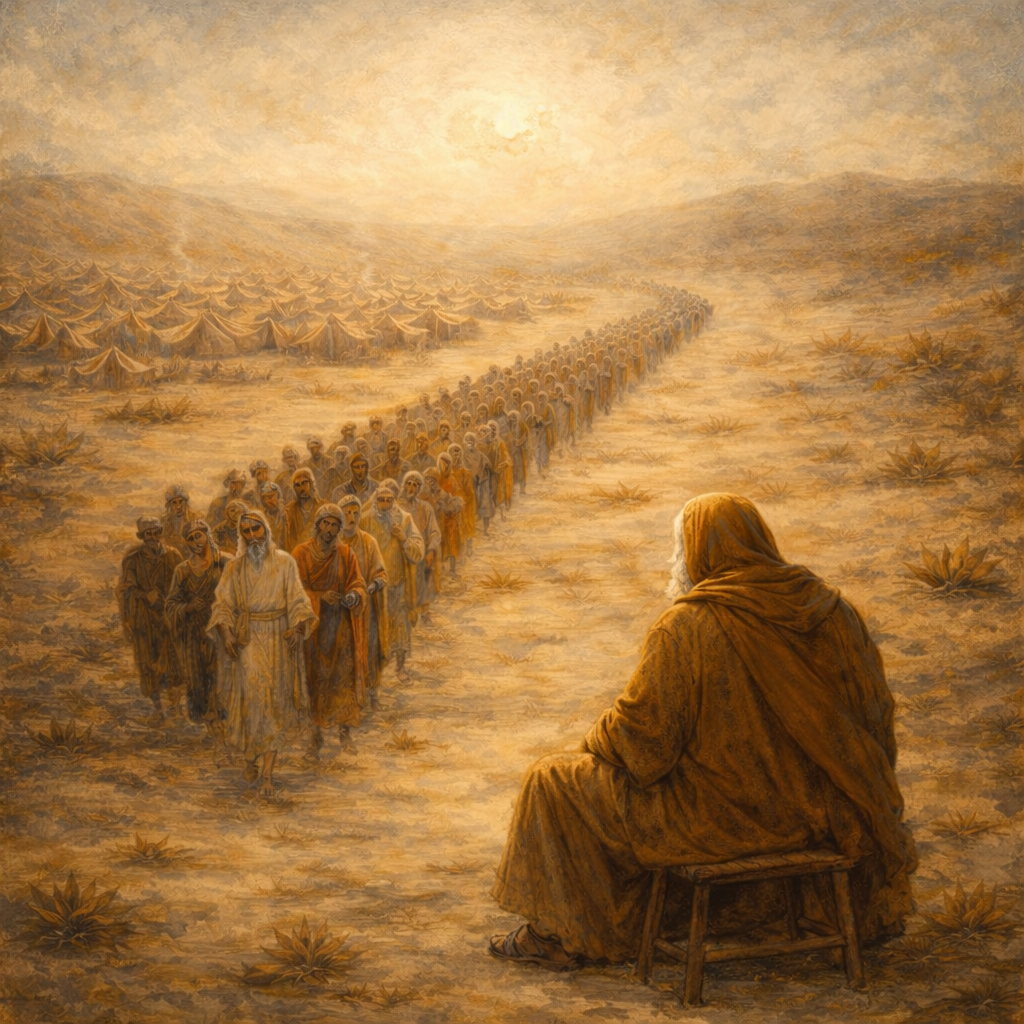
The next day, Moshe sat to judge the people, while the people stood about Moshe from morning until evening (Shemot 18:13).
The Torah is sparing with its use of words and rarely specifies that things happened the next day. It only uses the word “ממחרת-the next day” when there is an inherent connection between the day before and that day. Otherwise, it is unnecessary. Sefirat HaOmer, the most familiar example of this, is described as beginning the day after Pesach (Vayikra 23:15), as there is a connection between that timeframe and Pesach. Why here? Why do we need to know that immediately after meeting Yitro, Moshe dealt with the resolution of his people’s conflicts and quandaries? If it is because of Yitro’s upcoming constructive critique of Moshe’s method of judgment, it need not mention that it was the very next day. Yitro could not have made his observations if he had not been there.
To answer this question, we must address another: Rashi and Ramban disagree as to when this story of Moshe sitting in judgment and Yitro’s subsequent advice took place. Rashi (Shemot 18:13) says that this story is non-chronological. It did not happen the day after Yitro arrived. Rather, it happened the day after Moshe descended from Mount Sinai with the second pair of Luchot, the two tablets of stone upon which the Ten Commandments were engraved. The Jewish people were given the Torah on the sixth day of Sivan, the day we commemorate as Shavuot. Afterwards, Moshe ascended the mountain, where he remained for forty days and nights. The Jews, miscalculating, assumed that Moshe would no longer return. They sculpted and served the Golden Calf. Moshe descended from the mountain, destroyed the calf, and ascended the mountain again for forty more days to pray for the nation’s reprieve. This was granted. Afterwards, Moshe prayed for a further forty days for the people’s forgiveness and descended the mountain with the second pair of Luchot on the tenth of Tishrei, a day that was subsequently set eternally as a day of atonement: Yom Kippur. Accordingly, “The next day” is the day after Yom Kippur after Moshe descended the mountain for final time. Although it involves rearranging the narrative, there is a clear rationale to Rashi’s argument. Moshe could not have been judging and instructing the people until the Torah had been given; there was no legal code providing such guidance.
Ramban (Shemot 18:13) exercises his characteristic reluctance to claim that the Torah has no chronological order and disagrees. This story, he says, occurred the day after Yitro and Moshe’s family arrived at the Jewish encampment. Although the Jews were yet to receive the Torah, there were still many civil, moral, and perhaps a few religious matters for which Moshe would provide guidance.
In his book Vision and Leadership, R. Soloveitchik employs Rashi’s side of the debate to answer our question. The day when Moshe sat and judged the people was the day after Yom Kippur, the day after he had come down from Mount Sinai. Moshe began to judge the people because it was the day after Yom Kippur. Yom Kippur is not just a stand alone day, a day of Divine resolution of spiritual debts. Yom Kippur must affect the days and weeks that follow; it is a day of human resolve. Moshe’s descent from the mountain was not just the end of a story; it was a new beginning. Conflicts needed to be resolved, ethical standards improved, and justice and its resultant harmony must ensue. Overall, the day after must be better than the day before. The next day, Moshe sat to judge the people.
This beautiful explanation carries an important message but only completes half of the task. It works with Rashi’s explanation of events but not with Ramban’s. If, as the chronology implies, Yitro arrived before the giving of the Torah, what is the significance of Moshe beginning to judge the people the day after Yitro arrived?
The answer is simple. Yitro saw great miracles. He was not only moved by them; he moved because of them. Here was a man with a position of stature, a priest of Midian, a father and grandfather, probably of a considerable age, out in the desert. He saw the hand of God and reacted to it. He had experienced enough change in life, but he was prepared to learn and change once again. Moshe knew his father-in-law, saw his proactivity, and reflected inwards. Every day, you can react, learn, and improve.
The next day, Moshe sat to judge the people.
It does not have to be the day after Yom Kippur to make a change; tomorrow is also good.