The Day After 9/11
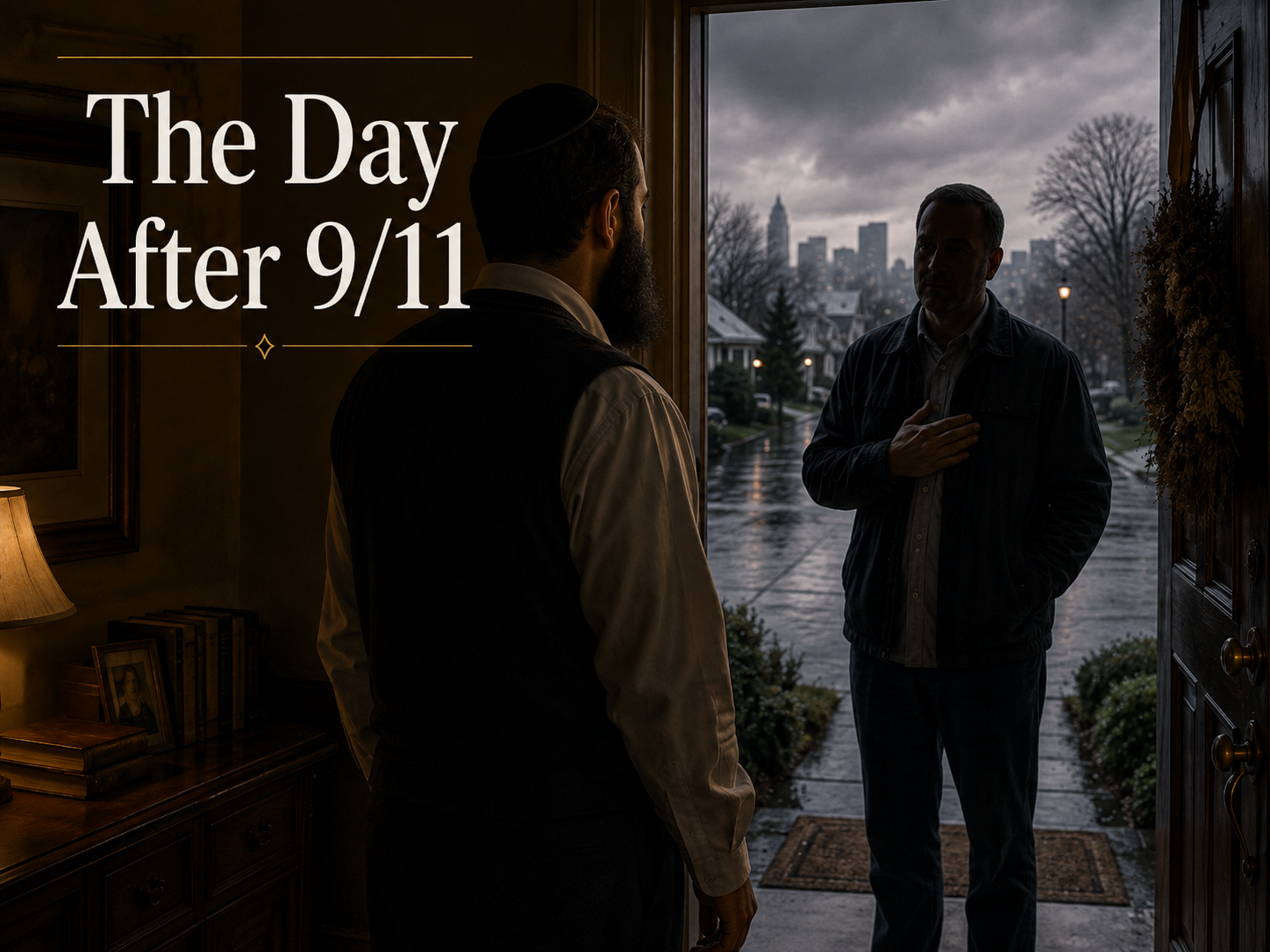
On September 12, 2001, while the ruins were still burning and America was struggling to comprehend what had happened, there was a knock at my door. The man standing there was the last person I expected to see.
He was a congregant who had been upset with me, and over time our relationship had grown strained. Whatever stood between us had seemed important just two days earlier.
“After what happened yesterday, I’ve been thinking all day,” he said. “Life is too short. Can you please forgive me?”
We hugged.
I have remembered that knock for 25 years.
Everyone remembers September 11. We remember where we were, how we heard, the smoke pouring from the towers, the people running through the streets, the awful realization that thousands of people who had begun an ordinary Tuesday morning would never come home.
September 11 carries its own terrible meaning. Nothing about what follows is meant to recast it. But over the years, I have also found myself thinking about the day that came after.
September 12 was a strange day in America. The planes were grounded. The markets were closed. Major league baseball cancelled. Families stayed close to home. People called relatives they had not spoken to in too long. Houses of worship filled. Neighbors checked on one another.
There was nothing beautiful about the circumstances that produced it. Thousands of families were grieving. Rescue workers were digging through rubble. The country was frightened and furious. But amid the shock, something happened to our sense of proportion.
The meeting could wait. The errand could wait. The petty disagreement suddenly looked petty. What mattered was painfully clear. Is my family safe? Who do I love? Who needs to hear from me? What am I doing with the time I have?
There is a strange cruelty in the way human beings sometimes acquire perspective. A diagnosis can do it. A funeral can do it. A near miss can do it. Suddenly the promotion that consumed us matters less, the grudge looks smaller, and the people sitting across from us become visible again.
The man at my door had not learned anything new. He knew on September 10 that life was short and relationships mattered. So did I. His grievance had not necessarily disappeared either. What changed was its size. In the shadow of what had happened, the relationship mattered more than whatever stood between us.
That is the part of September 12 I have never forgotten.
This year, the Jewish calendar brings me back to it in an unexpected way. September 11, 2026 falls on a Friday. As America completes a solemn day of remembrance, the sun will set. Shabbat and Rosh Hashanah (the Jewish New Year) will begin. The next morning will be September 12, exactly 25 years later.
That convergence has made me think again about what Shabbat gives us.
We often call Shabbat a day of rest, and of course it is. But rest barely captures it. Shabbat gives Jewish life a rhythm. For six days we build, answer, buy, drive, schedule, fix, produce, scroll and worry. Much of it is necessary. Some of it is deeply meaningful. The danger isn’t that these things do not matter. The danger is that because they matter, they can so easily convince us that they matter most.
Ordinary life expands to fill whatever space we give it. Someone needs an answer. There is another appointment, another problem, another obligation that cannot possibly wait. Before long, the things we are doing for our families, begin to crowd out our families. The work we undertake to build a meaningful life, begins to crowd out the meaning.
Then Shabbat comes.
For 25 hours, we step into sacred time. We sit around a table. We pray. We talk. We sing. We spend time with family and community. We make room for G-d and for parts of ourselves that are easily drowned out during the week.
The bills remain unpaid. The inbox remains full. The problems remain real. Shabbat does not make them disappear. It returns them to their proper size.
That rhythm is one of Shabbat’s great gifts. Every seven days, it gives us a sacred space to return to what matters most. Then we step back into the week with a clearer sense of proportion, better able to give our time and attention to what truly deserves them.
Judaism does not ask us to withdraw from ordinary life. Quite the opposite. We are meant to work, build, create, provide and take responsibility. But we are also given sacred time that arrives whether or not the week went well, whether or not the work is finished, whether or not we feel ready for it.
Shabbat simply comes.
What happened on September 12, 2001 was something altogether different. That day followed an act of unimaginable evil and national trauma. Its clarity was forced upon us at a terrible price.
But it revealed something about human nature that remains true. Sometimes life has to shake us before we can see our lives clearly.
Shabbat offers a gentler way. Every seven days, it gives us sacred space to step away from the noise and recover our sense of proportion. Then we return to the week, not removed from its demands, but better able to see them for what they are and to remember what they are for.
That is why this year’s calendar feels so striking to me. September 12 will be both Shabbat and Rosh Hashanah. Twenty-five years after a day when ordinary life was brought to a screeching halt, we will enter a sacred pause of our own choosing.
Twenty-five years ago, the world stopped us.
This time, we stop ourselves.