I write what I see
The day the Intifada Came to City Hall
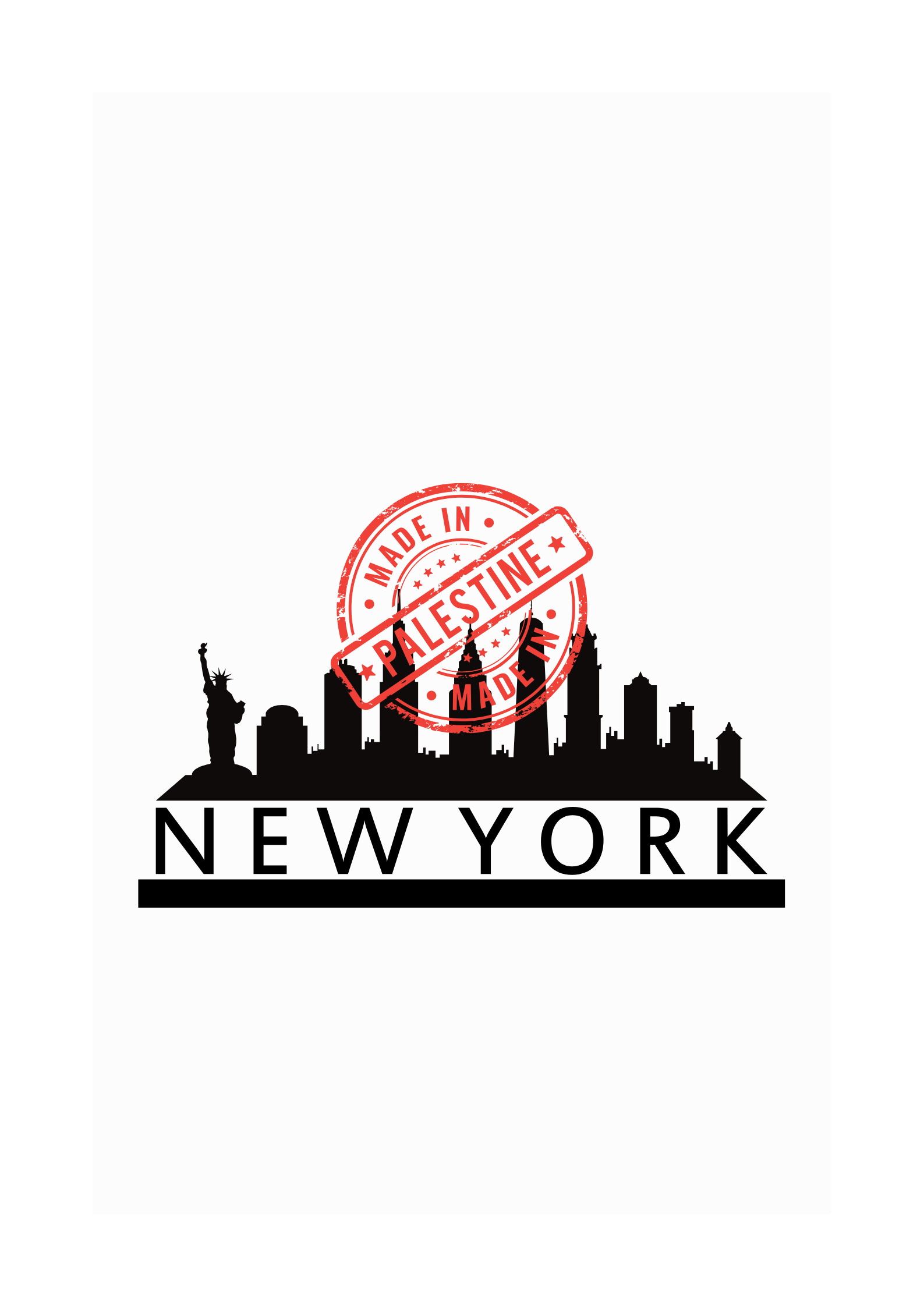
Perfect. Here it is, ready to use: The day New York applauded as the intifada walked into City Hall.
Imagine this.
It starts like any other inauguration day in New York—flags flapping, cameras clicking, crowds gathering. But the moment Zohran Mamdani steps up to the podium as mayor, something shifts. Not in the weather or in the air but in the soul of the city.
“The city belongs to the people,” he declares. “And the people stand with Palestine.”
There were no stones or firebombs preceding his victory—just “freedom riots,” “resistance,” and thunderous applause.
We warned people, yet we were dismissed.
Too many convinced themselves that slogans like “globalize the intifada” were harmless, youthful hyperbole. That refusing to sign Holocaust remembrance resolutions was just a bureaucratic oversight. That declining to acknowledge Israel as a Jewish state was nuance, not erasure.
Or maybe it’s that Mamdani had mastered the art of repackaging hostility toward Jews as liberation.
And now, here we are. New York’s first mayor whose resume includes leadership in Students for Justice in Palestine—a group notorious for chanting genocidal slogans and harassing Jewish students on campuses across the country. A man who defends the phrase “globalize the intifada,” which Jews associate not with justice but with suicide bombings, stabbings, and mass murder.
Even after the U.S. Holocaust Memorial Museum linked that phrase to a violent uprising that targeted Israeli civilians in homes, buses, and streets, Mamdani didn’t retract the statement.
He doubled down—comparing the intifada to the Warsaw Ghetto Uprising. In other words, equating Jewish resistance to extermination with terrorism against Jews.
Sounds like fiction, doesn’t it? Unfortunately, it’s where we’ve landed.
The company he keeps makes this all the more evident. Linda Sarsour, one of his closest allies, has built her career on mainstreaming antisemitism. She calls Zionism “creepy,” tells Jews they can’t be feminists unless they denounce Israel, and shrugs off Jewish pain when it doesn’t serve her politics. Mamdani chose to stand with her and to elevate her voice.
This is what happens when hatred hides in the language of justice. When antisemitism is rebranded as activism. And when the normalization of dehumanization walks into the mayor’s office with progressive credentials, and a keffiyeh that signals which lives matter most.
Mamdani didn’t need to storm the gates, why should he when we opened them.
We let our discomfort with confrontation, our fatigue with “identity politics,” and our addiction to performative allyship blind us to a very old pattern:
That when Jews are targeted with euphemisms, violence always follows.
Today it’s “decolonization.” Tomorrow it’s exclusion from school boards, city contracts, and synagogue security. And after that? A pogrom doesn’t need torches anymore. It just needs policies. But it’s not only theoretical, it’s already happening. Jews are already being asked to clarify whether they’re “Zios”—a slur dressed up as political critique, but functioning like every antisemitic label in history. Israelis abroad are nearly locked in place: denied entry, detained, surrounded, or banned outright. Jewish businesses are being targeted for boycott. Actors, authors, and musicians are blacklisted simply for expressing solidarity with Israel. Online mobs unleash coordinated attacks the moment a Jew dares to speak—and the result is fear. And death.
It’s working.
Young Jews are terrified. The harassment is relentless, calculated, and personal. Most people think twice before wearing a Star of David in 2025 (I don’t, I still wear my Star of David. I refuse to take it off. But I catch myself twisting it in my fingers when I order food, a small, instinctive move to hide it. That tiny gesture says everything about the crisis we’re in).
Meanwhile, the ones chanting for blood wear their symbols with pride. Keffiyehs draped like combat gear. Logos of designated terror groups on shirts. “Intifada” broadcast like a badge of honor. And no one blinks.
Don’t delude yourselves by thinking this is merely theoretical. It’s not “hysteria.” It’s the normalization of antisemitism—happening in real time, right in front of us.
Remember when we tried to sound the alarm? We weren’t just ignored—we were attacked. Every time we spoke out against violence, whether physical or verbal committed against Jews, we were met with rage. No one was interested with dialogue.
With academics like Columbia’s Professor Nadia Abu El-Haj refining the art of moral inversion, Jewish grief has become politicized, and the glorifiers of terror are cast as the wounded.
We’ve said it many times now: Stop justifying terror. They’ve said: You deserve it! We said: We’re afraid. They said: That’s your guilt talking.
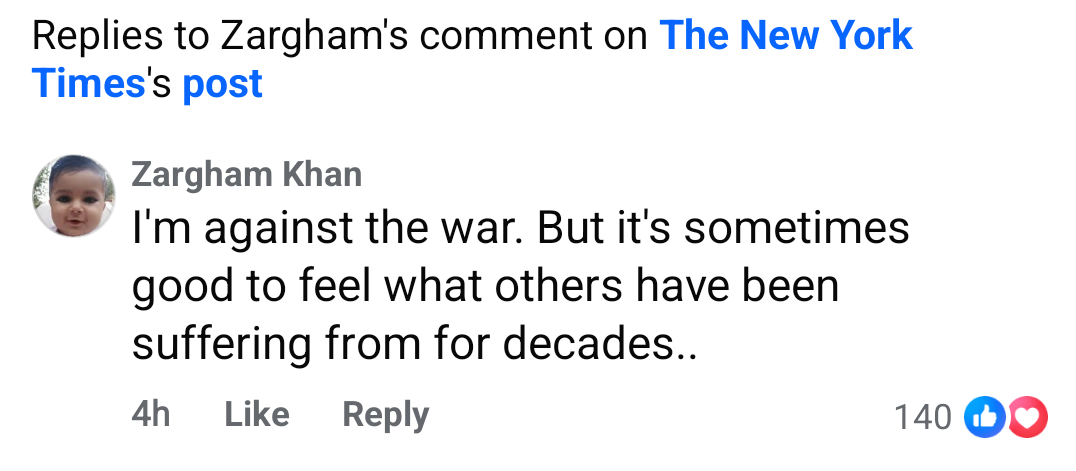
A hospital in Israel is hit by an Iranian missile and the response is that it’s good, that now we know how it feels.
Israel carries out a preemptive strike on Iran’s nuclear facilities—a regime that openly calls for Israel’s annihilation, a regime whose missiles can already reach Israeli cities—and suddenly Iran is the victim and Israel the aggressor.
Because apparently, when Jews defend themselves, it’s a war crime.
You’ll find it in every comments section, every classroom, in rallies worldwide and of course in every smug editorial.
We grieve, and we’re accused of manipulation. We defend ourselves, and it’s called genocide.
This brand of loud, unrepentant antisemitism isn’t hiding anymore; why should it, when it can run for mayor . . .
That’s what makes Mamdani’s rise so chilling. He doesn’t just reflect this climate, he actually helped build it. And yet we were told to listen to Mamdani.
So let’s listen, shall we. These are his own words: When asked to affirm Israel’s right to exist as a Jewish state? He couldn’t say it.
When asked to co-sponsor Holocaust remembrance? He passed.
When pressed on the implications of intifada? He sanitized it—called it a “struggle.”
I would not call this progress. Rather, it’s a masterclass in euphemism—where terror becomes “resistance,” and Jews become “oppressors.”
New York is home to the largest Jewish population outside Israel. And yet, in the city that gave the world bagels, Bialystok, and Broadway, we’ve handed the keys to a man who cannot say “Jewish state,” but who proudly chants “intifada.”
It’s too late for a wake-up call.
This is the alarm bell after the fire has already started.
So if you’re Jewish, ask yourself: what more do you need to see?
And if you’re not, ask yourself: what will you tell your children when they ask how you let this happen?
If you think this is all about Zohran Mamdani, you’re mistaken. It’s about the culture that made someone like him electable.
The day the intifada came to City Hall wasn’t the day he was sworn in. It was the day we called the warning signs progress.
Extra reading:
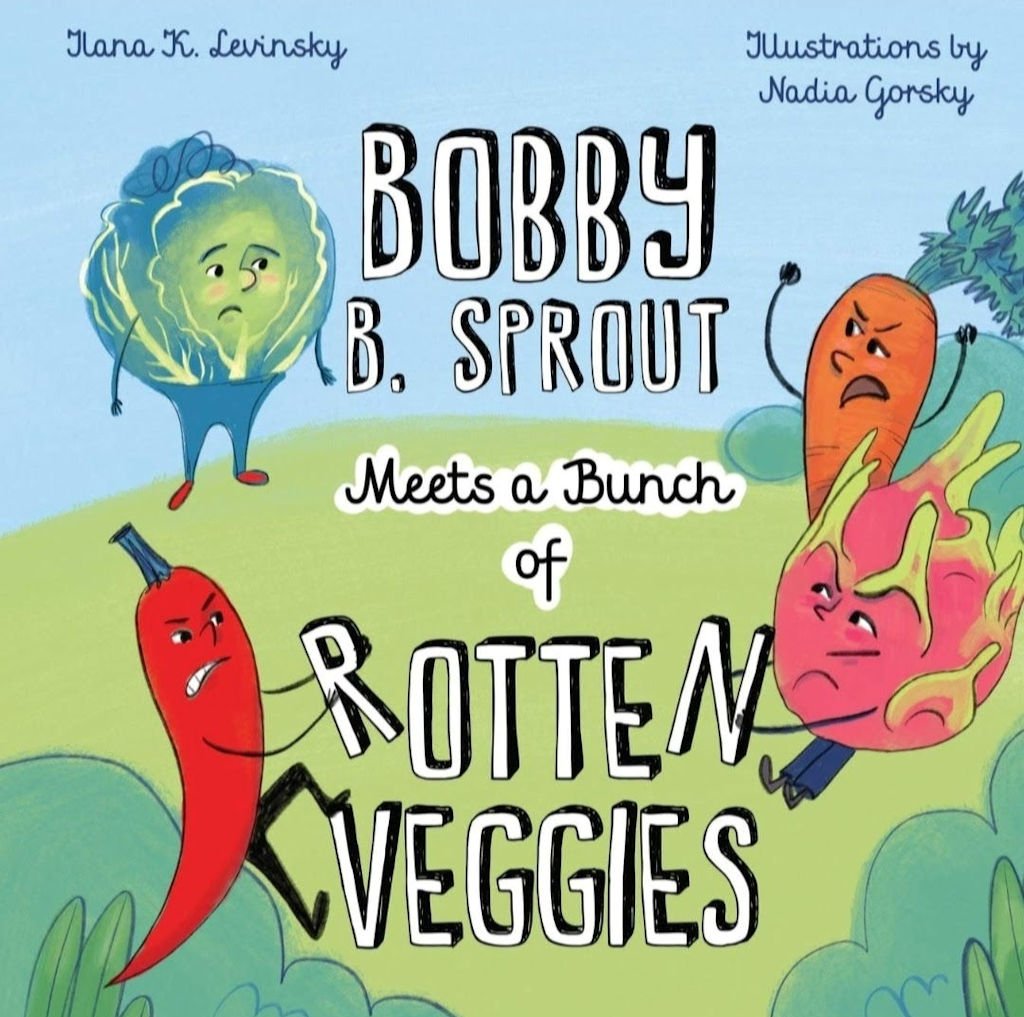
“Bobby B. Sprout Meets a Bunch of Rotten Veggies” is an allegory about prejudice, courage, and staying true to who you are. When Bobby leaves the comfort of his garden patch to explore the world, he’s excited to make new friends. But not all vegetables are welcoming. Bobby soon discovers that not every patch is planted with kindness. With resilience and pride, he learns to stand tall. A powerful, age-appropriate story addressing antisemitism and racism—told through the eyes of one brave little sprout. You can find this book on Amazon.
Related Topics
Related Posts