Writer covering Israel–Africa, Jewish affairs, and Israel worldwide
The Dealmaker, the Jihadists, and the Limits of the Art of the Deal
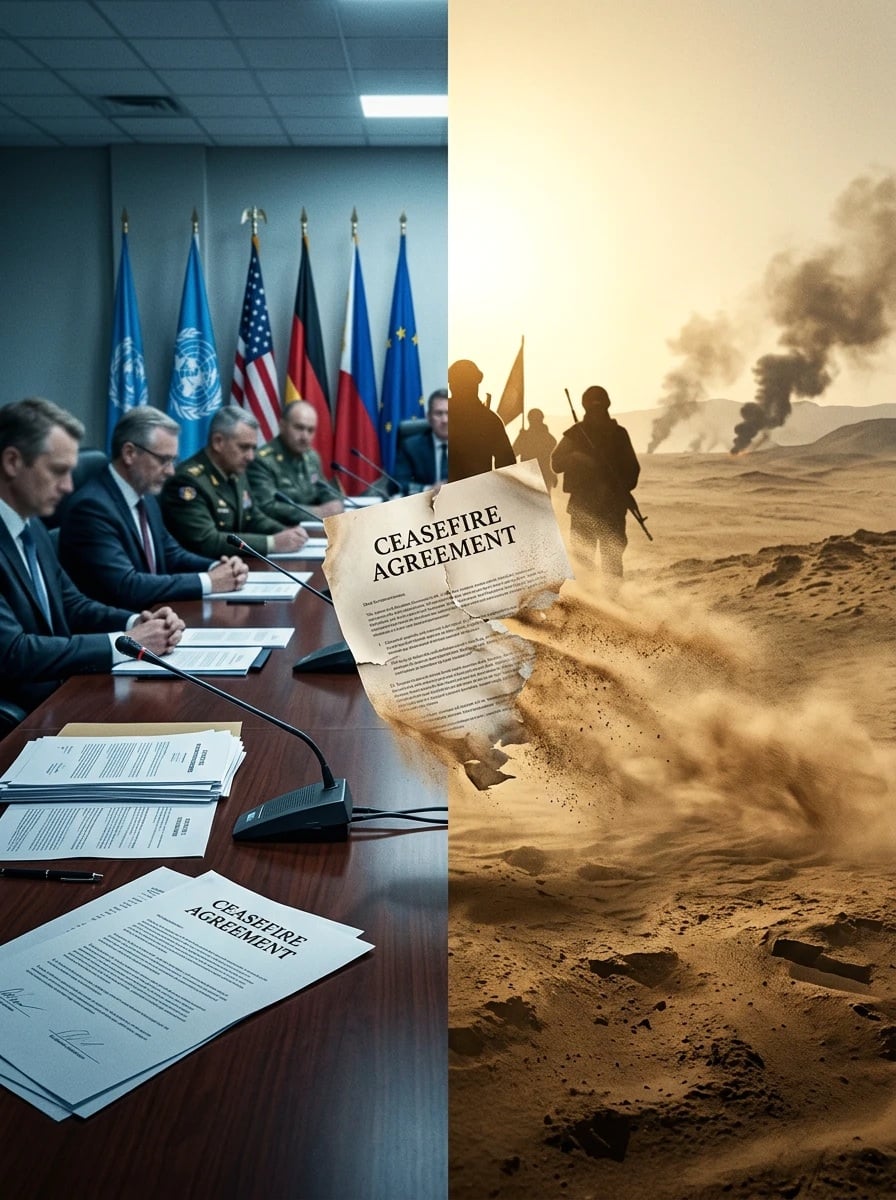
Illustrative. AI image created by the author.
Trump sees a deal waiting to be made. Tehran, Hamas, Hezbollah, and the Houthis see a struggle waiting to be continued. Unsurprisingly, only one side keeps being surprised.
Perhaps no politician in modern history enjoys announcing a deal quite as much as Trump. Every agreement is historic. Every ceasefire is tremendous. Every handshake appears to bring him one step closer to the Nobel Peace Prize that he seems convinced is being unfairly withheld from him by a committee of Scandinavian ingrates. To be fair, this should surprise no one. Trump has spent his entire career making deals. He has always viewed the world through the lens that made him successful: identify leverage, apply pressure, negotiate hard, close the deal, declare victory, and move on to the next one.
It is a perfectly reasonable mindset when buying hotels, constructing skyscrapers, or convincing someone to sell beachfront property. It becomes less reliable when confronting people whose worldview places martyrdom above prosperity and struggle above compromise.
Over the years, Trump has proudly touted various diplomatic achievements around the globe. He claimed credit for easing tensions between India and Pakistan. He celebrated agreements involving Rwanda and the Democratic Republic of Congo. He boasted about helping resolve disputes between Egypt and Ethiopia over the Grand Ethiopian Renaissance Dam.
The pattern is usually the same.
An agreement is announced.
The cameras arrive.
The headlines appear.
Everyone congratulates everyone else.
And then reality wanders into the room and asks whether anyone has actually informed the combatants. Middle Eastern ceasefires increasingly resemble Lebanese governments. They are announced optimistically, celebrated enthusiastically, and one is never entirely sure how long they will last.
None of this means diplomacy is useless. It simply means that a signed document and lasting peace are not the same thing. The signing ceremony is often the easiest part.
This is where the Middle East enters the story.
Trump often approaches the region with the understandable assumption that everyone wants stability, prosperity, and a better future. For most people, that is a safe assumption. The trouble is that Iran’s ruling clerics, Hezbollah, Hamas, and similar groups have spent decades explaining that their motivations extend beyond ordinary political calculations. These are not organizations that emerged because somebody wanted lower taxes or improved public transportation. They are ideological movements driven by religious and revolutionary visions. And ideological movements can be remarkably stubborn negotiating partners.
When Trump announced ceasefire arrangements involving Israel and Lebanon a month ago, he posted on his Truth Social platform “I hope Hezbollah acts nicely and well during this important period of time,” One struggles to imagine a sentence that better captures the gap between diplomatic optimism and Middle Eastern reality.
Asking Hezbollah to “act nicely” is like asking a camel to ignore water after crossing the Negev. The request is understandable. The outcome is predictable.
Then came the awkward moment this week. On Monday night, Israel and Lebanon had agreed to a U.S.-brokered truce. Statements had been issued. Expectations had been raised. Diplomats could be forgiven for thinking progress had been made. By Thursday, however, Hezbollah’s leader, Naim Qassem, had rejected the arrangement altogether.
There is something almost refreshing about such honesty. Presented with a carefully crafted diplomatic proposal, Hezbollah’s response was, in essence, “No thank you, we intend to continue being Hezbollah.”
Yet Washington’s approach often remains unchanged. Israel is permitted to fight, but frequently discouraged from winning. Time and again, Israeli military campaigns begin altering strategic realities on the ground only for international pressure to intensify in favor of ceasefires, pauses, de-escalations, and diplomatic off-ramps. The result is a recurring cycle in which threats are weakened but rarely eliminated, degraded but rarely defeated.
The modern international community increasingly treats Middle Eastern wars as though they were seasonal flare-ups rather than enduring ideological struggles. The prescription is always familiar: pause the fighting, lower the tensions, return to negotiations. This works reasonably well when both sides view peace as the destination. It works considerably less well when one side treats a ceasefire like the old Arab joke about solving problems: first we stop fighting, then we argue about why we stopped, then we start again.
Trump’s greatest strength may also be his greatest weakness. His confidence in negotiation has served him well throughout his career. The belief that every conflict contains a deal waiting to be made is what transformed him from businessman to political phenomenon.
The trouble is that some conflicts are not waiting for a deal. Some organizations do not seek compromise. Some ideologies view compromise itself as betrayal. Some leaders are not calculating profit and loss statements but pursuing visions they regard as sacred obligations.
Drug cartels want routes.
Governments want stability.
Businesses want profit.
Jihadist movements want something entirely different.
And that distinction matters.
The tragedy of the Middle East is not that there are too few diplomats. It is that there are too many people convinced every conflict is simply waiting for the right mediator, the right conference room, and the right amount of coffee. It suffers from a surplus of people convinced that every problem can be solved with a handshake, even when the hand being extended is holding a dagger behind its back. One cannot negotiate someone out of a belief that they were never reasoned into in the first place, and the Middle East’s graveyard of broken ceasefires is littered with leaders who learned that lesson too late.
Until the free world learns the difference between people seeking compromise and people seeking conquest, it will continue celebrating agreements while wondering why the wars keep returning.
After all, if Hezbollah, Hamas, and Tehran have spent decades telling the world what they want, perhaps the real mystery is not why the deals fail, but why so many people keep pretending not to hear them.
Related Topics
Related Posts