
Middle East Analyst
The deeper obstacle for the Abraham Accords: Political Theology
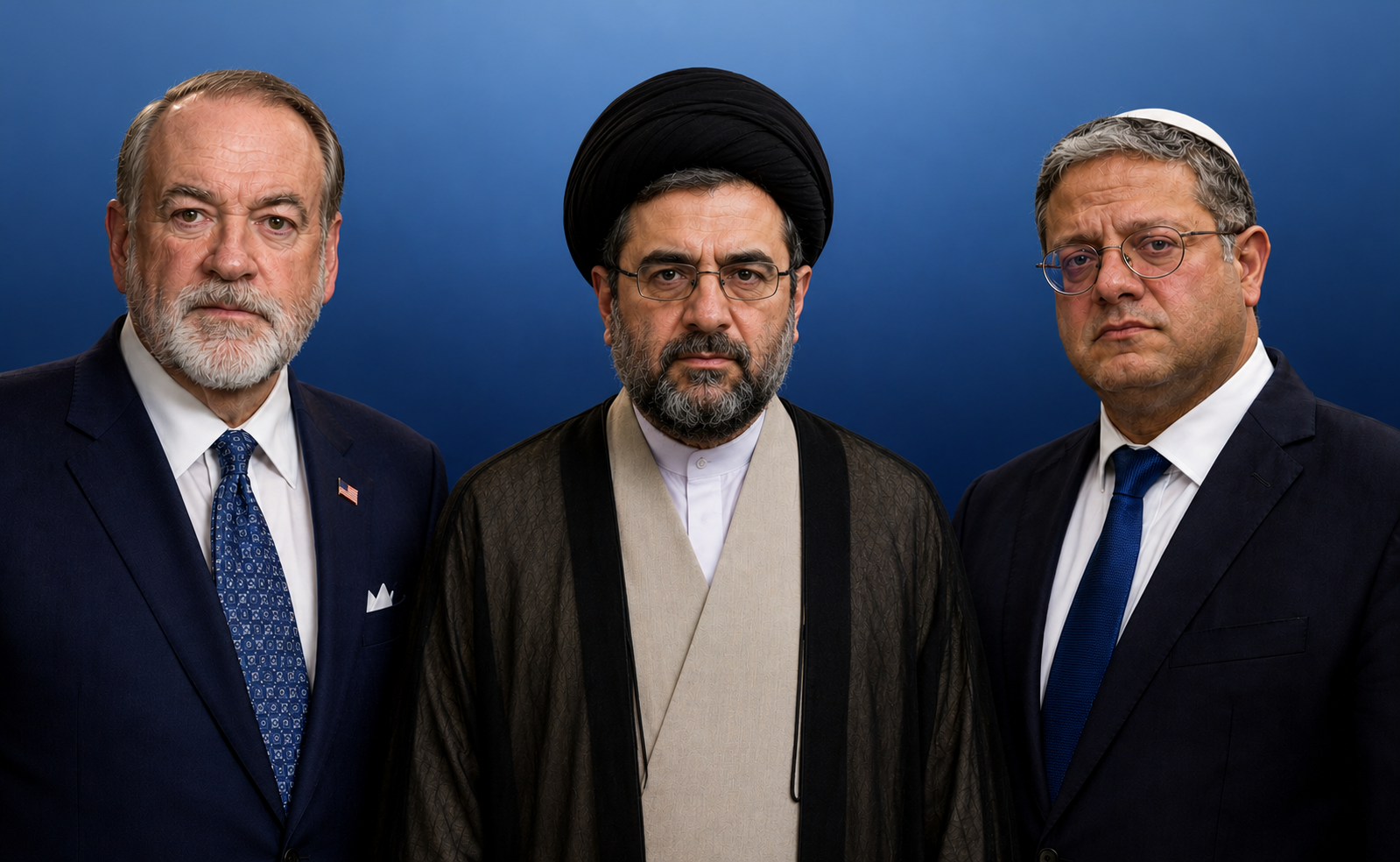
by author (AI)
The Twin Pillars of Peace
Two structures were supposed to carry the region past endless war: the Board of Peace, authorized under UNSC Resolution 2803 and launched in January 2026, and the prospect of an expanded Abraham Accords built on the Board of Peace’s anticipated momentum. Six months on, both are stalled, and the stall is not incidental — it traces back to the same unresolved condition: Gaza, and the broader question of Palestinian statehood, remain the precondition nearly every actor in the region has refused to negotiate around.
The Board of Peace illustrates the problem in miniature. France, Germany, the United Kingdom, Norway, Sweden, Spain, and Ukraine among others declined invitations to join it — leaving a body meant to anchor Gaza’s transitional governance without meaningful Western democratic participation. Numerous world leaders warned that the Board’s mandate was so broad it risked undermining the UN Charter–based international order. The Board’s own charter concentrates final interpretive authority in a single chairman and ties expanded membership to billion-dollar financial contributions — an architecture that reads to skeptical capitals less like a peace institution than an alternative to one.
Saudi normalization tells the same story from a different angle. Riyadh’s position has hardened, not softened, since the ceasefire: Prince Turki bin Faisal, the kingdom’s former intelligence chief, has stated that Saudi Arabia is not currently entertaining normalization and will only reconsider once Israel begins acting like a “normal country” under international law. Crown Prince Mohammed bin Salman has told Trump directly that Saudi entry into the Abraham Accords requires a credible, structured path to Palestinian statehood — not a gesture, a mechanism.
What connects these two stalls is not merely sequencing — that the Board needs to succeed before the Accords can expand, or that Gaza needs a political horizon before Riyadh will move. It is that both institutions were built on the assumption that state-level diplomacy could substitute for resolution of the underlying claim. It cannot, and the reason it cannot runs deeper than territory or security arrangements. It runs into political theology: the process by which contested political questions are reframed as sacred obligations that foreclose the very compromises diplomacy requires.
When Politics Becomes Sacred
Diplomacy assumes political actors can trade concessions. Religious fundamentalism introduces a competing premise: certain questions are not subject to negotiation because they have already been settled by God. Judaism, Christianity, and Islam each contain both traditions of peace and traditions anticipating cataclysmic struggle preceding the fulfillment of divine purpose — a tension most believers hold without translating it into political absolutism. The danger is specific to movements that convert that tension into a governing program, at which point three things happen: compromise becomes betrayal rather than policy; the opposing side becomes a theological adversary rather than a political rival; and the conflict becomes resistant to resolution because it is now bound to identity and destiny, not just to territory.
This is not abstract in the current context. On the Israeli side, currents within the religious-Zionist settlement movement — tracing to Rabbi Zvi Yehuda Kook’s reworking of his father’s teaching after 1967 — treat the retention of the whole Land of Israel as a religious duty inseparable from national redemption, which is one reason the current Israeli government has found territorial concessions in the West Bank politically almost impossible regardless of what a Gaza resolution or Saudi normalization might require. On the American side, dispensationalist Christian Zionism has long read Jewish sovereignty over biblical Israel as a precondition of End-Times prophecy, a framework that shapes a meaningful bloc of the Republican coalition’s baseline support for Israeli territorial positions independent of strategic argument. And within the Iranian and broader Islamist sphere, revolutionary rhetoric around Jerusalem and Palestine has been persistently framed in eschatological (End-Times) and Mahdist terms rather than purely nationalist one.
None of this implies absolute equivalence among these traditions, movements, or the level of violence associated with them — the historical record shows sharp differences in scale, method, and consequence. The analytical point is narrower: each of these currents performs the same operation, converting a negotiable political claim into a non-negotiable sacred one, and each is currently a live constraint on the specific diplomatic architecture — the Board of Peace, a viable Abraham Accords — that the region is relying on to move past the march to Armageddon.
Why diplomacy alone cannot resolve
The nascent 2020 Abraham Accords worked in part because Bahrain, the UAE, and Morocco could normalize without resolving the Palestinian question — they treated it as separable from their own bilateral interest in relations with Israel. That separability is precisely what Saudi Arabia has refused to accept, and what the Board of Peace’s Western holdouts have implicitly agreed with Riyadh about: a transitional structure for Gaza that leaves Palestinian self-determination conditional and indefinitely deferred does not look like a foundation for expansion, it looks like the same deferral in new institutional clothing. Riyadh’s public framing — that normalization requires Israel to act like a normal country under international law — is a theological-adjacent claim in its own right, an argument that Israeli conduct itself, not just Israeli-Palestinian negotiating positions, is the obstacle.
This is why expanding the Abraham Accords cannot simply await better diplomacy from Washington, or a change in Riyadh’s risk calculus, or the Board of Peace demonstrating competence over its next six-month reporting cycle. It requires an actual resolution of Gaza’s political future substantial enough to satisfy a Saudi public and leadership that have increasingly skeptical of normalization, an Israeli coalition that treats the relevant territorial questions as a security calculation rather than a theological obligation, and an Iranian (and proxies) posture that comes to accept the reality that Israel is not going away. Sustainable normalization therefore depends less on the next summit than on whether the three sacred framings can be decoupled from the political decisions currently blocking a Palestinian settlement — without attacking the religious traditions themselves, which is neither possible nor desirable, but by denying any single interpretation of them a veto over policies that affect people who do not share it.
Until that decoupling happens, the Board of Peace will keep reporting negligible progress to the Security Council, Saudi Arabia will keep declining to spend its regional credibility on a cosmetic settlement, Israel’s isolation from the diplomatic architecture built to end it will keep deepening, and Iran and proxies will remain battered but dangerous spoilers — not because the mechanics of any one deal are unsolvable, but because the actors involved are not only negotiating interests. Some of them believe the outcome was divinely decided before the negotiation began.
Related Posts