
The Democrats’ Duplicitous Hypocrisy on the US-Iran MOU
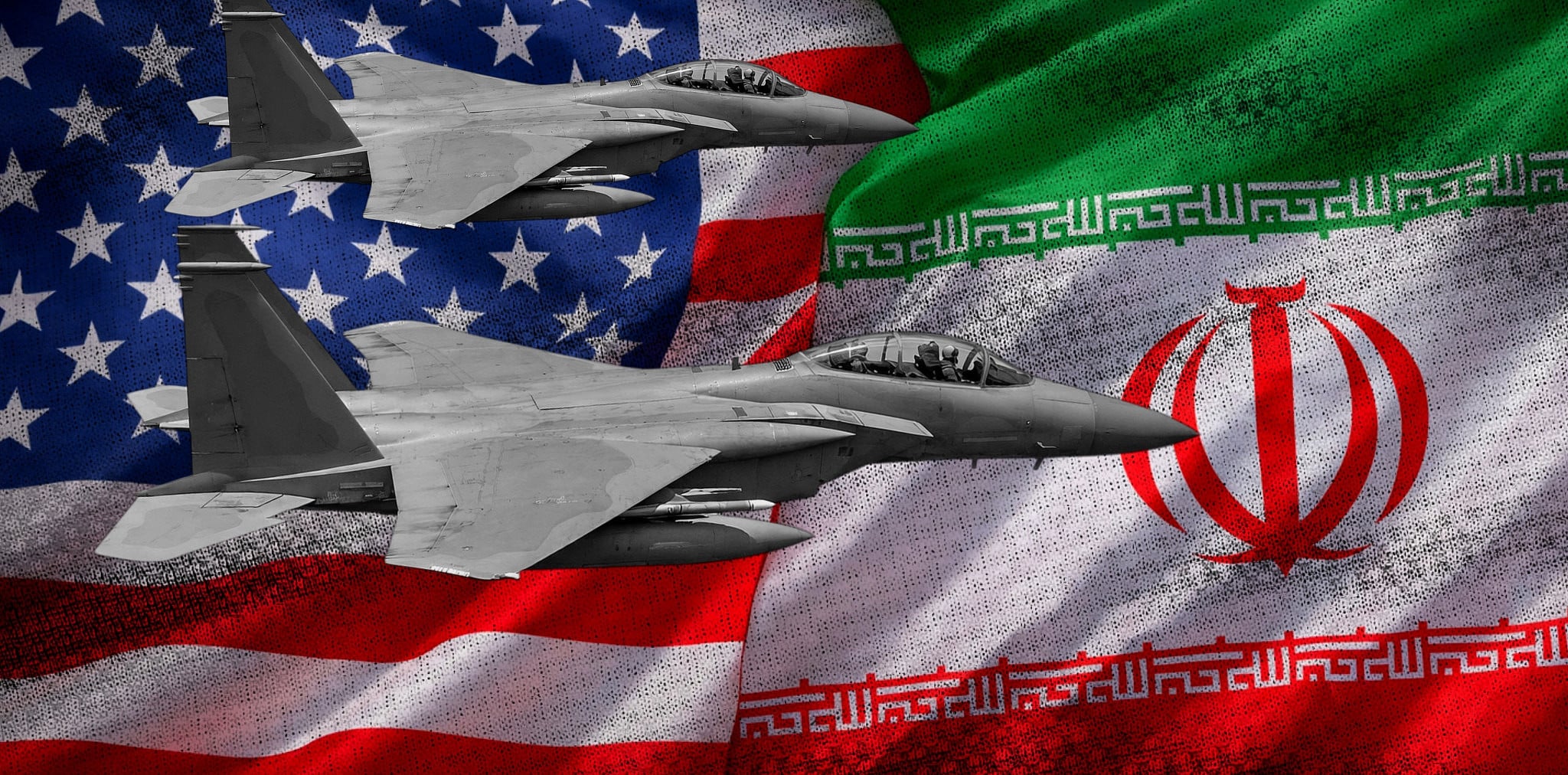
The Memorandum of Understanding (MOU) signed by President Trump with Iran has stoked a bipartisan wave of denunciation in Washington. The concerns are understandable. Lifting sanctions on Iranian oil sales; fostering a $300 billion reconstruction plan; and all while leaving the nuclear enrichment question open to negotiation – this looks all too much like an Iranian diplomatic victory.
The irony is, the harshest denunciations are coming from Democratic leaders. Senators Shumer and Blumenthal both decried the MOU as a complete “surrender,” with Shumer adding it was one of America’s “worst [ever] foreign policy disasters.” Other leading Democrats offered similar condemnations.
However, behind the Democrats’ performative outrage lies a more tawdry political reality, namely, their many efforts that undercut the President’s negotiating leverage. In fact, the Democrats tied the President’s hands against waging a war of victory – and they now excoriate him for entering precisely the kind of agreement that only a President with his hands tied would have signed.
Two Democrat moves especially weakened the President’s leverage.
First was their choice to seek partisan advantage by highlighting and denouncing the war’s effect on gas prices – instead of presenting a unified front against Iran. In March the Democrats launched a nationwide ad campaign denouncing “‘skyrocketing’ gas prices sparked by the Iran war,” with images declaring “DC Republicans Did That!”
The Democrats easily could have shown bipartisan support for the war while pressing for consumer relief, e.g., by suspending the federal gas tax. But instead they sent a clear signal to the Iranian regime that Trump’s war risked major losses in November’s midterm elections – and hence that Trump would face growing pressure to back down if the regime just held on for a few months.
Second was the Democrats’ choice to invoke the War Powers Act, cutting off the President’s authority to continue military strikes after 60 days. The House passed the resolution on June 3. Two weeks later, Trump signed the MOU with Iran. While the President challenged the applicability of the Act, further strikes risked entangling all three branches of government in a major Constitutional crisis. Hence again, by their War Powers Act vote, the Democrats signaled to the Iranian regime: Don’t worry, we’re disarming the President.
Viewed in this light, the weak MOU takes on an entirely different cast. Far from a reflection of Trump’s willingness to back down, it stands as a holding action to get through the mid-terms without losing his Congressional majorities – and hence without re-empowering the Democrats’ long-standing commitment to appease Iran, enable its nuclear ambitions, and unleash its terror proxies across the Middle East.
Importantly, the MOU is not a final deal, but rather just a pause in the war pending negotiations for a possible final deal. Insofar as it holds through November, the MOU does offer some potential upside benefits, namely, an interim cease-fire, re-opening the Straits of Hormuz, and gas prices falling to prewar levels. It also is virtually certain to demonstrate and hence clarify that negotiations absent a robust military threat are utterly incapable of stopping Iran’s pursuit of nuclear weapons.
Accordingly, given the steep obstacles raised by the Democrats against further military strikes, the far-from-ideal MOU offers the best chance for temporarily constraining Iran’s options while preserving America’s freedom of future action against the regime. This is why the Democrats’ cries of “surrender” are so utterly disingenuous.
Adding insult to injury is the Democrats’ specious insistence that the MOU is far worse than the 2015 Iran deal, the so-called JCPOA – when in reality, the reverse is true. Besides the fact that the JCPOA lacked any effective enforcement mechanism – it outright banned “no notice” inspections – the contexts of the two agreements are vastly different. When Obama entered the JCPOA, Iran had a robust military and was close to nuclear weapons capacity. In stark contrast, Trump entered the MOU only after his administration, in partnership with Israel:
- Sunk the Iranian Navy;
- Destroyed at least 2/3 of its ballistic missile arsenal;
- Eliminated most of its political and military leadership; and
- Buried its key nuclear development sites under tons of rubble, setting back its nuclear weapons program several years.
In fairness, the Democrats were not alone in seriously undermining the President’s negotiating leverage. Many of America’s allies across both Europe and East Asia also declined to support the war, and held back their navies from an effort to patrol and re-open the Straits of Hormuz. But had the Democrats formed a bipartisan front behind this eminently justifiable war effort, the lack of allied support would have been far less impactful.
To be clear, the MOU is far from a satisfactory framework for ending the many national security threats posed by Iran. But if the Democrats were honest, they would at least acknowledge this stark fact: The MOU was the best possible interim deal achievable, given their successful campaign to stigmatize and foreclose the President’s military options.
So as the Democrats continue their hunt for villains behind the so-called MOU “surrender,” they might do well to first take a look in the mirror. And better yet, stop obstructing the very policies needed to prevent the existential threat of a nuclear Iran – and support the President’s eminently well-founded war effort.