
The Club of Authoritarian Populists
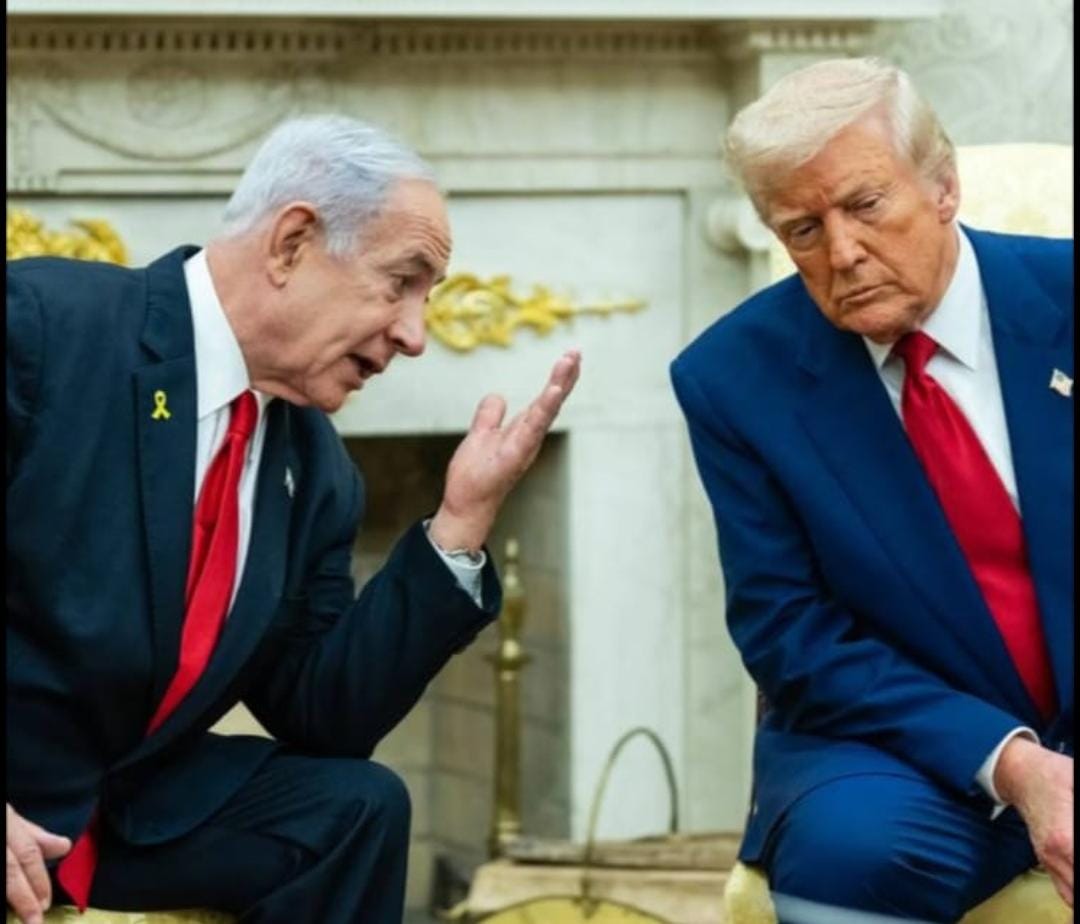
Now it’s official: President Trump has chosen to intervene in the elections in Israel. Unlike in Hungary, he did not send his vice president, J.D. Vance, to a Netanyahu election rally; instead, Trump issued a statement of support, likely after pressure from Netanyahu and his supporters in the administration, led by the ambassador, and perhaps even after some deal between the two.
Donald Trump’s support for Benjamin Netanyahu does not stem from concern for Israel-U.S. relations. On the contrary, it could further harm one of Israel’s most important strategic assets – the bipartisan support in Washington that Netanyahu has severely damaged over the years. Instead of repairing it ahead of the midterm elections, which are likely to bring Democratic control, at least in the House of Representatives and possibly in the Senate, Trump’s move only deepens the crisis.
When an American president openly identifies with a prime minister associated with the right, he reinforces the impression that Israel is an ally of one political camp, rather than of all of America. On the day Israel needs the support of the Democrats, it may find that the cost of the alliance with Trump is much higher than its immediate benefit.
The electoral contribution of the support message is also unclear. Trump indeed embodies almost perfectly what Netanyahu’s support base admires: brute power, narcissism, disdain for liberalism, and suspicion toward foreigners and international institutions. However, identifying leaders does not guarantee the public will adopt their recommendations. The Israeli public has already come to know Trump and his fickleness and knows that what he writes or says can change daily. Moreover, no one has told the Israeli public what the transactional Trump received from Netanyahu in exchange for that support.
Trump tends to interfere in foreign elections; in Hungary and Canada, his support for candidates has not necessarily benefited them and has at times even become a political burden. In Latin America, the picture is different. There, Trump helped boost populist right-wing leaders, and he also seeks to expand his influence in Brazil, where he supports the Bolsonaro family ahead of the second round of the presidential elections today. The similarity between the candidates Trump endorses suggests an attempt to build an international network of leaders who share a worldview: personal loyalty, concentrated power, weakened limiting institutions, and hostility toward the international liberal order. In this context, one can also see Trump’s tendency to support and befriend dictators like Putin and Erdoğan.
Two American moves recently drawing special interest: the announcement of support for Netanyahu and Trump’s withdrawal from the move to impose sanctions on the Russian energy sector, stemming from legislation initiated by the late Senator Lindsey Graham. In both cases, the same question arises: Are these long-term American interests or a neglect of the U.S. role as the leader of the free world?
In the Israeli case, the important question is what Netanyahu promised Trump in exchange for his support. Does the American president expect Netanyahu to attack Iran instead of the United States bearing the responsibility for an unpopular move among the American public? If this is the deal, it is troubling news for Israel. Despite Israel’s air and intelligence superiority, a strike alone does not guarantee a significant change in the Iranian nuclear and ballistic threat. It could draw Israel into another war, with a significant cost in human lives and the economy.
But these may be valuable commitments for Israel related to promoting Trump’s twenty-point plan in Gaza, which brought us our captives. It is a good plan for Israel, including the 19th point, which states that at the end of the process, a Palestinian state will be established.
The proposal may involve an agreement to stop preventing an arrangement that would allow Lebanon to free itself from Hezbollah’s grip gradually. This move would also require Israeli steps, including withdrawal from Lebanon according to the agreements reached. If this is the compensation, we can see the support as an opportunity. But we won’t get answers from declarations; we will get them from actions, which Netanyahu has so far failed to implement.
In any case, until there is a new government in Israel, we are left with an alliance between two failed leaders, seeking to turn the State of Israel into a protectorate, not of the United States but of President Trump, with all his interests in the region.
In the end, the club of populists is not a club of stable alliances or shared values. It is a club of personal interests. When interests change, so does loyalty. Israel cannot afford to base its security and future on personal commitments between leaders. It needs real alliances, based on shared interests, democratic values, and public trust on both sides of the ocean. To do that, both countries need a change of government.