An odd collection of thoughts
The Difficult Hug
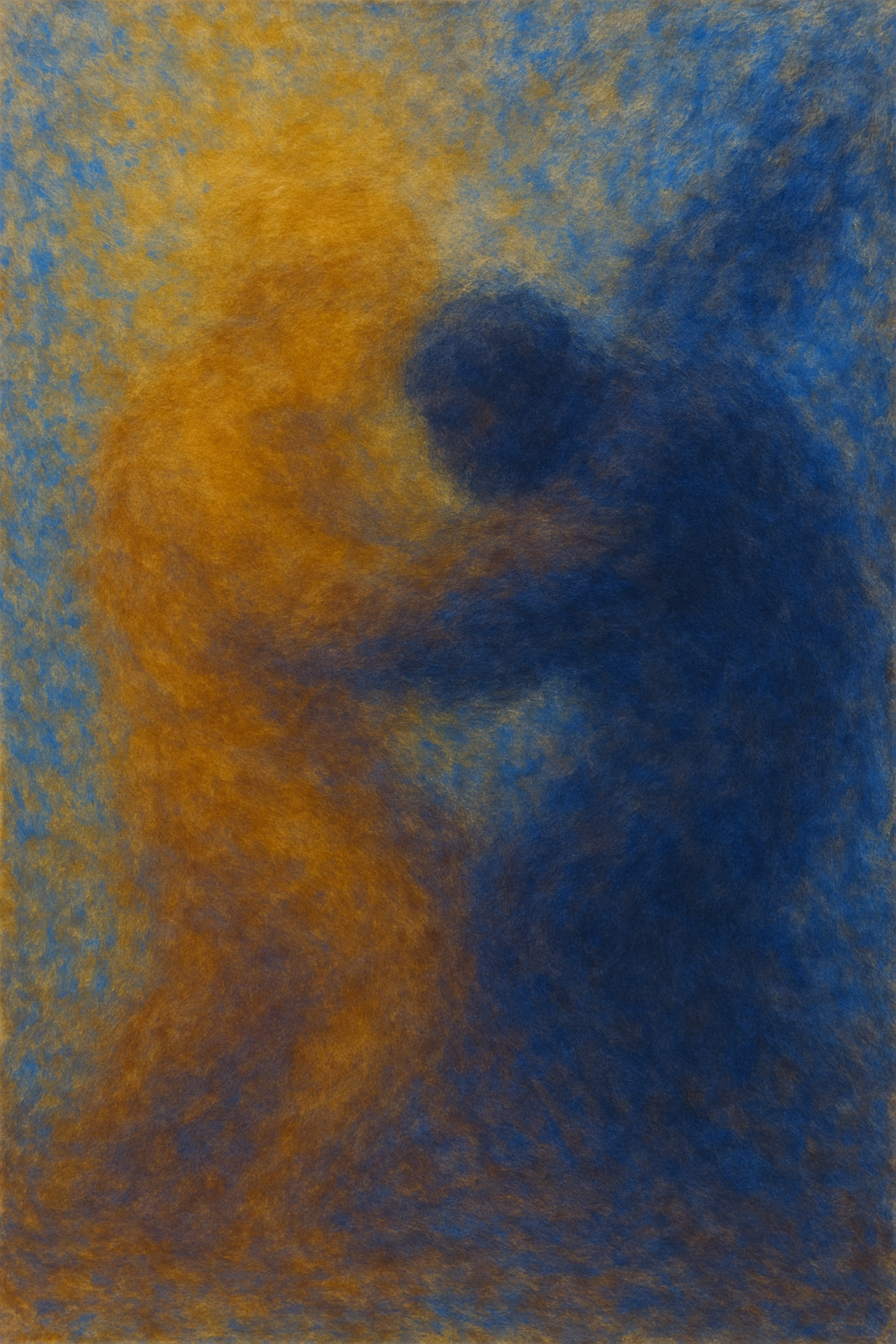
ChatGPT Generated image using the inputs "an abstract image in the style of Monet depicting Jacob struggling with an unknown man"
On Parashat Vayishlach and the Courage to Stop Running
A few weeks ago my daughter and I were working on Chumash homework. The assignment was uneventful: read several pesukim and then draft a question on what we had read. As we worked through the beginning of Parashat Vayishlach, my younger boys were nearby on the couch, wrestling. In my effort to follow the advice of parenting books that recommend a more hands-off approach, I refrained from intervening.
A more perfect stage could not have been set. In the lead-up to Yaakov’s struggle with the unknown ish, my youngest suddenly called out, “Avishai! Let me go!” I gently separated the boys (at least that’s how I remember it), but I was left thinking about Yaakov’s encounter with the unknown man who, as day approached, cried out שלחני – “let me go.”
Left Alone — or Left Behind?
Parashat Vayishlach contains one of the most enigmatic and emotionally charged scenes in the Torah: Yaakov alone at night, on the eve of his reunion with Esav, grappling with a mysterious figure until dawn. The drama begins in two spare phrases:
וַיִּוָּתֵר יַעֲקֹב לְבַדּוֹ — And Yaakov was left alone.
וַיֵּאָבֵק אִישׁ עִמּוֹ — And a man wrestled with him.
What looks at first like a simple ambush quickly becomes something deeper: an encounter with fear, memory, and the self he has been avoiding for decades.
The verb וַיִּוָּתֵר shares a root with נוֹתָר, that which remains or is left behind. The Torah may be teaching that Yaakov is not just alone; he is stuck in the emotional terrain of his past.
He fled home under the weight of deception, guilt, and Esav’s rage. Years later, Esav has moved on, arriving with family, flocks, and a life that has grown beyond the pain of his youth. But Yaakov remains haunted. His elaborate preparations – dividing camps, sending gifts, rehearsing catastrophe, read less like strategy and more like fear that never healed.
Standing on the riverbank, Yaakov is not merely alone. He is left behind by the story he never resolved.
A Life of Disappearing in the Dark
To understand the mysterious ish who appears, we have to notice a pattern: when Yaakov is afraid, he vanishes. He slips away from his parents’ home under threat of Esav. He later slips away from Lavan with similar stealth:
וַיִּגְנֹב יַעֲקֹב אֶת לֵב לָבָן… עַל בְּלִי הַגִּיד לוֹ כִּי בֹרֵחַ הוּא
“And Yaakov stole the heart of Lavan… by not telling him he was fleeing.”
Leaving in the dark becomes his instinctive response to conflict. It protects him, perhaps, but prevents any real repair. On the Yabbok, that instinct calls again. He could leave unseen. He has done it before. He knows how.
And precisely then the ish arrives.
Wrestling — or Being Held in Place?
While וַיֵּאָבֵק is usually translated as “wrestled,” R. Dovid Zvi Hoffman notes that the root may echo the Aramaic אַבַּק, related to לחבק—“to embrace, to hold close.” This is not a gentle hug. But it is a kind of binding, an intense contact that keeps Yaakov from running, forcing him to remain in the reckoning he has avoided his entire adult life.
Read this way, the ish becomes the embodiment of Yaakov’s own fearful self—the part shaped by panic, guilt, and flight. It is the voice that whispers: You’re not strong enough to face what you’ve done. You’re not worthy of forgiveness. It’s safer to disappear before anyone can reject you.
The wrestling match becomes an inner battle. Will Yaakov run yet again, or will he stay, wounded, afraid, but present?
A Wound That Opens a Future
By dawn, the fearful self cannot prevail. It releases him, but leaves a mark.
Yaakov emerges limping, transformed. The limp is not a sign of failure; it is the sign of someone who has stopped running, someone who has confronted the hardest parts of himself and survived the night. Only then can he finally meet Esav, not as the young man he once fled, but as a brother standing before him now:
“וַיָּרָץ עֵשָׂו לִקְרָאתוֹ… וַיְחַבְּקֵהוּ”
“Esav ran to meet him… and embraced him.”
That night on the couch ended with a quick intervention and everyone back to homework. Yaakov’s night does not end so neatly. No parent steps in; no one calls time. The ish holds him there until he can no longer run from himself, and only then does the grip finally loosen. My son’s “let me go” still echoes when I come to שלחני in the parasha. There are times in life when we need precisely that, to be released, to step away, to create space. And there are other times, harder to recognize, when the only way forward means staying in the embrace a little longer, just long enough to leave us limping; but able, at last, to step toward whatever waits on the other side of the river.
What for Yaakov began in darkness as a suffocating hold becomes, in daylight, the possibility of a different kind of embrace—the difficult hug that makes all the others possible.
Related Topics
Related Posts