
Middle East Analyst
The Doha Shockwave That Catalyzed the Mecca Agreement
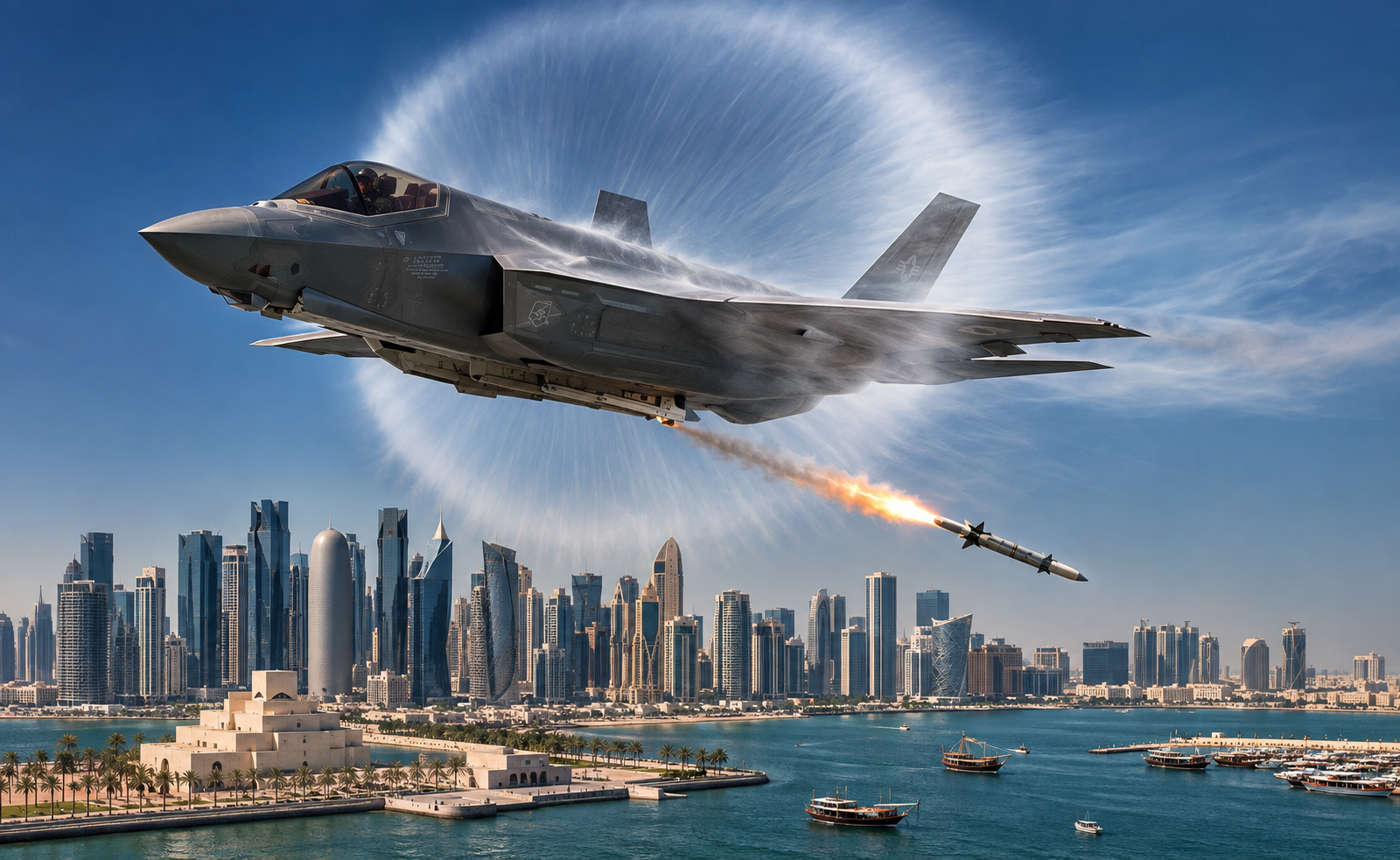
By author (AI)
One Strike, Two Tracks
On the afternoon of September 9, 2025, Israeli aircraft struck a residential compound in Doha’s Leqtaifiya district, targeting Hamas’s negotiating leadership as it met to discuss a US-sponsored ceasefire proposal. The strike killed six people — five lower-ranking Hamas members and a Qatari security officer — and failed to hit any of its intended targets. It was also something else: the first Israeli strike on the territory of a Gulf Cooperation Council state, and the first on a country hosting the forward headquarters of US Central Command.
No one in the Gulf missed the implication. If Israel would strike Hamas leaders in Doha — a close US security partner, a Major Non-NATO Ally, home to the largest American base in the region — then no capital in the Gulf could assume its American relationship offered real protection from Iran or even Israel. The strike did not simply anger Gulf and Muslim-world leaders. It reordered their calculations about who could guarantee their security, and it did so within a matter of days.
What follows is a timeline of two tracks that emerged from that reordering — one built around collective self-defense, the other around American-brokered diplomacy — and the case for reading the Doha strike as the catalyst for both, even though they were never formally linked to one another.
The Security Track: From Doha to Mecca
The response moved fast. On September 15, six days after the strike, nearly sixty Arab League and Organisation of Islamic Cooperation states convened an emergency summit in Doha at Qatar’s invitation. The joint communiqué condemned the strike as a violation of international law and urged member states to consider reviewing diplomatic and economic ties with Israel — rhetorically strong, but, as with most such statements, short on binding commitments.
The concrete response came two days later, on September 17, when Saudi Arabia and Pakistan signed the Strategic Mutual Defense Agreement in Riyadh — a pact declaring that an attack on either state would be treated as an attack on both. Riyadh and Islamabad had discussed renewed security cooperation for months prior, but the decision to formalize and publicize it now, in the direct aftermath of Doha, was not coincidental. It was a signal, aimed as much at Washington as at Tehran or Tel Aviv: the Gulf’s assumption that American partnership deterred this kind of strike had just been proven false, and Riyadh intended to hedge accordingly.
Turkey’s path into the arrangement took longer. By early January 2026, Turkish media were reporting that Ankara was in advanced talks to join the Saudi-Pakistani pact, a process driven in part by Turkey’s own doubts about the durability of NATO’s American commitment. Those talks matured over the following seven months, and on August 7, 2026 — nearly eleven months after the original Saudi-Pakistani signing — Saudi Arabia, Turkey, and Pakistan signed the Mecca Joint Defence Agreement, explicitly built on the earlier bilateral pact and open, by its own framers’ account, to further expansion.
Traced backward, the line is direct: Doha strike, emergency summit, Saudi-Pakistani pact within eight days, Turkish accession roughly eleven months later. Each step compressed the one before it into urgency. None of it required the Doha strike to have been intended as a catalyst — only for Gulf and Muslim-world leaders to have concluded, correctly or not, that they needed an insurance policy the United States was not reliably offering.
The Diplomatic Track: From Doha to UNSC 2803
The second track ran in parallel, and its relationship to Doha is less direct but still traceable. The UN General Assembly’s annual session in New York was already scheduled for late September 202 5 — its timing had nothing to do with the strike. But the content and urgency of what the Trump administration brought to that session did.
On September 23, at a multilateral meeting on the sidelines of the UNGA, US Special Envoy Steve Witkoff presented a 21-point framework for ending the Gaza war to leaders from Saudi Arabia, the UAE, Qatar, Egypt, Jordan, Turkey, Indonesia, and Pakistan — a session convened for Arab and Muslim states specifically; Netanyahu was not present. Witkoff described the meeting as “very productive” and expressed confidence in an imminent breakthrough. Six days later, on September 29, Trump publicly unveiled the 20-point version of the plan alongside Netanyahu at the White House — a version that, by several accounts, had been altered from what Arab leaders had endorsed at the UN, particularly around annexation and settlement language.
The plan was formally endorsed seven weeks later, on November 17, 2025, when the UN Security Council adopted Resolution 2803, authorizing the temporary International Stabilization Force and setting the disarmament and governance framework that has dominated the dispute between Netanyahu and the Board of Peace ever since.
The inferential case here is softer than the Mecca Pact case. The UNGA convening was fixed on the calendar independent of anything Israel did in Doha. Netanyahu did not attend the meeting where the framework was presented, and no public source has the administration crediting the Doha strike with having shaped the plan’s substance or timing. What can be said is this: the diplomatic window in which the Trump plan was drafted, presented to Arab leaders, and pushed toward UN endorsement sits entirely inside the two-and-a-half-month span opened by the Doha strike — a period in which Washington was simultaneously trying to repair the damage the strike had done to its own Gulf relationships. The same crisis that pushed Riyadh, Islamabad, and eventually Ankara toward mutual self-defense also pushed the Trump administration to accelerate a diplomatic offer substantial enough to hold Arab and Muslim buy-in together. Coincidence of calendar; convergence of motive.
The Missing Piece: Washington’s Own Response
The administration’s own reaction to Doha is the detail that ties both tracks together without explaining either one away. On September 29 — the same day Trump unveiled the 20-point plan — he signed Executive Order 14353, “Assuring the Security of the State of Qatar,” pledging that the United States would treat any armed attack on Qatar as a threat to its own security. It was, by any comparison, an extraordinary commitment: no other Arab partner, including Saudi Arabia, holds an explicit US security guarantee of this kind. That same day, in a joint call arranged at the White House, Netanyahu apologized to Qatar’s prime minister for the strike — an apology Trump had visibly pressed him to make.
The optics were of decisive American reassurance. The substance was thinner. The guarantee was an executive order, not a Senate-ratified treaty — reversible by any successor administration, and legally untested. More tellingly, it did not actually deter anything: Qatar had already absorbed an Iranian missile strike on Al Udeid Air Base in June 2025, months before Doha, despite hosting the largest American base in the region. The lesson Gulf capitals drew was not that American guarantees were newly credible. It was that they had never been sufficient, and that the Doha strike had simply made the gap too obvious to keep managing quietly. The Mecca Pact track proceeded regardless of the EO, on its own accelerating timeline.
Reading the Timeline
Within days, Israel’s airstrike on Doha simultaneously convinced Muslim-world capitals that they needed to build their own security architecture, and forced a struggling American administration to accelerate a diplomatic framework substantial enough to hold Gulf buy-in through a moment when its own credibility as a security guarantor had just been publicly undercut. Two tracks, one catalyst, no formal connection between them — and a full year later, both are still shaping the region’s most consequential unresolved question: whether Israel accepts a genuine pathway to Palestinian statehood and is integrated into the region via an expanded Abraham Accords, or watches the Muslim world’s alternative architecture harden into a substitute for the accommodation it never made.
Related Topics
Related Posts