
The Election Strategy Israel Knows Too Well
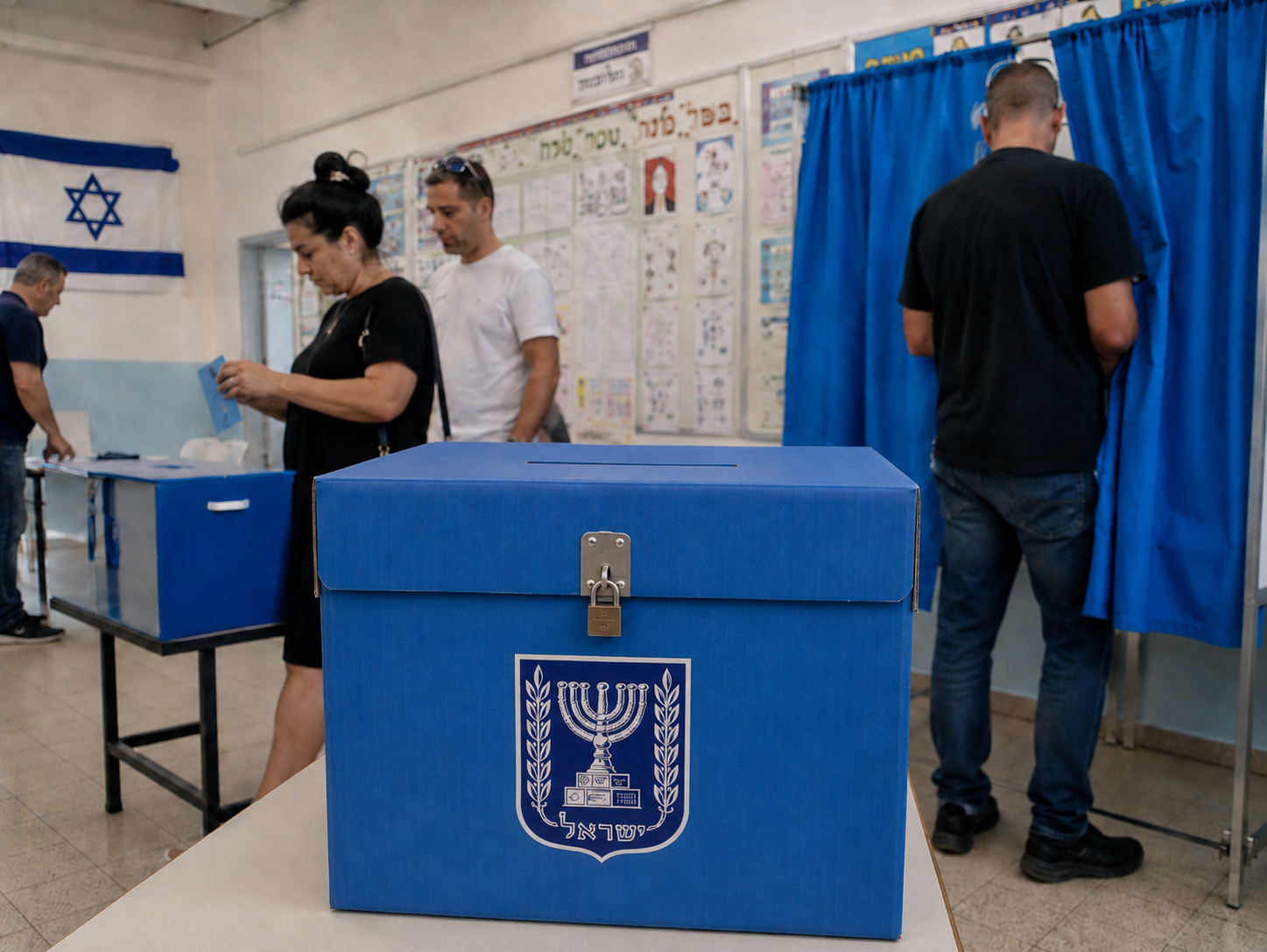
Israel is heading into what may become the most toxic election cycle in its history, with local, regional, and international circles of influence. Not because the country lacks real crises to debate, but because its political system increasingly rewards those who manufacture internal enemies rather than confront national failure.
The warning signs appear not only in speeches by politicians or viral social media clips, but in hard data. Two recent studies by the aChord Center at the Hebrew University and FakeReporter provide a disturbing glimpse into how anti-Arab discourse is being engineered online and how public perceptions are being shaped accordingly. The findings describe a coordinated, manufactured, and timed political atmosphere in which Arab citizens of Israel are gradually reframed not as a minority with complex identities and legitimate grievances, but as an extension of Israel’s external enemies: Hamas, Hezbollah, Iran, criminal networks, and terrorism itself. This matters now more than ever because election campaigns do not merely reflect society. They manufacture emotional realities. And Israel is entering an election season primed for scapegoating.
The first study by aChord examined more than 1,100 posts and comments across X, Facebook, Telegram, and TikTok relating to Bedouin citizens in the Negev between January and March 2025. The researchers found that 56 percent of the discourse was explicitly negative, while only 17% was positive. But the more alarming finding was structural:
A tiny network of only seven accounts generated just 2% of the content yet was responsible for 18% of total exposure, reaching approximately 1.87 million views. These accounts repeatedly amplified one another, circulated similar narratives, and pushed themes connecting Bedouin communities to criminality, loss of sovereignty, illegal construction, and national security threats. The study describes this as the creation of a “double threat” narrative: Arab citizens are portrayed simultaneously as a danger to personal safety and as a symbolic threat to the Jewish identity and sovereignty of the state.
This distinction is critical. Crime alone does not generate existential panic. Crime fused with ethnic identity does. Once the discourse shifts from “there is crime in Arab communities” to “Arab identity itself is linked to disorder, disloyalty, and national danger,” the political logic changes entirely. Every social problem becomes proof of civilizational decay. Every opposition alliance with Arab parties becomes a betrayal. Every attempt at partnership becomes suspect. The same study also found a massive gap between reality and Jewish perceptions of Bedouin citizens. While 62% of Arab Bedouin respondents said they strongly oppose aggression toward Jews, only 18% of Jewish respondents believed that Bedouin citizens oppose such violence.
That is not merely polarization. It is the manufacturing of politically useful perceptions toward 21% of Israel’s citizens. When citizens believe an entire minority population is inherently hostile, political actors no longer need to discuss housing costs, collapsing public services, judicial dysfunction, the failures surrounding October 7, or the government’s inability to provide security. The emotional center of politics shifts toward fear.
The second study examined Jewish attitudes toward the legitimacy of complex Arab identities in Israel. Its findings reveal how fragile the social fabric has become. Among Jewish respondents, only 4% expressed strong support for the legitimacy of Arab citizens holding both Palestinian and Israeli identities simultaneously. A majority rejected the idea outright. Among right-wing respondents, rejection rates were even higher.
Yet the same survey found overwhelming support for identities perceived as non-threatening. Large majorities accepted that Arabs could identify simultaneously as Muslim, Christian, Druze, and Israeli. The problem, in other words, is not complexity itself. It is Palestinian identity specifically. This is politically explosive because Palestinian identity among Arab citizens of Israel is not disappearing. Nor should anyone seriously expect it to. Nearly every national minority in the modern world carries layered identities. Catalans in Spain, Quebecois in Canada, Scots in Britain, Kurds across the Middle East. Mature democracies learn to manage this complexity. Fragile democracies weaponize it.
And this is where the current Israeli political trajectory becomes dangerous. For years, the populists in the Israeli political system have relied on mobilizing Jewish anxiety around Arab political participation. Today, the mechanism is broader, more sophisticated, and more professional. The Arab citizen is no longer presented merely as a demographic threat. He is increasingly framed as part of the same axis as Hamas, Hezbollah, Iran, organized crime, campus dissent, judicial opposition, and the Israeli center-left itself.
This fusion serves a strategic purpose. Once Arab citizens are defined as existentially suspect, anyone cooperating with them becomes suspect too. Opposition parties are then portrayed not as ideological rivals but as collaborators. Journalists become traitors. Protest movements and NGOs become internal enemies. This is precisely how democratic erosion happens, through the normalization of moral panic.
Israel now risks entering a similar cycle, adapted to its own context of war, trauma, and unresolved conflict. The timing matters. After October 7, Israeli society is traumatized, angry, and profoundly insecure. That insecurity creates fertile ground for manipulation. It becomes easier to blur distinctions between Hamas militants and Arab citizens. Easier to conflate criticism with betrayal. Easier to present authoritarian instincts as a patriotic necessity. And easier, above all, to avoid accountability. Because if elections revolve around fear of Arabs, they do not revolve around government failure and Israel’s enormous internal and external challenges.
Israelis should not underestimate how deliberate this process is becoming. The studies show coordinated amplification networks, systematic framing patterns, dehumanizing rhetoric, and the strategic linking of Arab citizens to national enemies. This is not random online toxicity. It is infrastructure being built ahead of elections. Israel is entering the most poisonous electoral period it has ever known.
The groundwork is already being laid through incitement, fake news, scapegoating, and the manufacturing of collective paranoia designed to preserve political power. This is evident in last week’s disqualifications by Israel’s legal election committee of different initiatives with illegal impact on the coming national elections, even before an official date was declared. We need to enter this period with our eyes open. The damage to democracy may not be repairable for generations to come. The scale and strength of the multiple crises Israel has undergone, and the need for rehabilitation and repair, do not allow us to wander into a manufactured crisis.