The Emotional Side of Aliyah Nobody Warned You About
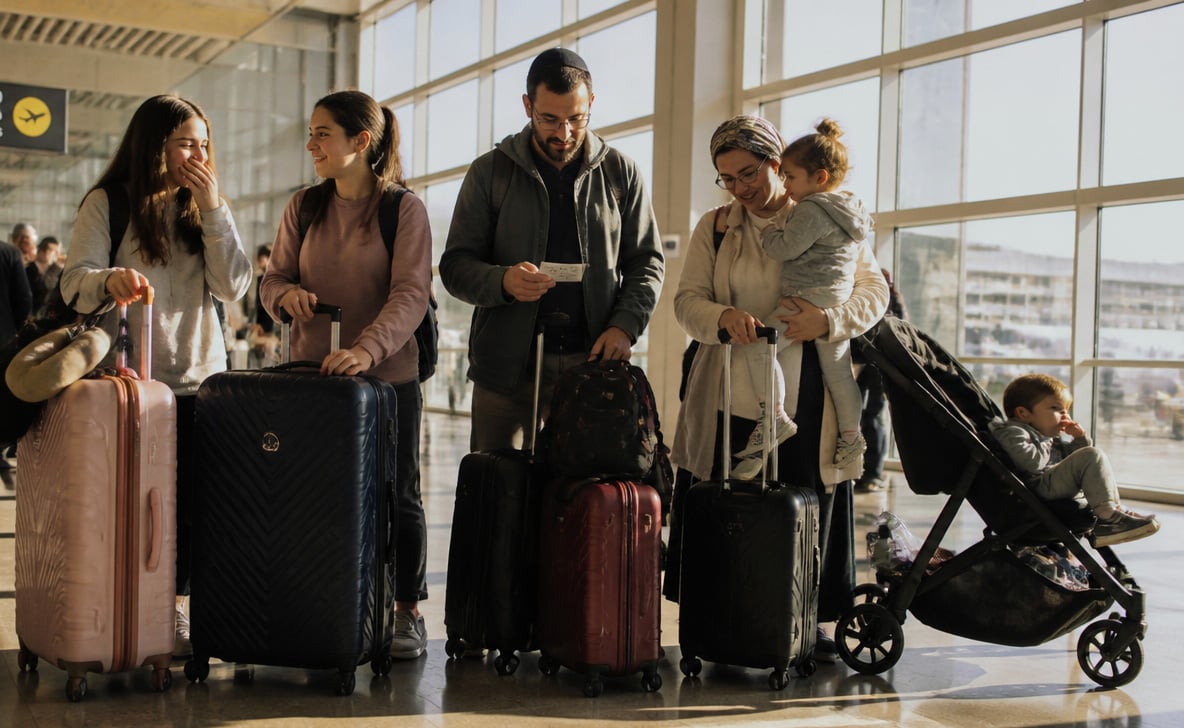
The going-away party was beautiful. The speeches were moving. Someone quoted a verse and someone else cried happy tears and you flew out feeling like the lead character in a story worth telling.
Then came month four.
Month four is when the adrenaline of the move has fully worn off and the reality of having rebuilt your entire life from scratch hasn’t yet settled into something comfortable. It’s when the emotional terrain of Aliyah that nobody put in the brochure shows up and introduces itself.
Here’s what it looks like, and what to do with it.
You Will Grieve Things You Didn’t Expect to Grieve
Not the big things. You prepared for those. What catches people off guard is grief for the small things: the coffee shop where the barista knew your order, the ability to read a menu without guessing, the sensation of being completely understood without searching for words. The invisible social capital built over years, left behind entirely.
You can be sitting on a mirpeset watching a sunset that belongs in a travel magazine and feel a wave of sadness that seems to make no logical sense. It makes complete emotional sense. Grief doesn’t check whether your circumstances justify it before arriving.
The Olim who navigate this best don’t argue themselves out of it. They feel it and let it pass and don’t treat it as evidence they made the wrong choice. You can be grateful for your decision and still mourn what you left. Both are true at the same time.
The Competence Problem Is Real and Temporary
Before Aliyah you were a capable adult who navigated complexity without thinking much about it. Then you arrived and couldn’t figure out how the electricity bill works, needed help with a lease clause, and had to ask someone’s teenager how to use the Kupat Holim app.
Your intelligence and experience haven’t gone anywhere. They’re temporarily inaccessible in a new language and cultural context. This peaks around months three through six and then improves steadily as Hebrew develops and systems become familiar. In the meantime, the right response is the same grace you’d extend a close friend in the same situation. Of course you don’t know how the arnona reduction works. You’ve been here four months. That’s not failure. That’s newness.
The Loneliness Has a Specific Shape
New Olim often feel lonely even when surrounded by people. What’s missing isn’t company but context. In your previous life, people knew your history, your humor, your reputation. You arrived in Israel without any of that, and rebuilding it takes years. You have acquaintances before you have people who really know you, and that gap is real.
The Anglo Olim community bridges this partially and usefully. People who’ve made the same move understand the experience without requiring explanation. Use this community while also investing in broader Israeli relationships, because both serve different and real needs.
Couples and Families Feel the Strain
Aliyah puts specific pressure on relationships. Both partners deplete their reserves simultaneously, which means neither is fully available to support the other the way they normally would be. Children process the transition through behavior rather than words, and a difficult teenager or acting-out younger child may be expressing grief they don’t have language for.
Name what you’re feeling. Ask for what you need. Consider couples or family counseling not as crisis intervention but as a practical tool for navigating a hard transition together.
The Moments That Make It Make Sense
In the middle of all of the above, something else happens. Irregularly, unexpectedly, and with startling clarity.
You’re at a Friday morning market and the whole country is preparing for Shabbat and the noise and the light and the fresh bread smell does something to you that you can’t fully explain. Or your child sings in Hebrew at a school performance, fluently and unselfconsciously, in a language they barely spoke when you arrived. Or you’re at a Shabbat table with friends who didn’t exist in your life two years ago and it’s warm and funny and fully yours, and you realize this is your life now.
These moments don’t cancel the difficulty. But they’re real, and they accumulate, and they’re what people mean when they say after ten years they couldn’t imagine being anywhere else.
What Actually Helps
Therapy works and is underused. Therapists working with Olim in English exist in every major Israeli city. You don’t need to be in crisis to benefit from having a professional space to process an enormous life transition.
Community requires showing up before you feel ready. Join the shul, attend the event, accept the invitation. Do it before your Hebrew is good enough, because waiting until you feel settled is how months become years.
And give yourself credit for what you’re actually doing. You moved to a new country in a new language and you’re rebuilding a life from the ground up. It’s hard because it’s hard, not because you’re doing it wrong.
Olim Advisors supports new immigrants through the practical and emotional dimensions of life in Israel. Since October 7th, our real estate guidance package is provided to clients at no charge. Reach out. Whatever stage of the journey you’re in, you don’t have to navigate it alone.