Strategic Intelligence Consultant & Insights Advisor
The Empty Chair in Geneva: Writing the Rules Without the Democracies
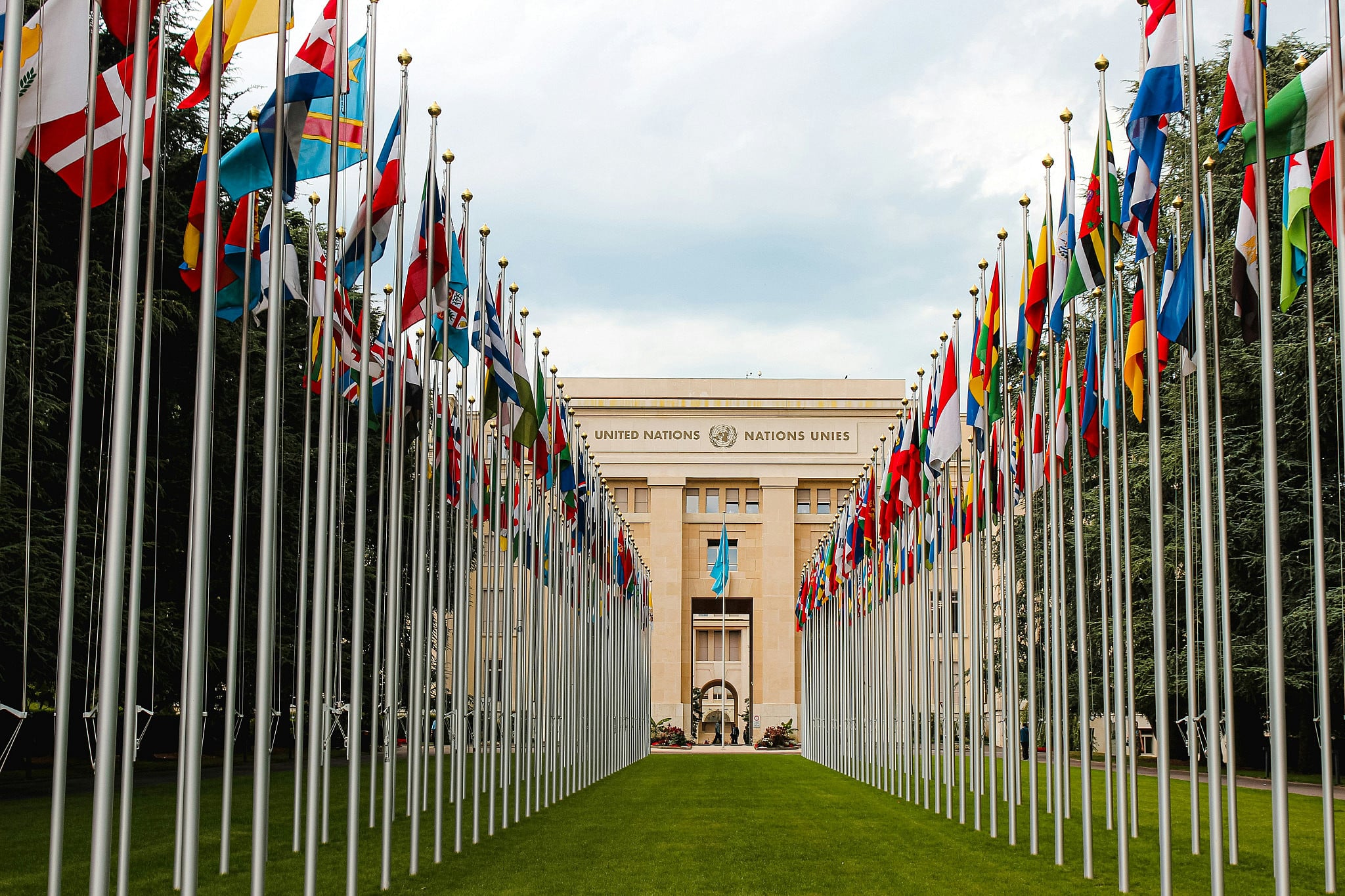
Photo by Mathias Reding on Unsplash
America and Israel walked away from the UN Human Rights Council. The institution didn’t stop working — it kept writing the rules, with China methodically filling the space the democracies left behind.
In Geneva, international institutions do not wait for those who walk out. When the Trump administration ordered in February 2025 that the United States would no longer participate in the UN Human Rights Council, and Israel announced it was halting its own engagement with the body, many commentators dismissed both moves as symbolic gestures with no practical consequence. A year and a half later, the picture looks rather different. The Council keeps meeting, voting, appointing investigators and shaping the international language of rights. It simply does so with fewer democratic voices in the room.
The issue is not who holds a seat. America’s term as an elected member had already expired at the end of 2024, and Israel was not one of the 47 member states when it announced its disengagement. The real stakes lie in who participates, day in and day out, in drafting texts, negotiating resolutions, building coalitions and defending accountability mechanisms. That is where the vacuum opened. And in international politics, vacuums never stay empty.
Why Washington and Jerusalem Walked Away
The executive order of February 4, 2025 stipulated that the US would not participate in the Council, would not seek re-election, would terminate the office of the US Representative and would withhold the related funding. The administration argued that the body had drifted from its mission, targeted Washington’s allies and shielded regimes that violate the very rights it is supposed to police. This was not unprecedented: the first Trump administration had withdrawn in 2018, and the Biden administration returned to serve the 2022–2024 term. Later in 2025, as Reuters reported, Washington extended the retreat by declining to take part even in the Universal Periodic Review of its own record.
Israel’s reasoning was more direct. Foreign Minister Gideon Sa’ar informed the Council that Israel was ending its engagement, denouncing what he called persistent and institutionalized bias against Israel since the body’s founding in 2006. Readers of this site need little reminder of the institutional basis for that charge: the Council maintains Item 7 on its permanent agenda, devoted exclusively to the human rights situation in the Palestinian territories — the only standing agenda item that focuses on a single state. Critics see it as structural discrimination; defenders argue it reflects the duration and nature of the Israeli-Palestinian conflict. The dispute remains open, but it served as the catalyst for disengagement.
There is, however, a counter-argument — and it is a strategic one. The outgoing US ambassador to the UN, Linda Thomas-Greenfield, warned the incoming administration in January 2025 that if the United States abandoned its leadership role in international organizations, its rivals would rush to fill the gap: withdrawal does not punish the institution, it hands it over to those who seek to curtail international scrutiny. The Council’s decisions are not legally binding, but the body creates commissions of inquiry, appoints special rapporteurs, collects and preserves evidence, and at times feeds later processes of international criminal justice. Whoever absents themselves from that machine does not switch it off; they merely stop influencing it.
Michèle Taylor, who served as US permanent representative to the Human Rights Council from 2022 to 2025, put the same warning even more bluntly. After Washington’s renewed withdrawal, she wrote that “if you’re not at the table, you’re on the menu” — arguing that America’s absence does not simply leave an empty seat, but allows China, Russia and other authoritarian states to shape the Council’s rules, language and priorities.
Two Conceptions of What a Right Is
Behind the diplomatic friction lies a deeper clash of definitions. The Western liberal tradition, as expressed in the Universal Declaration and the European system of protection, places the individual at the center as the bearer of rights against the state: freedom of expression and assembly, fair trial, judicial independence, effective legal remedy and — above all — a universality that justifies cross-border scrutiny.
The official Chinese approach orders things differently. In February 2026, Foreign Minister Wang Yi told the Council that every country’s path to human rights must be grounded in its particular national conditions, that non-interference in internal affairs is a “golden rule,” and that the right to development should move to the center of the multilateral agenda. This is not a denial of the concept of rights, but a different hierarchy — one in which survival, development, stability and state sovereignty come first, and external scrutiny is dismissed as “politicization.” Western democracies, for their part, do not ignore social and economic rights. The real question is which rights come first, and who is entitled to police their implementation.
Taylor had flagged precisely this as the crucial stake as early as December 2024: whether human rights will continue to be understood as rights of the individual, or drift toward a state-centered conception more compatible with Beijing’s doctrine of sovereignty and non-interference — a shift she called “very dangerous.”
How Beijing Is Using the Opening
China’s strategy inside UN institutions was not born of the American withdrawal; it predates it by many years. What changed after 2025 is the resistance it encounters. China, an elected Council member in the current cycle, operates on three levels.
The first is coalition diplomacy. After the close of the 62nd session on July 8, 2026, the Chinese foreign ministry announced that its delegation had acted through the “Group of Friends of Global Governance” and delivered a joint statement on behalf of 67 states on AI accessibility, while pledging — in Beijing’s name — to build a “fair, equitable and inclusive” system of global human rights governance. Reuters had already documented, ahead of China’s 2024 review, the systematic mobilization of non-Western states to praise the Chinese record.
The second level is institutional and budgetary. In October 2025, Reuters reported — based on a study by the International Service for Human Rights — that a group of states led by China and Russia had repeatedly tried, over five years, to cut funding for the UN human rights system, including specific investigative mechanisms; Beijing rejected the report as baseless. The third level concerns civil society: a 2025 investigation by the ICIJ and the Washington Post documented a swarm of Chinese organizations accredited at the UN that functioned in practice as extensions of the state, squeezing the space for independent critics in Geneva.
None of this amounts to a “takeover” of the Council. It does amount to a methodical expansion of influence over language, procedures, budgets and access — precisely the terrain from which the democracies withdrew.
A View from the Eastern Mediterranean
I write from London, however I am also a Greek Cypriot and a Jew, and for Israel’s partners in this corner of the world the debate is anything but theoretical. Cyprus — with Greece, one of Israel’s closest regional partners — was elected to the Council for the first time in its history for the 2025–2027 term, and now takes an active part in its work. Smaller states depend, far more than great powers do, on predictable international rules, universally applicable principles and institutions that let them invoke law rather than raw power. If the international rights system drifts from universal accountability toward the invocation of sovereignty and “national particularities,” the countries with a vital interest in strong rules — and Israel, Greece and Cyprus all belong in that category — will find themselves with fewer footholds. This is a strategic judgment, but it rests on the logic of multilateralism itself: rules protect, above all, those who cannot impose their will by other means.
Credibility also demands an admission. Neither the United States nor Israel is an infallible model; both face serious international criticism over specific policies, and UN mechanisms continue to examine the practices of each. Criticism of the Council does not cancel out criticism of those who abandon it. The institutional power of the democracies depends, in the end, on their own consistency with the principles they invoke.
The dilemma is not whether democracies are entitled to denounce an institution’s distortions; they are, and often with good reason. The dilemma is what follows the denunciation. Walking out does not abolish the institution or cure its pathologies; it hands its shaping over to states with a very different understanding of sovereignty, accountability and freedom. In international organizations, the empty chair is not a cost-free protest. It is space that someone else will occupy — politically, procedurally and ideologically. Or, as Taylor warned: when the democracies are not at the table, they risk ending up on the menu.
Related Topics
Related Posts