
The Erosion of Belonging: American Jewry in an Age of Anxiety
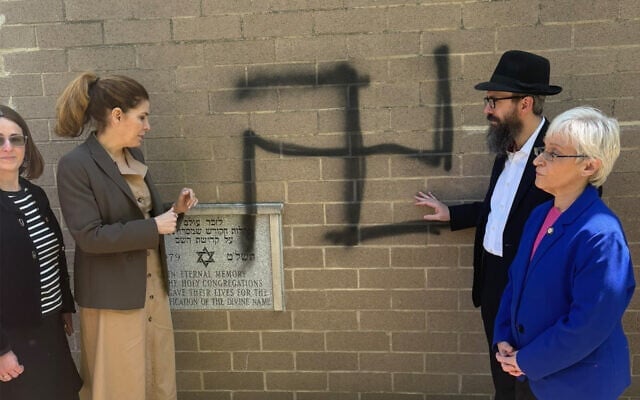
For generations, the American Jewish experience was defined by a sense of hard-won security—a belief that, unlike in the fractured landscapes of European history, Jewish identity could coexist comfortably within the pluralistic fabric of the United States. Today, that foundational assumption is fracturing. A new survey from the AP-NORC Center for Public Affairs Research reveals a sobering reality: approximately six in ten American Jews feel less safe today than they did before the October 7, 2023, massacre.
This is not merely a data point; it is a profound shift in the psychological geography of the diaspora. As a journalist covering the intersection of Israeli policy and global Jewish life, I find these figures particularly alarming. They signal that the tremors currently shaking Israeli society are no longer contained within our borders; they have become central, destabilizing forces in the daily lives of Jews across the Atlantic.
The Retreat of Identity
Perhaps the most visceral indicator of this shifting climate is the quiet, self-imposed retreat from public Jewishness. The poll reveals that four in ten Jewish adults are now less likely to display outward symbols of their faith or identity than they were prior to the war. When individuals start weighing the risks of wearing a Star of David or displaying a mezuzah, we are witnessing the erosion of civil freedom.
This is the tangible result of a climate where antisemitic incidents—ranging from online harassment to physical assault—have migrated from the fringes of political discourse to the mainstream. When roughly 30% of the community reports experiencing some form of abuse or harassment in the past year, we are no longer discussing isolated episodes of bigotry. We are confronting a systemic failure of societal safety.
The Netanyahu Factor and the Branding Crisis
As someone deeply critical of the current Israeli government, I must address an uncomfortable truth: the radical policies and inflammatory rhetoric emanating from Jerusalem’s current cabinet have exacerbated this vulnerability. While antisemitism in America is a multi-faceted hydra with deep domestic roots, the branding of Israel under the current administration has undeniably tethered Jewish identity in the diaspora to the political controversies of the Israeli Right.
When the current cabinet conflates any and all dissent with existential hostility, it provides cover for those who seek to demonize the Jewish state and, by extension, the Jewish people. This current government has treated Israel’s international standing as a partisan cudgel rather than a strategic asset. By alienating the very liberal, diaspora-based coalitions that have historically provided the backbone of support for Zionism, the current administration has left American Jews isolated, forced to defend policies they often find morally indefensible, while simultaneously bearing the brunt of the backlash.
A Divided Community, A Shared Vulnerability
The survey highlights a deep fracture within American Jewry regarding the definition of antisemitism, particularly in relation to anti-Israel protests. While about half of respondents do not view anti-Israel protests as inherently antisemitic, 40% do. This ambiguity reflects a community grappling with how to distinguish between legitimate political speech and the crossing of lines into hate speech—such as calls for the destruction of the Jewish state or the holding of American Jews accountable for the policies of the Israeli government.
However, the consensus remains strong on core issues: vandalizing synagogues, denying the Holocaust, and invoking dual-loyalty tropes are, by any objective measure, expressions of pure prejudice. The challenge is that in the current hyper-polarized US climate, these distinctions are frequently lost.
Strategic Consequences for Israel’s Future
The implications for Israel are strategic and dire. The strength of the US-Israel alliance has always relied on the bridge provided by a secure, confident, and engaged American Jewish community. As that community increasingly retreats, feeling alienated from an Israeli government that does not represent their values, that bridge weakens.
If Israel continues to pursue a path of radical isolationism and domestic instability, it will lose the most important asset it possesses: the support of a diaspora that views the existence of a democratic, liberal, and secure Israel as a vital component of its own safety. We are moving toward a future where “Israel” and “Jewishness” are increasingly viewed in the West as incompatible with liberal democratic values, and the current cabinet is doing little to combat that narrative—and, at times, much to accelerate it.
The feeling of insecurity among American Jews is a warning light. It tells us that our internal choices in Jerusalem have consequences that echo far beyond our borders. If we truly care about the future of the Jewish state, we must prioritize the restoration of a moral and strategic coherence that can once again make Jewish identity a source of pride, rather than a cause for fear.