the Eternal Jew's biographer
The Eternal Jew’s Tale, #195, Crystal Haggadah, 6
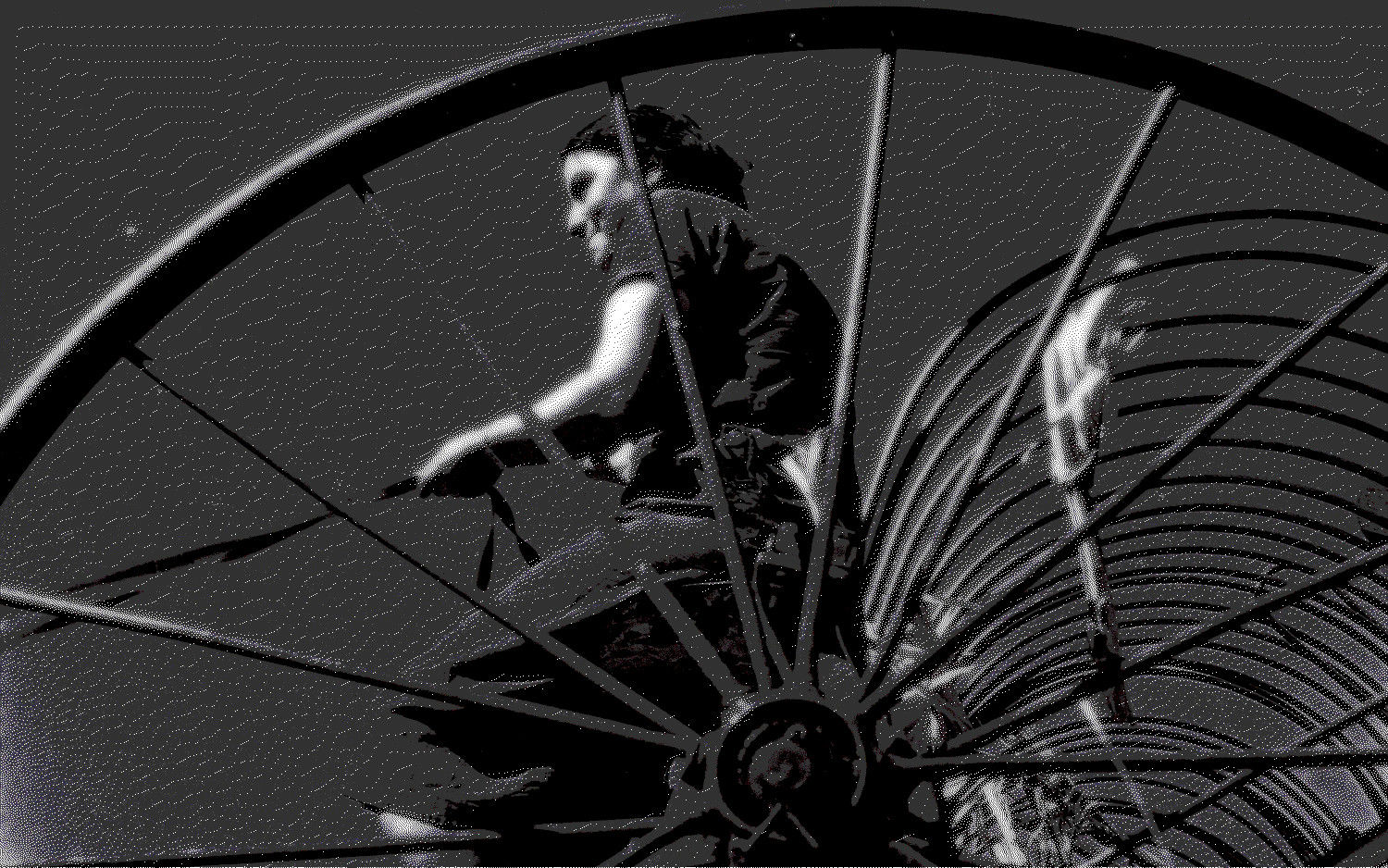
Boker Ba L'Avodah; image colorized and modified by the author, obtained from Wikimedia Commons, “Rivka Driving a Hay Rake, Kibbutz Maabarot”, in the public domain.
In this episode, sorrows in Kotsk and repairing an old haggada in The Eretz.
The Eternal Jew’s Tale
A Pesakh Montage, The Crystal Haggadah
Seders in Kotsk and Kibbutz Na’an
Khassidic Seder, Kotsk, 1838 CE
Where is the joy in our season of joy, and where is the freedom from Pharaoh’s whip? A crumb of khametz* beneath a rug and a handful hidden within our soul. And where is the joy in a khassid’s** prayer, since who can sing with a spirit that’s free? Reb Mendel, Reb Mendel be merciful to us. Who has money for a shank of lamb? Who has money for apples and wine? Who has money for raisins and nuts? Why then, Rebbe, do you beat your fist, demanding we must feed the poor, when we are the poor. Who will feed us?
* leavened foods, forbidden on Pesakh;
** roughly, a follower of a charismatic rebbe, generally, deeply observant and mystical
Who is so wise he can memorize the whole tractate of Pesakhim?* And who even has the time to read chapter ten on the seder’s laws? Who even has the energy to go to the baet midrash at night to hear the scholars argue texts? Rebbe, we tremble like fools afraid to come to your table on Pesakh night.
* Talmud tractate on Pesakh
Come seder night, what can we do? When a lion roars, who will not run? When the rebbe calls, who will not come?
Each of us brings an offering:
Some roasted beets, some stuffed eggs, boiled cabbage, an onion pie, baked carrots, potato fry, some wild mushrooms baked in schmaltz.*
* rendered chicken fat
And somehow, from somewhere or someone unknown, the rebbe gets wine, kharoset,* roast lamb. Who could argue if Pharaoh’s woes deserved pity or eternal scorn with the sweet savor of lamb in the air?
* a sweet relish made from fruits, nuts, and spices
The meal complete, the children run to greet Elijah at the door.
Just then, a knock knock knock rings out. Some of the children yelp in fear. The little ones shout, ‘Elijah’s here!’ The older kids are sure it’s a prank organized by the rebbe himself. Loud and firm the rebbe shouts,
“Children! Stay away from the door!”
And still the teens think it’s a prank. Knock knock knock. The rebbe gets up, flanked by two husky, no-nonsense men. One of them grips a knife in his hand. Quickly the women gather the children, while some men, fast and quiet-like, check the back door. Is it safe out there? At the front, the heavies, each at a side of the door, are backed against the wall. They nod and the rebbe opens up.
For a long moment, yea, very long, the rebbe looks out into the dark. He seems to be talking, but none understand, then slowly he pulls the door back shut, returns to the table, begins Hallel.
One of his khassids* interupts:
* devoted followers
“Rebbe, you forgot *Eliyahu haNavi,*”
*-* song about Elijah
but Reb Mendel continues, raising his voice,
“*Halleluya, hallelu avday Adonai…*”
*-* first line of psalm 113
then stops.
“Moishie, you have a voice. Complete the seder.”
And he walks out.
Menakhem never led us again. Gone, living withdrawn in a hut, disavowing his khassidic crown. Woe to us. Woe to the world. We can hear Shekhina’s voice no more.
Kibbutz Na’an Seder in the Eretz, 1950 CE
A new dawn in a new spring and a fresh breeze in this ancient vale. Shoots of barley, oats, and wheat; vines of grapes and cucumbers. The palm fronds rattle, their bunches of dates sway as the palms sway in the breeze. A new dawn in a new day. This new Pesakh in this ancient vale.
In the kitchen a muscular woman grinds wheat; others mix dough and bake it fast, fresh matzah for the seder tonight. From the dining hall some of the men are carrying tables, dishes, and chairs out to the open meeting place, banked by orange and banana groves. A watch tower is up on the rise, pasture and pens downwind, east. In the shed and meeting place children work, setting tables, cleaning pans, learning recipes, feeding chicks, watching the men hammer and saw. Teenage boys and girls at work breaking down guns and cleaning them, and taking turns in the tower watch.
Two of the elders off in a shed are piecing together an old haggadah —
broken spine and torn leaves, missing pages and worn out beliefs —
rewriting the text for this new age. The traditional writings never speak of Moshe, who led the Exodus. This text also removes the name of God.
“Now let us only tell of things that we can verify. And let our questions be relevant to the new history we will create. And the evil son and the wise son. let us re-think who they’ve been.”
Sun sets. The seder begins. Few words, a few prayers, simple food, senses alert. Once it was Moab, now fedayeen. Early to bed. The night is short. Tomorrow will be another renewing day.
~~~~~~~~~~
In the next episode we begin to look deeper into the seven seders we glanced at in preceding episodes. This deeper look is part of the “midrashbase” of the Crystal Haggada. It is open to expansion, as is every aspect of this new haggada.
Related Topics
Related Posts