The Etrog, the Willow, and My Mother’s Legacy
Imagine a luminous scene—a levaya, a funeral, for a radiant soul. The body, once the vessel of a vibrant life, is laid to rest in a serene cemetery beneath towering Northwest conifers, wrapped in green hug, tended with care. It is early fall, one of the last sunlit afternoons in a small town outside Seattle.
The awning of fir and spruce trees formed a shelter for those who came, gathering them close. The Chabad rabbi began the levaya with words of consolation, honoring a grand soul passing into the next world. A Reform cantor and his partner sang a Yiddish melody requested long ago—woven with whispers of childhood and tradition one never forgets. Grandchildren spoke with fierce devotion, giving voice to love that will accompany them for eternity. Friends of every kind stood shoulder to shoulder.
At my mother’s funeral, I was struck by the extraordinary diversity of Jews who gathered to honor her life: the deeply observant, the secular, the traditional, the questioning, and those who rarely step inside a synagogue. Non-Jewish friends and neighbors joined too, their presence expanding the embrace. I was told this had never happened before there—different communities merging for one funeral. Local politics normally got in the way. But not then. Not at my mother’s levaya.
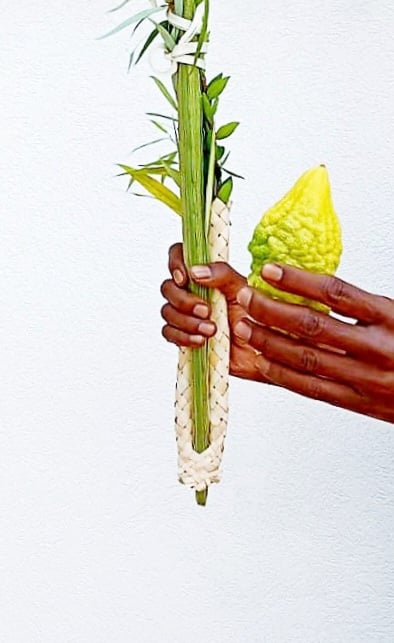
It reminded me of Sukkot, and of the Midrash that speaks of the Arba Minim, the Four Species. Each plant symbolizes a type of Jew:
- The etrog, with both taste and fragrance, represents one who studies Torah and fulfills mitzvot.
- The lulav, with taste but no fragrance, one who studies Torah but does not act.
- The hadas, the myrtle, with fragrance but no taste, one who performs mitzvot without deep study.
- And the aravah, the willow, with neither taste nor fragrance, one who may not yet engage in study or mitzvot—yet who still belongs.
The mitzvah of Sukkot is fulfilled only when these four species are bound together. None can stand alone. Only then can we make use of them, shake them, pray with them.
That was one of my mother’s biggest gifts: She wove people together in love, gathering voices and souls as naturally as the lulav binds the Four Species. Jews of every background, and friends beyond our faith, came together, forming a living bundle that reflected the beauty of diversity and difference.
At my mother’s levaya, differences did not cancel each other; they amplified the love. Now more than ever we need that kind of love. Unique, but one, individual yet collective, free, yet bound in blessings.
Just like the Arba Minim, the four species of Sukkot, and just like my mother’s love.
Dedicated l’iluy nishamat Beverly Wolfers, Pesha bat Pesach Leib and Necha