
The European Message and the Vanishing Eco-Political Vote in Israel
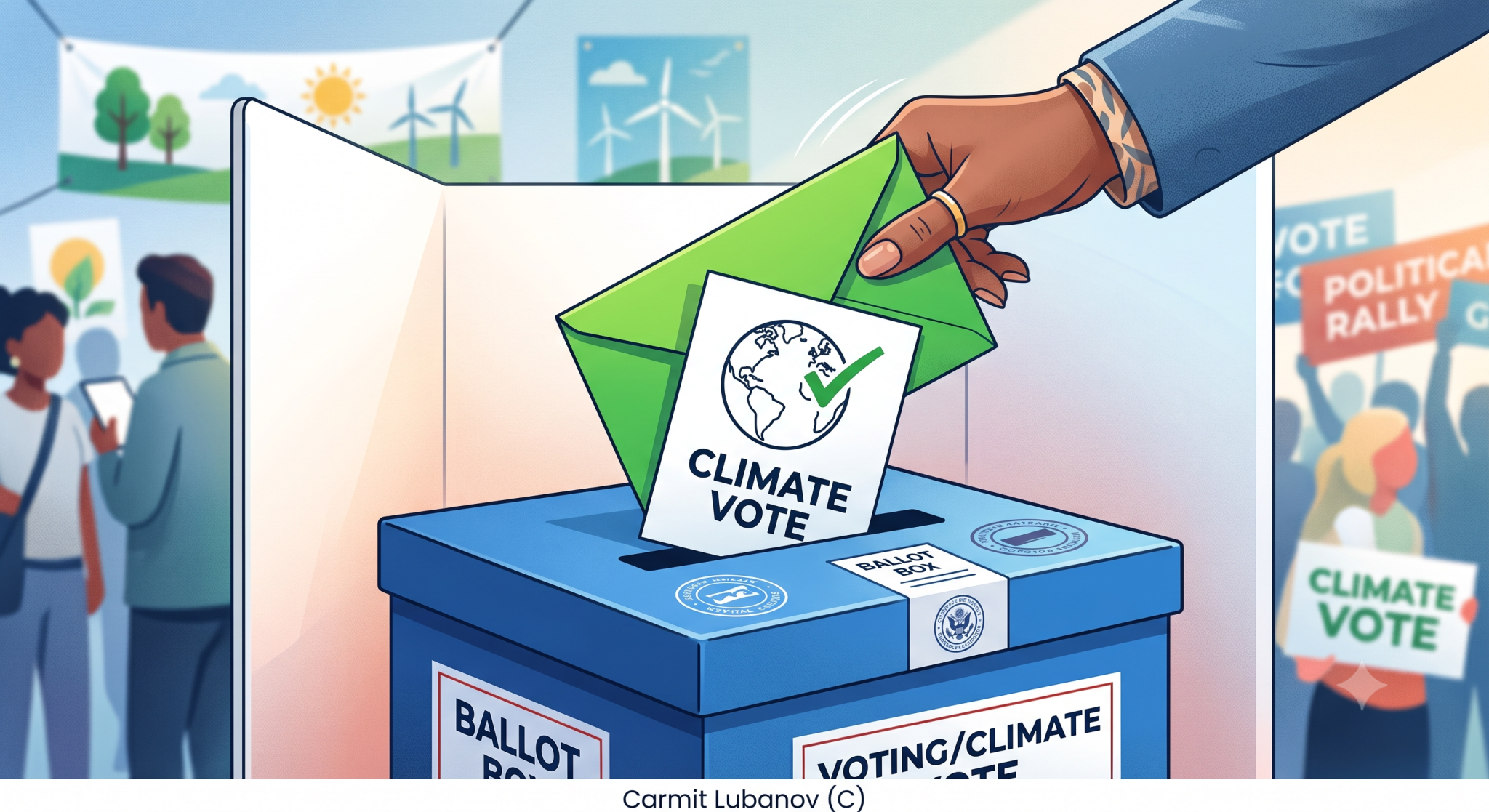
The recent political reshuffling in Israel delivered a quiet yet telling message: veteran advocates who connected environmental justice with peace and social equity have been pushed to the unrealistic margins of party lists. Figures whose public track records bridge environmental stewardship and political courage— as former Meretz MK Mossi Raz—found themselves sidelined.
This is not a coincidence; it is a symptom of a deep-seated political misconception. In Israel, environmental policy has long been treated as a luxury item—a soft, non-essential topic reserved for quiet times. Over the years, the Ministry of Environmental Protection has frequently been viewed as a minor political bargaining chip. In recent political cycles, this trend hit a new low, with the ministry’s leadership guided by narrow sectoral interests and political patronage rather than long-term socio-environmental goals.
However, viewing environmental protection as an ideological privilege of the affluent or the politically connected is a critical strategic error. A genuinely impactful green agenda is not meant to serve narrow interests; it must function as a tool to bridge socioeconomic divides, uphold human rights, and build national resilience. To rebuild the weight of the “green vote” in Israel, civil society and policymakers must move beyond past hesitations and adopt a clear doctrine of Climate Realism.
The European Mirror: Mainstreaming, Backlash, and Hard Realities
To understand Israel’s trajectory, one must look at Europe, where the political weight of the green agenda is undergoing a major transformation.
- Western & Northern Europe: Once the undisputed stronghold of Green parties—from Germany’s historic Bündnis 90/Die Grünen to Scandinavia—the dedicated “Green vote” is experiencing electoral friction. In the 2024 European Parliament elections, the Greens/EFA group lost roughly a third of its seats, dropping from 71 to 53. This shift was not caused by a denial of climate change, but by two distinct factors: the absorption of green policies into mainstream platforms, and a severe economic backlash against the immediate costs of the energy transition.
- Eastern Europe: In contrast, Eastern European nations (such as Poland, Hungary, and the Baltic states) have historically maintained low support for single-issue Green parties. Here, public discourse has always prioritized “hard security,” rapid economic growth, and energy independence—especially in light of geopolitical tensions with Russia.
- The Takeaway: Across Europe, environmental issues only maintain long-term political traction when they are framed through economic feasibility, energy security, and social stability—not purely through abstract planetary idealism.
The Israeli Paradox: Hard Security Survival vs. Socio-Environmental Quality of Life
In Israel, the overwhelming focus on hard security survival—amplified by ongoing conflict, the heavy burden of military reserve service, deep social schisms, and the sidelined debate over a two-state solution—reduces state policy to basic physical protection. Under this narrow security umbrella, governments concern themselves strictly with physical defense, while entirely neglecting the quality of life, environmental safety, and long-term well-being of citizens. Yet, this division between “hard security” and “socio-environmental health” is entirely artificial. The data demonstrates that climate change and environmental degradation directly exacerbate social inequalities and threaten physical safety:
- Accelerated Warming: According to the Israel Meteorological Service (IMS), Israel has warmed by approximately 4°C over the past 30 years—nearly double the global average rate.
- Extreme Heat & Vulnerability: Climate models project that by 2050, central Israel will experience up to 40 to 50 days per year exceeding 35°C. Urban heat islands disproportionately affect low-income neighborhoods and peripheral communities, widening the socioeconomic divide.
- Resource Vulnerability: Israel relies on coastal desalination plants for over 85% of its domestic municipal water. These critical assets operate under constant threat from both marine pollution and security escalations.
Filling the Vacuum: The Imperative of Climate Realism.
Historically, the mainstream Israeli environmental movement stumbled not because it was too political, but because it was not political enough. For decades, most environmental NGOs intentionally avoided core political issues—such as environmental rights violations across the Green Line, human rights, and the broader Israeli-Palestinian conflict—seeking comfort in broad, depoliticized consensus.
Only a few political figures and unique NGOs (such as the Association for Environmental Justice in Israel) refused to disconnect environmental degradation from political reality and human rights. As those few political champions are sidelined from party rosters, a political vacuum has emerged. Climate Realism fills this vacuum with a sober, strategic framework that bridges environmental rights, regional reality, and national resilience:
- Relinking the Green Vote to Strategic Reality: True environmental protection cannot ignore political boundaries or resource equity. Addressing environmental hazards across the Green Line, shared aquifers, and regional pollution is not an abstract ideal—it is an immediate necessity for public health and safety on both sides.
- Socio-Environmental Equity as Internal Security: Environmental justice is social justice. Reducing urban heat, expanding green infrastructure in peripheral towns, and protecting vulnerable populations from climate hazards directly alleviate the physical and financial burdens on working families.
- Regional Pragmatism: Cross-border cooperation on energy, solar power, and water management with neighboring states and Mediterranean partners (Greece, Cyprus, Malta) should not be framed as symbolic gestures. It is a pragmatic, self-interested requirement to secure vital resources in a shared, arid ecosystem.
Conclusion: Reclaiming the Power of the Green Vote
The pushing aside of environmental activists in Israeli politics is a call to action. It exposes a broken paradigm that forces citizens to choose between hard security survival today and living conditions tomorrow.
Socio-environmental sustainability is not a luxury for quiet times—it is the bedrock of long-term social cohesion, regional stability, and national survival. By shifting from historic depoliticization to a clear stance of Climate Realism, the green vote in Israel can reclaim its political weight—asserting that true security encompasses not only physical defense, but the fundamental right to a viable, equitable, and sustainable future.