
The Eurovision Audience the New York Times Couldn’t See
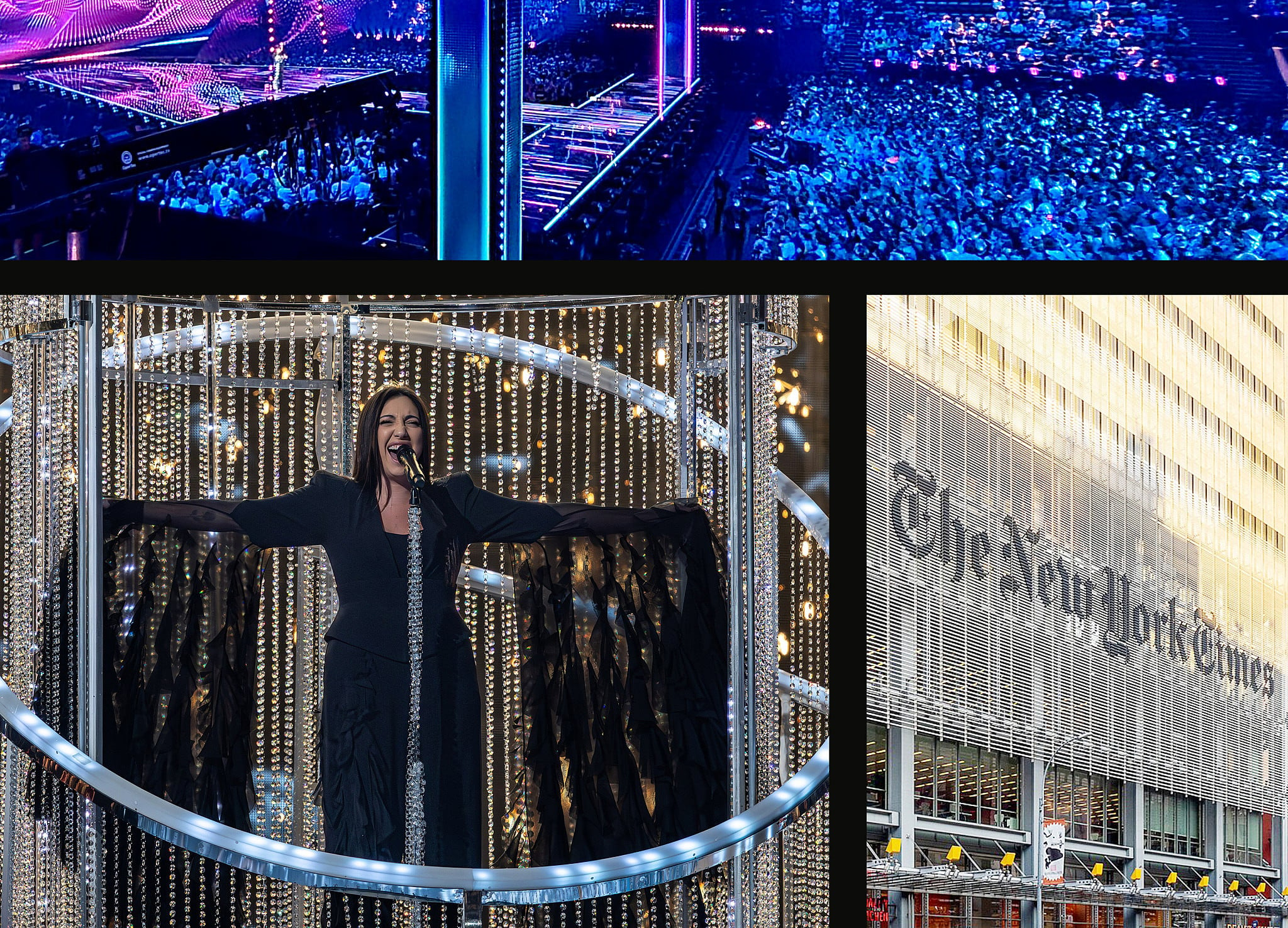
Spain gave Israel 33 percent of its public vote at Eurovision 2025, in a country whose public opinion is deeply hostile to the Israeli government. The New York Times investigation published on May 11 treats this result as suspicious enough to require explanation, and offers one: a coordinated Israeli government influence campaign.
The explanation only works if you accept something the investigation never quite says out loud, that the audience is incapable of holding more than one thought at once, that its vote must collapse into its stated political opinions, and that any result which fails to do so is evidence of foreign manipulation rather than of an audience the investigation refused to imagine.
The piece is meticulous about budgets, bureaucracies, and meeting minutes. It documents real things, the foreign ministry’s advertising spend, the prime minister’s social media graphics, the diplomatic pressure on European broadcasters, the contortions of Eurovision’s governing body trying to avoid an internal vote. These are genuine findings.
But the analysis that surrounds those findings rests on a particular theory of what audiences are and what voting is. A vote in a song contest, the investigation assumes, is a political instrument. A person who opposes Israeli government policy should, as a matter of course, also vote against the Israeli singer. If such an audience nevertheless votes for her, the explanation must be technological, financial, or coordinated. Not human.
A Eurovision audience is not a polling sample. A poll measures how a sample of citizens answers a question about government policy. A Eurovision vote asks no question at all. It is a request to choose a song. Many viewers may oppose Benjamin Netanyahu’s government while still rejecting the idea that a young singer should serve as its stand-in in a moral referendum.
The audience that voted for Yuval Raphael was responding to a specific person with a specific story. A young woman who survived the October 7 Hamas massacre by hiding for hours beneath the bodies of murdered festivalgoers at the Nova music festival. A young woman who, nineteen months later, stood on an international stage and performed a song shaped by what she had lived through. The investigation never engages with this. It treats Raphael as a name attached to advertising spending and voting data. The possibility that a European viewer might respond to her story directly, without being instructed to do so by a government campaign, does not appear in the analysis at all.
Eurovision audiences have long responded to biography as much as performance. The victories of Dana International, Conchita Wurst, and Kalush Orchestra were all inseparable from the symbolic narratives surrounding them. Raphael’s case was not an anomaly requiring a special explanatory model. The explanation sitting in plain sight, which a reasonable reader would consider within seconds, is simply absent.
The strongest evidence for that absence is internal to the New York Times itself. On May 17, 2025, one of the reporters credited on the new investigation published a separate article titled “Israel’s Entrant Survived the Hamas Attacks of Oct. 7.” It described how Raphael survived by hiding for hours inside a roadside shelter. The article ran the day before the Eurovision final at which she would come second, carried, as the new investigation itself notes, by the popular vote.
The 2026 investigation, built around explaining that vote, does not mention October 7. It does not mention Nova. It does not mention the shelter. It does not link to the earlier article, despite linking repeatedly to other New York Times coverage throughout the piece. The woman whose biography the paper itself reported a year earlier has effectively disappeared from the analysis of her own result. This was not missing information. It was information the investigation treated as analytically irrelevant.
A central quantitative claim in the investigation is that in some countries only a few hundred repeat voters could have tipped the popular vote. The claim is arithmetically true and rhetorically misleading. It is true of every contestant in the competition. If a few hundred repeat voters in favor of Estonia would have changed Estonia’s result in Spain, no one would write an investigation about it. A system in which each viewer can vote up to twenty times, and in which only a small fraction of the viewing audience bothers to vote, is by definition a system in which relatively small numbers move outcomes. To present this as evidence for suspicion about the Israeli campaign is to confuse a description of the system with proof of manipulation.
By May 2025, audiences had been exposed to organized campaigns against Israel’s participation for more than a year. More than seventy former Eurovision contestants had signed an open letter demanding Israel’s exclusion, including past winners. Public broadcasters from several countries, among them Spain, Iceland, and Slovenia, were openly calling for debate on Israel’s removal. Thousands of musicians and industry professionals across Europe had signed petitions to the same effect. None of this was hidden. Much of it was reported by the New York Times itself. Yet none of these campaigns appears in the investigation as a measurable form of influence on the audience. Israel’s advertising enters the analysis as a force acting on voters. The campaigns against Israel’s participation enter as background.
The investigation set out to explain how audiences were influenced. What it ultimately revealed was something else: a profound difficulty imagining that audiences might already have had reasons of their own. The biographies of the singers, like the inner lives of the people who voted for them, do not quite exist in the eyes of the investigation. Raphael and the Spanish viewer who picked up a phone on a Saturday night are reduced to the same thing: a vector that should have pointed elsewhere.