Stand for Jewish life. Fight antisemitism.
The Fall of Orbán: What comes next?
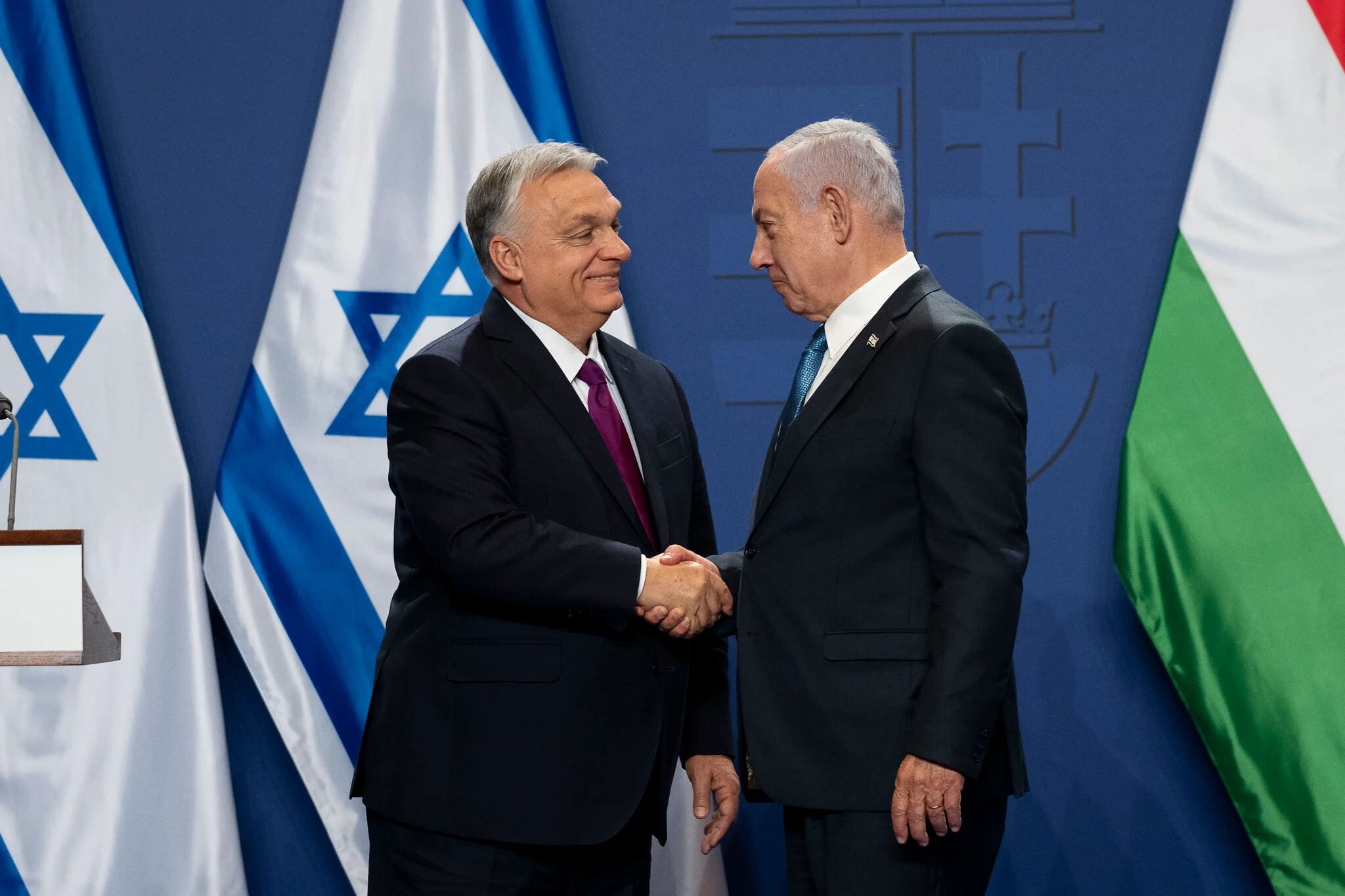
Hungarian Prime Minister Viktor Orban, left, and Prime Minister Benjamin Netanyahu shake hands after a press statement at the Carmelite Monastery in the Buda Castle in Budapest, Hungary, April 3, 2025. (AP/Denes Erdos)
The parliamentary elections in Hungary on April 12, 2026, have done more than just end sixteen years of illiberal rule; they have dismantled a political structure that was as unique as it was unsettling within the European Union. As Péter Magyar and his Tisza party celebrate a landslide victory, a palpable sigh of relief echoes across the EU. But for the Jewish world and the State of Israel, the end of the Orbán era also raises a complex set of questions.
The Orbán Paradox
In many ways, Viktor Orbán presented himself as a paradox. In the streets of Budapest, Jewish life flourished in a state of physical security that is now tragically rare in other Western European capitals. Yet this safety was wallpapered with state-sponsored campaigns against George Soros that utilized antisemitic tropes straight out of a 1930s playbook. It was a regime that claimed to protect Jewish citizens while simultaneously flirting with historical revisionism that sought to sanitize Hungary’s own role in the Holocaust.
This contradiction was even sharper on the global stage. Israel viewed Orbán as an “iron shield” in the European Union, a leader willing to wield his veto power to block one-sided, anti-Israel resolutions when everyone else fell in line. But while acting as Israel’s ally in the EU, Orbán also served as the primary bridgehead for Vladimir Putin’s interests in Europe. The same leader who promised to stand with Israel was cozying up to the very autocrat in Moscow whose strategic partnership with Iran and its proxies constitutes one of the greatest threats to the Jewish state.
False Friend?
The pragmatic defense of Israel’s alliance with Orbán has usually rested on a simple, albeit cynical, premise: in a hostile international arena, Israel cannot afford to turn away a willing ally, regardless of its domestic democratic shortcomings. But this transactional logic collapses under the weight of global geopolitics. The fatal flaw in embracing Viktor Orbán as a “pro-Israel” strongman is that his ultimate geopolitical loyalty has never been to Jerusalem, nor to democratic values. His primary allegiance has consistently been to Vladimir Putin. It is here that the paradox dissolves into outright contradiction. You cannot credibly claim to be the ultimate defender of the Jewish state in the halls of the EU while simultaneously acting as the premier European enabler for the Kremlin.
For years, many Israeli policymakers chose to compartmentalize this, treating Orbán’s relationship with Moscow as a separate, localized European issue that had no bearing on his support for Israel. But that compartmentalization has always been a dangerous strategic liability. Orbán’s pro-Israel stance was never a reflection of shared destiny; it was just a highly effective bargaining chip used to maintain Orbán’s balancing act between the EU and Putin.
The Moscow-Tehran Axis
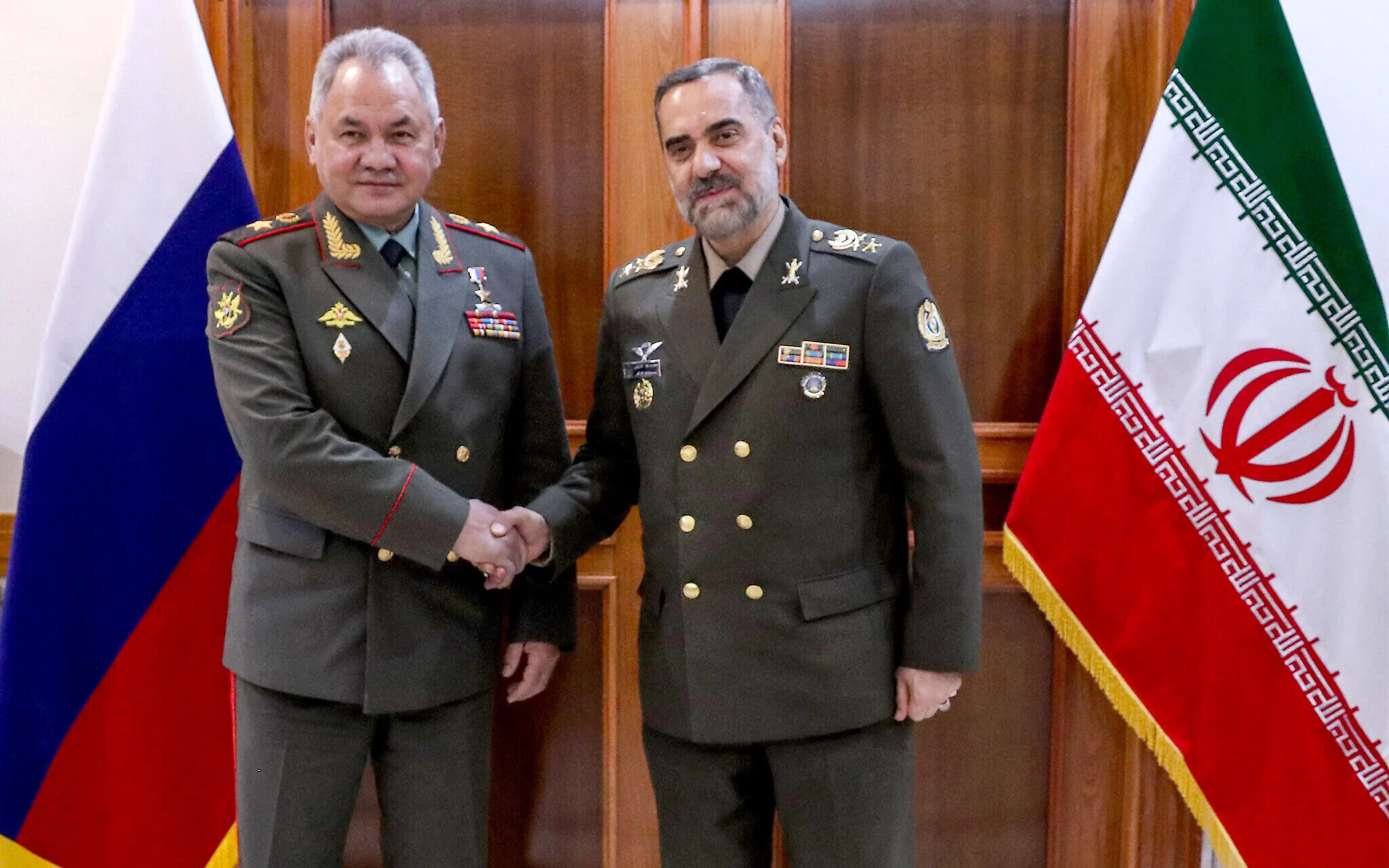
The road to Moscow runs directly through Tehran. The Kremlin, which Orbán so diligently courted and shielded from within European institutions, is locked into a deep strategic military partnership with the Islamic Republic of Iran. While Orbán was blocking anti-Israel resolutions in Brussels, his government was actively subverting Western unity against Russia, with reports even surfacing of Orbán’s foreign minister sharing internal EU information with Sergey Lavrov.
This is the same Russia that regularly hosts Hamas delegations with open arms, providing crucial diplomatic cover to the perpetrators of the worst massacre of Jews since the Holocaust. It is the same Russia that relies heavily on Iranian Shahed drones to terrorize Ukrainian cities, effectively funding and empowering the very regime that arms Hezbollah, funds Hamas, and orchestrates the “ring of fire” around Israel’s borders. By serving as Putin’s most reliable Trojan horse in the West, Orbán was indirectly bolstering the very axis of terror that seeks Israel’s annihilation.
You cannot genuinely stand against the existential threats facing the Jewish state while simultaneously sabotaging the West’s resistance against the autocrat who enables those very threats.
Cautious Optimism
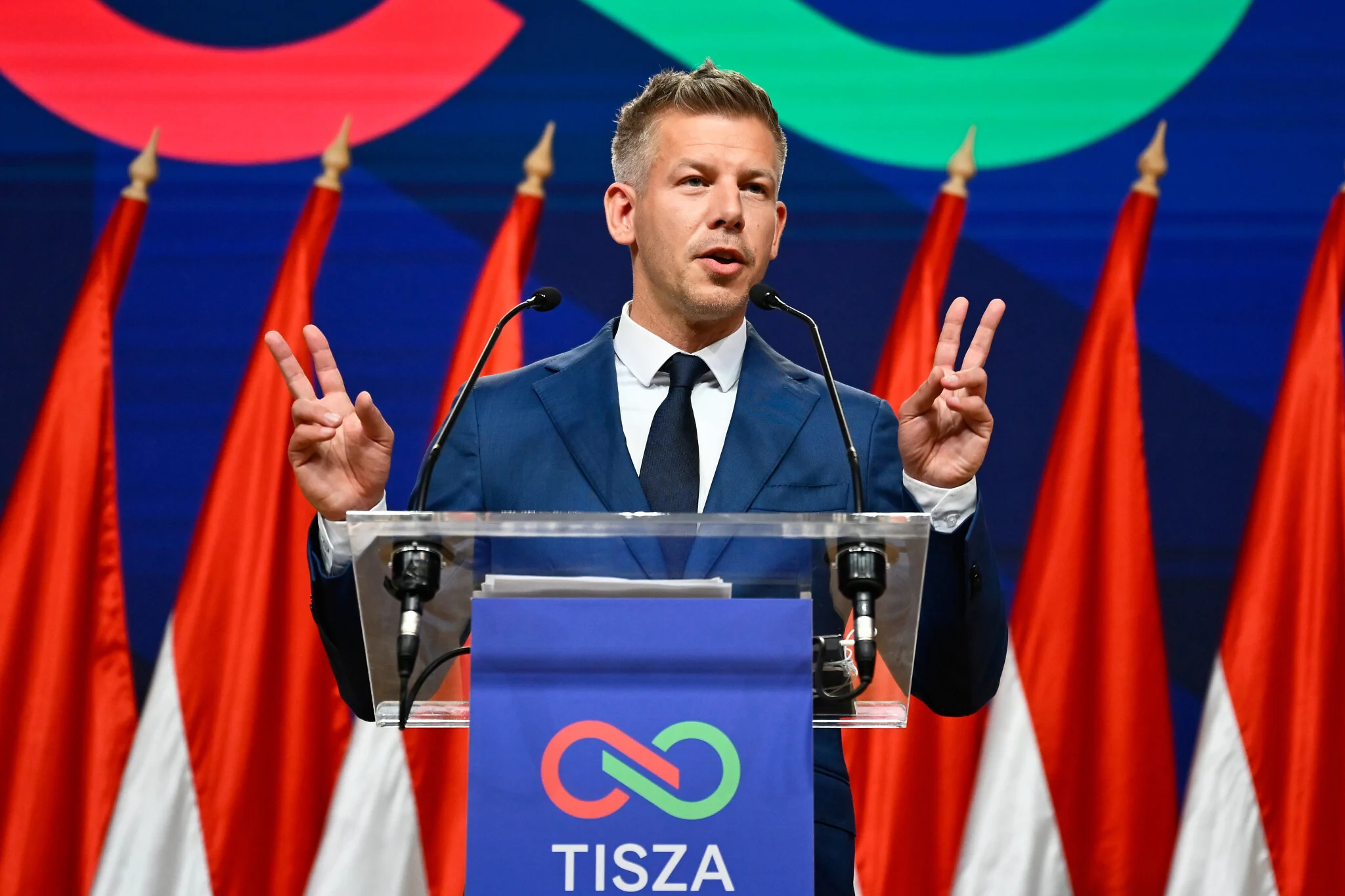
While the fall of the Orbán regime brings a necessary end to a toxic geopolitical charade, the new era under Péter Magyar calls for a nuanced, cautiously optimistic approach.
Magyar is not a guaranteed “dream partner,” and his first foreign policy signals already warrant a critical eye. His immediate announcement that Hungary will return to the jurisdiction of the International Criminal Court (ICC) signals a clear shift: Magyar will prioritize alignment with international institutions and EU consensus again. But those bodies too often harbor systemic, disproportionate biases against the Jewish state.
On the other hand, Magyar has explicitly promised zero tolerance for antisemitism and, more importantly, a return to the rule of law. A government that protects its Jewish community through strong, independent democratic institutions is fundamentally more reliable than one that protects them through the arbitrary goodwill of an autocrat. It is time to end state-sponsored, antisemitic-coded campaigns and historical revisionism.
Israel will undoubtedly face a more complex and potentially cooler diplomatic landscape in Europe without Orbán’s veto. But a stable, pro-European Hungary that shares fundamental democratic values is ultimately a much healthier and more sustainable foundation for relations. The era of Orbán’s hypocritical alliance with a pro-Russian autocrat is over. The new reality will be demanding, and Magyar’s adherence to flawed international institutions must be eyed skeptically; but for the first time in sixteen years, the relationship with Hungary has the chance to be honest.
Related Topics
Related Posts