Connecting Israel to the world through language, culture and technology
The Families Who Can: Two Jeeps, Four Stories, and a Promise
One day after arriving in Israel, I joined a volunteer jeep excursion through the Galilee. I came home with a small scorpion pin, stories I will never forget, and a promise to keep telling them.
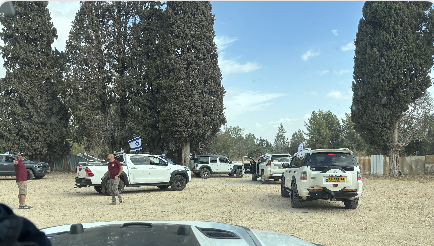
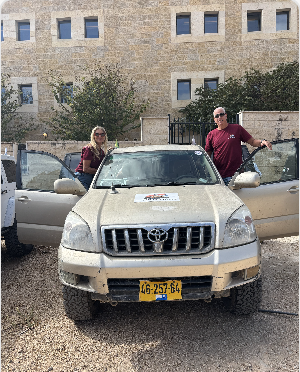
One day after landing in Israel, I received an invitation from two dear friends, Shlomi and Hagit, to join them for a day of volunteering.
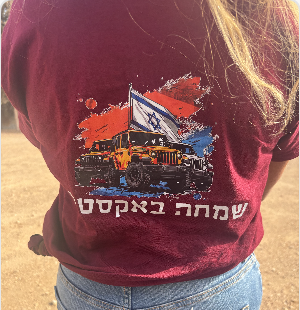
They were taking part in a jeep excursion organized by an Israeli nonprofit called Simcha B’Extreme, which brings bereaved families together for outdoor adventures and moments of connection.
Would I like to join them?
I said yes. Sometimes saying yes isn’t about knowing where you’re going, but simply trusting the people who asked, and hoping that somehow, your presence might offer a quiet comfort to someone who needed it.
I have known Shlomi and Hagit for many years, and I know that Shlomi carries his own story of loss, his younger brother, Ron Yehuda Z”L, was killed while serving in the IDF over three decades ago.
Knowing this made their involvement in the organization especially meaningful to me.
Still, I had little idea of what to expect.
I thought I was joining my friends for a meaningful day in nature, perhaps offering some companionship to families who had experienced unimaginable loss.
Instead, I returned from Birya Forest carrying four stories, a small scorpion pin, and a promise I intend to keep.
A journey that begins with another family’s loss
To understand the experience, you first need to know the story of the organization that made it possible.
Simcha means joy in Hebrew.
It is an unexpected word to find at the heart of an organization serving bereaved families.
But the name is no accident.
Simcha B’Extreme ״שִׂמְחָה בְּאֶקְסְטְרִים״ was established by Amichai and Ravit Ressler in memory of their eldest son, Dvir Chaim Ressler, a 21-year-old soldier in the Golani Brigade who was killed on October 7, 2023.
Dvir loved outdoor adventures, including jeep rides, motorcycles, and all-terrain vehicles. He also loved music, played the drums, and was remembered by those who knew him as a young man who brought people together and cared deeply about others.
His memorial biography describes someone who noticed when a friend was sad or struggling and made an effort to help.
That quality was evident in the circumstances that brought him to his military base on October 7.
Dvir had not been scheduled to remain at the base for the holiday. But when he saw that another soldier was homesick and wanted to be with his family, he offered to exchange shifts.
When the Hamas-led attack began, Dvir went from room to room to make sure his fellow soldiers had awakened and reached shelter.
Only after ensuring that the others were safe did he enter a protected room with two fellow soldiers.
When terrorists tried to force their way inside, Dvir held the door shut. An explosive device was eventually detonated at the entrance.
Dvir was killed. His two friends survived.
His parents lost their eldest son.
And in the aftermath of that loss, they made an extraordinary decision.
They would honor Dvir not only by remembering how he died, but by continuing something that had defined how he lived.
His joy.
His generosity.
His love of people and outdoor adventures.
Together with friends and volunteers, Amichai and Ravit established Simcha B’Extreme, bringing families affected by bereavement and terrorism into nature for shared experiences.
The outings combine jeep rides, time outdoors, food, conversation, and companionship.
A published account of one excursion described a convoy of 15 jeeps belonging to friends of the organization, with volunteers helping welcome the families and organize the day.
The number of vehicles may change from one outing to another. What remains constant is the idea behind them.
A family joins a jeep.
A volunteer welcomes them.
And for a few hours, people who may never have met before share a journey.
The Resslers have found a way to carry their son’s memory into the lives of others.
Dvir loved jeep adventures.
Today, jeep adventures are part of his legacy.
Families who can
There is a powerful distinction that Amichai Ressler coined and highlighted during the outing, which has stayed with me ever since.
Bereaved families are called mishpachot shakulot – מִשְׁפָּחוֹת שַׁכּוּלוֹת.
But here, I heard another expression:
Mishpachot sheyecholot – מִשְׁפָּחוֹת שֶׁיְּכוֹלוֹת
Families who can.
The words sound similar in Hebrew, but the change in meaning is profound.
Families who can still laugh.
Families who can still enjoy a beautiful day.
Families who can still tell stories, share memories, and find moments of happiness.
Families who can continue to love and give, even while living with an absence that will never disappear.
I found the expression deeply moving.
It does not suggest that grief can be overcome through a jeep ride or a pleasant afternoon.
Nor should it.
No excursion can undo the loss of a child, a sibling, a spouse, or a parent.
But it can create a space in which grief does not have to be the only experience of the day.
A space where families are not defined solely by what they have lost.
That, to me, is the beauty of this initiative.
The volunteers who carry stories of their own
Behind every jeep is a volunteer.
And behind some of those volunteers are stories of loss of their own.
My friend Shlomi is one of them.
His younger brother, Staff Sergeant Ron Yehuda, was born on January 28, 1969, in Moshav Tzur Moshe.
Ron enlisted in the IDF in August 1988 and, after completing training as a certified electrician, served as a helicopter electrician in Squadron 160.
According to his memorial plaque, he was appreciated by his commanders and loved by his fellow soldiers.
On January 4, 1990, Ron was killed in a road accident while traveling to his military base.
He was just twenty years old.
As Shlomi drove through the Galilee during this excursion, he passed the very spot on the road where Ron’s life was tragically ended, a poignant reminder that brought his personal memory directly into the landscape they traversed together.
He left behind his parents, Luba and Aryeh z”l, and his brother, Shlomi.
I have known this story for years, through my friendship with Shlomi and Hagit.
It was not something I learned for the first time during our excursion.
But being there with them gave that knowledge another dimension.
More than thirty-six years after losing his brother, Shlomi was participating in an initiative that brings moments of companionship and joy to other bereaved families.
I cannot presume to know what motivates him or what he feels during these outings.
But I know what his participation meant to me.
It reminded me that the people offering comfort may also be carrying their own grief.
The volunteers of Simcha B’Extreme give their time, their vehicles, and their energy to make these experiences possible. Some help with logistics and hospitality, while others drive the families along the trails.
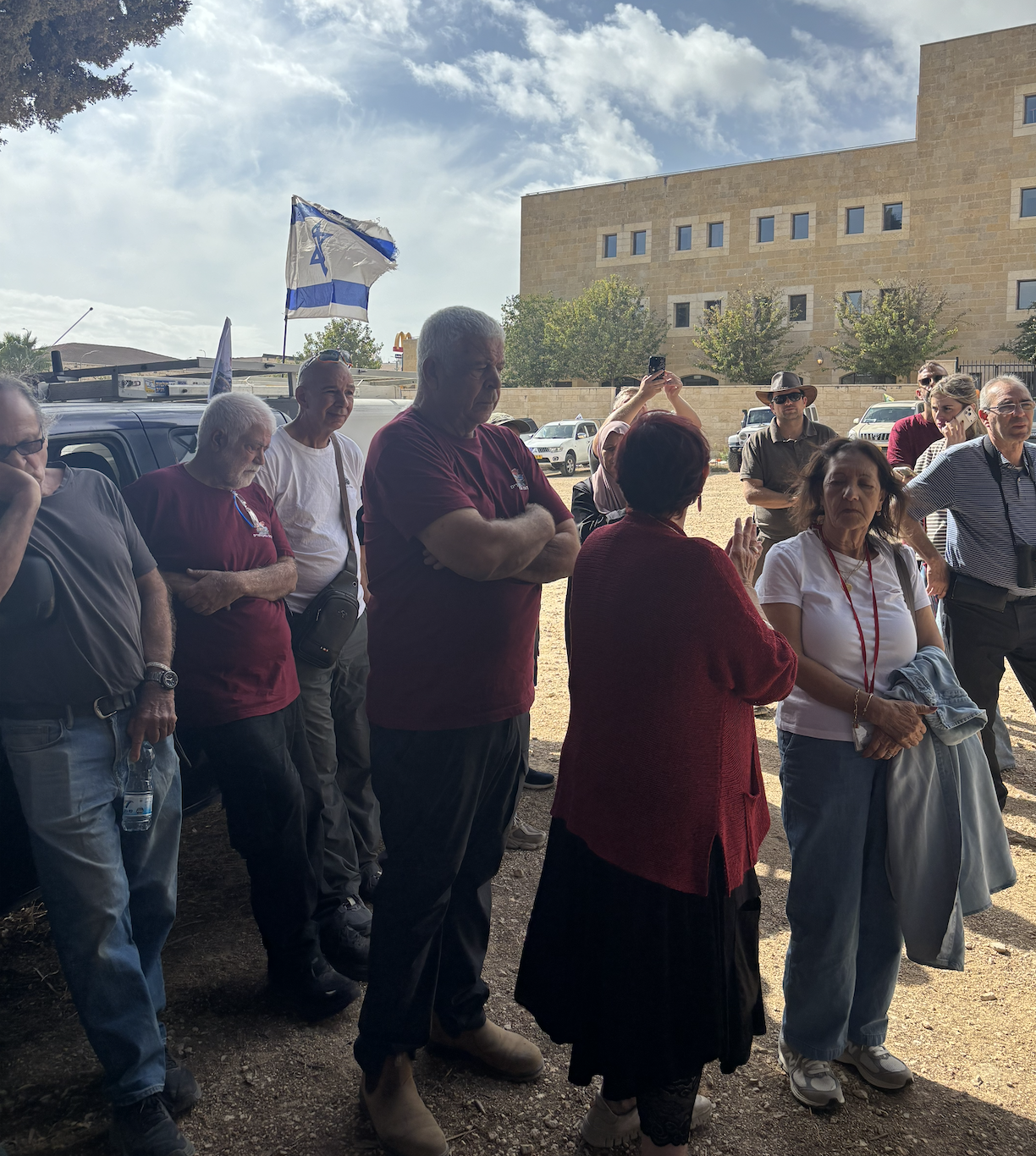
Many of these same volunteers are themselves bereaved, yet when the crisis struck on October 7, they did not hesitate for a moment: they grabbed their weapons and drove from every corner of the country to the south to protect others and save lives.
In a published account of an earlier outing, two volunteers were described as parents who had lost their child only months before joining the initiative.
They, too, had chosen to take part in helping others.
There is something profoundly human about that.
People do not need to have escaped grief to offer kindness.
Sometimes, they carry both.
Two jeeps, two parents
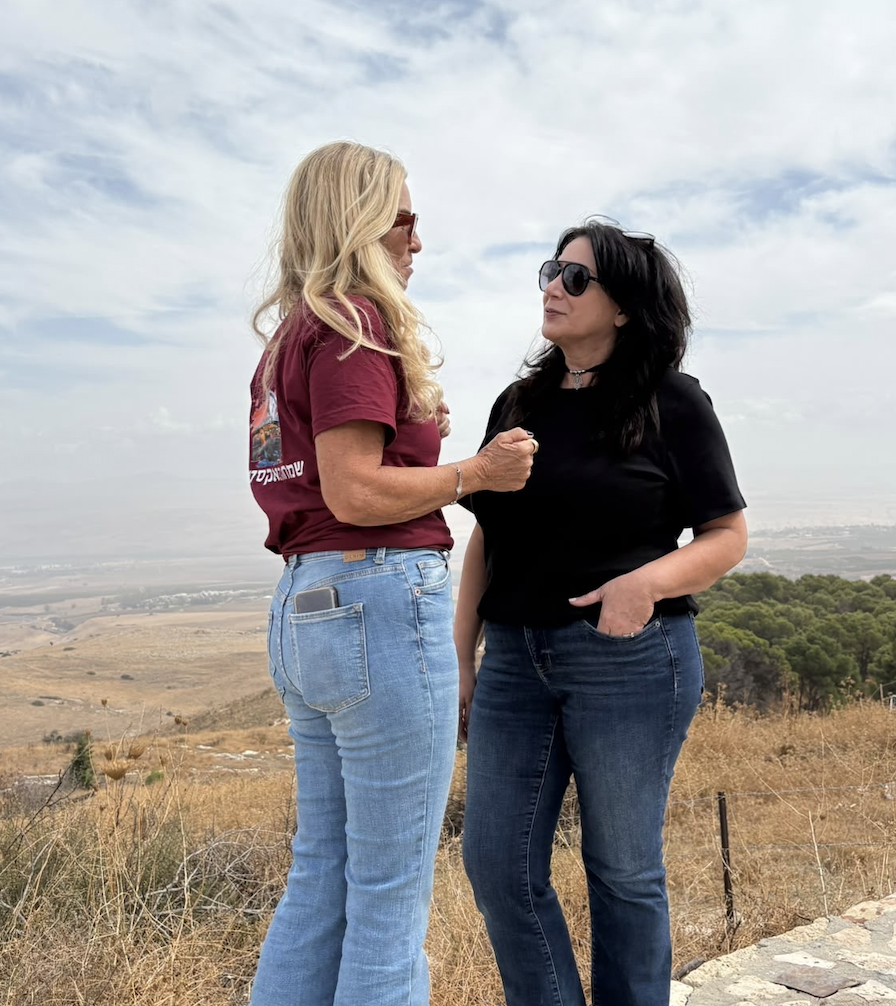
Our excursion took us through Birya Forest in the Upper Galilee.
There were winding dirt roads, tall trees, open views, and Israeli flags flying from the vehicles.
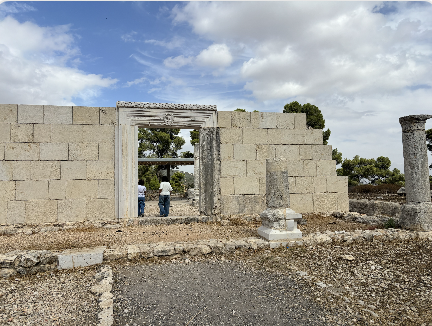 We also stopped near the ancient Navoraya (Nabretein – נבוריה) synagogue, a reminder of the long Jewish history of the Galilee.
Outside, the Galilee breeze rushed past the open windows; inside, the atmosphere immediately softened, making room for stories that defied easy words.
It was a beautiful setting.
But the most meaningful part of the day took place inside the jeeps.
I moved between two vehicles, and in each one I listened to a parent speak about a son.
There were no formal interviews.
No stage.
No microphones.
Just people sharing a journey.
And stories that deserved to be heard.
Itzik Gvili and the story of Rani
In one of the jeeps, I met Itzik Gvili, the father of Ran, known as Rani Gvili z”l.
Rani was a 24-year-old Israeli police officer serving in the Southern District.
On October 7, 2023, he was recovering from an injury and awaiting surgery.
Despite his condition, he went out to help defend communities in southern Israel during the Hamas-led attacks.
He was killed in battle near Kibbutz Alumim, and his body was taken into Gaza.
For 843 days, his family waited for his return.
On January 26, 2026, his remains were recovered and returned to Israel. He was the last hostage held in Gaza.
I had followed Rani’s story in the news.
Like so many people, I knew his name and the circumstances of his death.
But sitting in a jeep with his father was an entirely different experience.
I was no longer encountering the story through a headline or a television report.
I was listening to a father.
And that distinction matters.
Public memory often preserves the circumstances of a person’s death.
A family preserves the much larger story of a person’s life.
The years before the tragedy.
The relationships.
The everyday moments.
The person who existed long before the rest of the country learned their name.
Listening to Itzik reminded me that even when we think we know a story, there is always more to understand.
A name in the news is never just a name.
It belongs to someone who was loved.
In the other jeep, I met Esther Yahalomi, the mother of Ohad Yahalomi z”l.
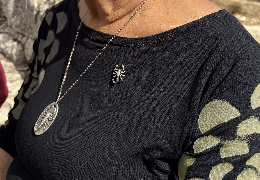
Ohad was 49 years old when he was abducted from his home in Kibbutz Nir Oz on October 7, 2023. He was abducted alongside his wife, Bat-Sheva, and their three children. While Bat-Sheva and their two daughters managed to escape, Ohad and their 12-year-old son, Eitan, were taken to Gaza. Eitan was released in November 2023 and reported being separated from his father shortly after arrival.
He was later confirmed to have been murdered in Hamas captivity.
He was a husband, a father, and a man whose life was closely connected to Israel’s natural landscapes.
Ohad worked for the Israel Nature and Parks Authority for approximately 19 years.
He served in several conservation roles, including as head of the southern region of the authority’s Green Patrol.
He knew the desert, its trails, its wildlife, and its fragile ecosystems.
He was also involved in studying scorpions.
Esther shared a touching and slightly humorous memory about his passion: as a boy, Ohad would frequently bring scorpions home, keeping them in jars to observe. One afternoon, a jar tumbled to the floor and shattered, sending scorpions scattering in every direction across the house. Through the chaos and laughter of that day, she learned to fondly appreciate the creature that her son held so dear.
The Israel Nature and Parks Authority remembers him not only as a dedicated conservation professional, but as a family man, educator, colleague, and friend.
As we traveled through the Galilee, I listened to Esther speak about her son.
I kept thinking about the difference between knowing the facts of a tragedy and listening to someone who knew the person before the tragedy.
Ohad was not only a hostage whose name appeared in the news.
He was a man who had devoted years of his life to protecting the natural world.
And then Esther gave me something.
A small scorpion pin, in memory of Ohad.
At first glance, it was a simple object.
But I knew that scorpions were connected to Ohad’s work and interests. The Israel Nature and Parks Authority has even published a photograph of him holding a field guide to Israeli scorpions.
Suddenly, the small pin carried a story I could share.
It could become the beginning of a conversation.
Someone might notice it and ask what it meant.
And I could tell them about Ohad.
About his love of nature.
About his work protecting Israel’s open spaces.
About the life he lived, rather than only the circumstances in which he died.
I promised Esther, and the people I met that day, that I would tell their stories.
That promise stayed with me long after the jeep ride ended.
And it is one of the reasons I am writing this article.
What listening can do
I have spent much of my professional life as an educator.
I believe in the power of language, stories, and human connection.
I encourage students to ask questions, listen carefully, and try to understand perspectives beyond their own.
Yet that day reminded me how much there is to learn outside a classroom.
Especially about listening.
I did not have answers for the parents I met.
I could not change what had happened to their sons.
I could not make their grief disappear.
And I did not need to pretend otherwise.
I could listen.
I could make room for their stories.
I could remember their names.
And I could carry what I learned into another conversation, another place, another community.
Perhaps that is something we can all do.
Not every act of remembrance requires a ceremony.
Sometimes it begins when someone tells a story and another person gives it their full attention.
Sometimes it begins with a photograph.
Sometimes with a conversation inside a jeep.
And sometimes with a small scorpion pin.
The kind of joy that makes room for grief
As the day continued, I kept returning to the name Simcha B’Extreme.
Joy.
It is a word we do not usually associate with bereavement.
But after spending the day with the families and volunteers, I began to understand why the Resslers had chosen it.
The organization does not promise to take away anyone’s pain.
It offers something more modest, and perhaps more realistic.
A day outdoors.
A shared meal.
A chance to meet people.
An opportunity to tell a story, or simply enjoy the ride.
A few hours in which laughter and sadness do not have to be opposites.
The volunteers are not there to fix anyone.
They are there to accompany them.
And there is something beautiful about an organization that understands the value of simply being together.
I thought about Dvir, whose love of outdoor adventures inspired the initiative.
I thought about Ron, whose brother had invited me to take part.
I thought about Rani and Ohad, whose fathers’ and mothers’ stories I had been privileged to hear.
Four lives, separated by years and circumstances, connected for me by one day in Birya Forest.
And I thought again about those two Hebrew words.
Mishpachot sheyecholot משפחות שיכולות.
Families who can.
Not because the weight of their loss has grown any lighter, or because their grief has ended.
But because they refuse to let grief erase their humanity, their memories, or their capacity for connection and hope.
A promise worth keeping
When I returned home, I thought about what I had expected from the day.
I had arrived in Israel just one day earlier.
I had accepted an invitation from friends.
I had joined a volunteer excursion.
And I had come home with something I had not anticipated.
A responsibility.
I wanted the stories I had heard to travel beyond the jeeps.
Beyond Birya Forest.
Beyond the people who had been there that day.
I will wear the scorpion pin Esther gave me.
When someone asks about it, I will tell them about Ohad Yahalomi and his love of nature.
I will tell them about Rani Gvili, who went out to defend others despite his injury.
I will tell them about Dvir Ressler, whose parents chose to honor their son through an organization dedicated to bringing joy and connection to others.
I am grateful to Shlomi and Hagit for inviting me, to the volunteers who made the outing possible.
I began the day thinking about what I might be able to give.
I ended it thinking about what I had been entrusted to carry.
Two jeeps. Four stories. One scorpion pin. And an enduring testament to families who can.
This is the promise I carry.
And one we must all continue to keep by sharing their light.
Help keep the journeys going
Simcha B’Extreme, established in memory of Dvir Chaim Ressler, brings bereaved families and families affected by terrorism together through outdoor experiences and human connection.
Its work depends on people willing to volunteer, support its activities, and help make these outings possible.
If this story moved you, I invite you to learn more about the organization and consider supporting its work.
Organization’s Instagram: https://www.instagram.com/simcha_bextrim/
Donation page: https://givechak.co.il/ExtremeJoy/form
A contribution can help support the organization’s mission of creating moments of joy, connection, and companionship for families living with loss.
And if you cannot donate, you can still help.
Share their story.
Tell someone about Dvir.
Remember Rani, Ohad, and Ron.
Sometimes, carrying a story forward is itself a meaningful act of giving.
Credit for all images: Orly Lavi Travish
Related Topics
Related Posts