
Foreign Policy Analyst | India, Israel & Middle East
The Fauda Reality: Hamas, Hezbollah and Europe’s Hidden Front
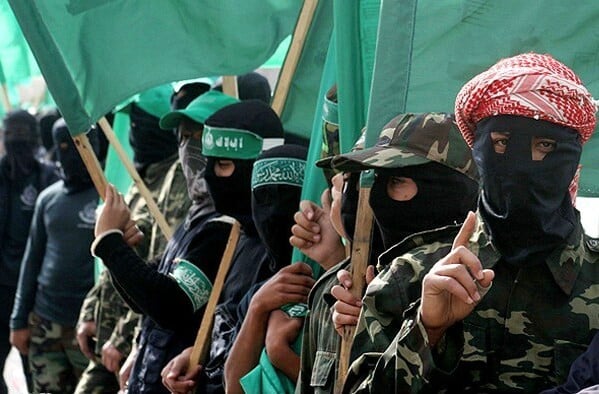
Palestinian militants parade during a military display in Gaza, November 12, 2011. Photo: Hadi Mohammad/Fars News Agency, via Wikimedia Commons, CC BY 4.0.
The fifth season of Fauda commences with a disturbing scenario. A Hamas operative related to the October 7 attacks flees Gaza and hides in Marseille, where Israeli counterterrorism officials discover a larger network planning another attack. Following the events of October 7, the season was revised to emphasize a security issue that transcends the Gaza battlefield. In the broader conflict, European cities have become increasingly significant spaces, where Hamas and Hezbollah affiliated networks can benefit from permissive political environments, diaspora communities, financial systems, and open borders to sustain their activities.
European counterterrorism investigations increasingly reveal that Hamas and Hezbollah have sought to build networks across the continent for financing, recruitment, radicalisation and operational planning. The threat is therefore no longer confined to Gaza, Lebanon or the wider Middle East, as Europe has become an important arena for terrorist financing and clandestine activity. The mobilisation of pro Hamas networks has further complicated the task of European governments in distinguishing legitimate political activism from activities that may facilitate or support terrorism. The persistence of these networks presents a broader intelligence challenge for Israel and its European partners, particularly as Hamas and Hezbollah seek to preserve their capabilities and establish the foundations for future attacks.
The European Network: Cells, Weapons Caches, and Operational Planning
The magnitude of Hamas’s European operations was gradually revealed through investigations in Germany, Denmark, and Austria. According to recent criminal trials, Hamas had been developing contingency infrastructure in Europe for years before to October 7, including weapons stockpiles that could be triggered for operations against Israeli and Jewish targets. According to German investigations, Hamas operatives kept caches in many European countries and then attempted to collect them as part of the October 7 preparations. In one instance, Ibrahim Elrassatmi was purportedly instructed by the Qassam Brigades to create an arms cache in Bulgaria in 2019, where he interred handguns, a Kalashnikov rifle, a suppressor, and ammo, thereafter transmitting images and coordinates to Hamas operatives. Similar attempts encompassed weapons depots in Denmark and Poland, suggesting that the network was not contrived after October 7, but rather the result of years of contingency planning overseen by senior Hamas members in Lebanon. These trends may reflect a substantial shift toward external operations as Hamas strives to make up for the loss of its capabilities in Gaza.
The threat became more immediate after a series of arrests across Europe. In October 2025, German authorities apprehended suspected Hamas operatives who were accused of obtaining firearms and ammunition for attacks against Israeli or Jewish institutions. They seized an AK 47, a Glock pistol, and several hundred rounds of ammunition. The investigation linked the accused to Hamas leadership and weaponry made in Scandinavia. Earlier investigations in Germany and Denmark have revealed similar attempts to recover weapons stockpiles and collaborate with organized criminal networks for terrorist reasons. Hence, by 2024 and 2025, European authorities were encountering a network that fused inactive infrastructure, overseas operations, and criminal facilitators rather than separate individuals functioning independently. The European Leadership Network has also identified dozens of Hamas-affiliated individuals and organizations in Germany, the United Kingdom, Italy, Belgium, and the Netherlands, demonstrating how the movement has sought to maintain influence through ostensibly civilian and charitable structures.
Hezbollah’s presence in Europe provides another layer to the threat, since it supports procurement, logistics, and operational planning. European authorities in Spain, Germany, France and the United Kingdom found a network involved in procuring components for explosive drones meant for Hezbollah. In 2025, Spanish authorities arrested persons in Barcelona who were allegedly part of a Hezbollah logistics chain in charge of obtaining ingredients for the manufacturing of explosive UAVs.
The investigation followed prior arrests related to the fabrication of over a thousand drones and showed procurement activities involving companies and suppliers from all throughout Europe. In December 2025, British police brought charges against two British-Lebanese men for participating in terrorism training camps in Lebanon and being affiliated with Hezbollah. Additionally, one of the individuals was accused of assisting in the procurement of drone parts. The network’s importance extends beyond the individual arrests since it exposes how European commercial infrastructure may be used for military acquisition.
The utilization of legitimate companies, international supply chains, and front structures facilitates the acquisition of dual-use technologies by terrorist organizations, while simultaneously decreasing the visibility of their operations. In this regard, Hamas and Hezbollah have exhibited a broader strategy of using Europe not just as a political forum, but also as a logistical environment for developing personnel, equipment, cash, and operational capabilities.
France serves as an especially instructive illustration of the European network’s dependence on financial conduits that can sustain these operations for extended periods, in addition to the procurement of weapons and operational logistics. In February 2026, French police charged Khaled Al Shuli, Faysal Sellami, and Kamel Laifi with alleged terrorist financing and criminal affiliation with a terrorist organization. According to reports, the network allegedly channeled between €3 million and €5 million per year, with suspected payments totaling more than €30 million over a decade. The magnitude and duration of these transactions suggest that the purported finance system was not a one-time fundraising attempt, but rather a long-term network capable of moving significant sums. The case reportedly involved intermediary associations and financial conduits through which money collected in France was transferred outside the country before reaching organizations in Gaza associated with Hamas’s wider social infrastructure. From an intelligence standpoint, the example highlights how terrorist finance can occur through seemingly civilian entities while remaining geographically and organizationally away from Hamas’ military machinery.
The Funding Pipeline: Charities, Zakat, and Cryptocurrency
Hamas and Hezbollah’s European presence is supported by extensive financial networks that go far beyond traditional banks. Charitable organizations, zakat collections, informal money transfers, criminal enterprises, and cryptocurrency have all emerged as alternate methods for raising and moving monies across borders. After October 7, the magnitude of this issue became increasingly apparent to Hamas, as US Treasury assessments revealed that the organization may have received as much as $10 million per month through fictitious charitable entities in early 2024. In June 2025, the Treasury sanctioned five individuals and five charities suspected of soliciting funds for Hamas’ military branch under the pretense of humanitarian assistance, including businesses based in Italy and the Netherlands. Consequently, European authorities have been confronted with a financial network that can exploit legitimate humanitarian activity while the ultimate destination of funds is kept several organizational steps away from Hamas’s military structure.
Italy is one of the most visible instances of how this infrastructure may operate on the ground. In December 2025, Italian police detained nine people suspected of directing around €7 million to Hamas-linked companies and seized more than €8 million in assets. The investigation, which encompassed Italy, the Netherlands, Austria, France, and the United Kingdom, reportedly revealed mechanisms for concealing and moving the proceeds, as well as fundraising through donations and community activities. The case is notable not only because of the money involved, but also because Israeli intelligence provided information to the inquiry, indicating how financial intelligence has become an essential component of Israeli-European counterterrorism collaboration.
The Union of Good, a Hamas-linked philanthropic network recognized by the US Treasury in 2008, reflects the broader European picture, demonstrating how the organization had already constructed a transnational fundraising architecture prior to October 7. European institutions have implemented their own enforcement measures against individuals and entities that are involved in financing Hamas, such as an EU sanctions regime that targets those who support or facilitate the organization.
Hezbollah has established a comprehensive European network that integrates terrorist financing and organized crime, thereby extending the financial vulnerabilities that Hamas has experienced. According to European investigations, the organization is implicated in the international trade of luxury goods, money laundering, and drug trafficking. In 2016, Operation Cedar led to the arrest of 16 Hezbollah operatives in France, Belgium, Germany, and Italy after investigators discovered a network laundering proceeds from international drug trafficking through luxury goods, with the operation moving up to €1 million per week at its peak. In addition to these illicit operations, Hezbollah has relied on charities, Islamic institutions, and individual contributors for fundraising, resulting in many avenues for resource generation and transfer.
Cover Operations: Restaurants, Community Centers, and the “Sham” Humanitarian Front
The financial networks outlined above also rely on physical venues for fundraising, mobilization, and interpersonal contact. In December 2025, the Palestinian restaurant ShakeShuka in Marylebone, London, garnered attention for displaying portraits of Dr. Hussam Abu Safiya, who has been accused by Israeli authorities of having ties to Hamas. The restaurant had previously been the subject of controversy after footage emerged of customers celebrating during an Iranian missile attack on Tel Aviv. Incidents of this nature do not by themselves prove that a business is an operational Hamas front; however, they demonstrate how restaurants and community spaces can serve as hubs of ideological activity and political mobilization.
The significance of these spaces is more apparent when they are compared to the documented financing structures of Hamas. It may be challenging to differentiate between ordinary community activity and legitimate enterprises, associations, and community centers from an intelligence perspective, as they can offer access to local networks, financial channels, and meeting spaces. In addition, businesses that are cash-intensive may generate opportunities for financial concealment, while community organizations may facilitate recruitment and mobilization. European counterterrorism agencies are therefore faced with the challenge of recognizing when legitimate commercial or humanitarian structures are intentionally exploited for fundraising, recruitment, logistical support, or operational coordination, while simultaneously not treating ordinary community activity as inherently suspicious.
Radicalization and Permissive Environment
The aforementioned financial and logistical networks are situated within a broader social context in which political sympathy and radicalization can give Hamas and Hezbollah an additional opportunity to maintain their influence. According to a study conducted by the Federal Criminal Police Office’s Radicalization Monitoring System in Germany, 45.1% of Muslims under the age of 40 surveyed exhibited Islamist attitudes, while antisemitic attitudes were four times more prevalent among young Muslims than in the general population. Since October 7, pro-Palestinian demonstrations have grown considerably across Europe, with protests in Italy and Spain growing more than sixfold compared to previous levels. In the Netherlands, the AIVD has assessed that Hamas-affiliated networks have been involved in the organization of demonstrations, as well as propaganda, lobbying, and fundraising activities. These trends do not equate pro-Palestinian activism with Hamas support, but they do highlight the broader climate in which extreme narratives can gain attention, perhaps facilitating recruitment and finance.
From an intelligence standpoint, this environment is noteworthy due to the mutual reinforcement that can occur between radicalization, political mobilization, and existing extremist networks. According to European security agencies, online propaganda, Islamist influencers, and radical networks can speed up the transition from ideological exposure to violent action, with Europol warning that the time between exposure to extremist content and violent activity has shortened. The mix of online radicalization, public mobilization, and established funding networks creates a situation in which Hamas and Hezbollah can exploit political concerns while remaining detached from direct operational operations. Consequently, the challenge for Israeli and European intelligence services is not merely the identification of active terrorist cells, but the identification of the broader social and ideological conditions that can attract recruits, sympathizers, funding, and operational space for these cells.
Israel’s response to the growing Hamas and Hezbollah infrastructure in Europe has become more reliant on close intelligence coordination with European security agencies. Mossad has shared intelligence with European and Western agencies to help identify operatives, weapons networks, and planned attacks, and former Mossad director Yossi Cohen has emphasized the agency’s long history of providing intelligence to help prevent attacks and save lives. Since October 7, this collaboration has become increasingly critical as European agencies contend with networks that span multiple jurisdictions in terms of personnel, financing, and logistics.
Israel has also attempted to disrupt threats before they reach operational status. Mossad has indicated that it is seeking to prevent assault plots against Israelis and Jews abroad, particularly those affiliated to Hamas and Hezbollah. In addition to intelligence operations, Israel has persisted in its efforts to encourage European governments to enhance their legal and financial measures against terrorist organizations. This includes a more rigorous examination of Hamas-affiliated charities and fundraising structures, as well as more aggressive action against Hezbollah. Germany has implemented numerous measures against organizations like BDS movement that are suspected of being associated with Hamas, which is indicative of a broader European trend toward treating terrorist financing and extremist infrastructure as security threats rather than merely political concerns.
The final component is public and diplomatic pressure. Israel has exposed weapons depots, finance networks, and planned assaults in Europe in an effort to show that Hezbollah and Hamas pose a threat to international security that goes beyond the Middle East. Thus, Israel’s strategy integrates intelligence sharing, disruption operations, and diplomatic pressure to deny Hamas and Hezbollah the European space necessary to finance, recruit, procure, and plan future operations.
Conclusion
While Fauda Season 5 may depict Hamas operatives plotting attacks from European cities, the intelligence record indicates that the underlying threat is becoming more tangible. Hamas and Hezbollah have established networks covering fundraising, logistics, recruitment, and operational planning, capitalizing on the openness of European societies and the gaps between national security systems. The most pressing issue from an intelligence aspect is not any particular cell or incident, but rather the wider ecosystem’s resilience and its capacity to regenerate in the event of individual network disruptions. Israel has responded with intelligence cooperation, counterterrorism operations, and diplomatic pressure, but limiting this threat would need continuous European action against terrorist financing, related networks, and radicalization. What has been discovered may represent merely a portion of the larger infrastructure. The next season of Fauda may be fiction, but the peril it depicts will stay real until Europe responds before the next onslaught, rather than after it occurs.
Related Posts