English Professor; Executive Director, Writing on the Wall
The Final Act: Isaiah’s Failed Theodicy
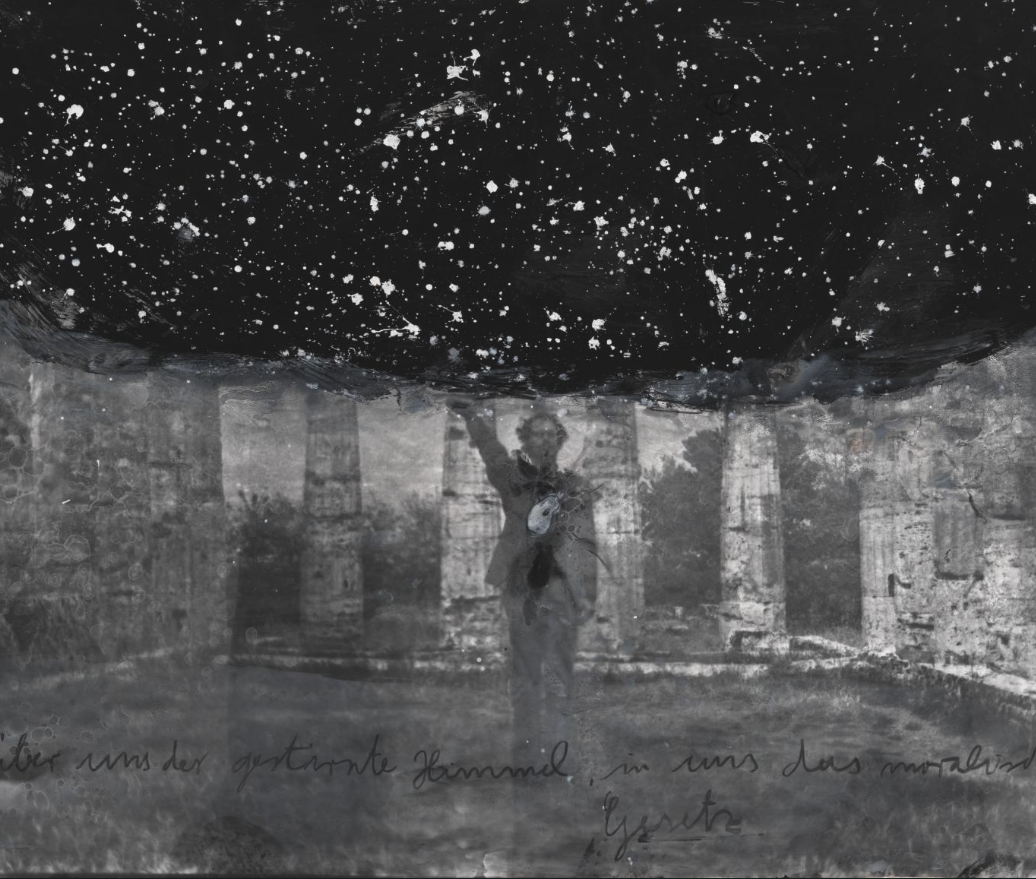
Anselm Kiefer, 'The Starry Heavens Above Us, and the Moral Law Within' (Wiki-Art)
Our seven-act drama, ‘From Catastrophe to Consolation,’ created by the Talmudic Rabbis, starring the prophet Isaiah, comes to an end.
At last, the long-awaited happy ending – or is it?
The philosopher and inventor of calculus Leibniz coined the word ‘theodicy’ – what the poet John Milton calls ‘justifying the ways of God to man.’ In his annoyingly optimistic work, Leibniz creates the happiest ending for humanity, but this closure depends on erasing of the experience of evil, and of human suffering. Leibniz might convince other philosophers, but for those of us who live in the (real) world, the ‘success’ of the theodicy reveals its failure.
Isaiah, the star of the show, is not afraid to fail, and in this, he succeeds.
In the previous episode, Isaiah presented the iMax film of the messianic age. Now it is Israel’s turn to speak, singing God’s praises, reveling in new raiments, clothed in Justice and Salvation. In this final vision, inside and outside, appearance and reality converge. Not only Israel, but the earth sprouts Justice, and Jerusalem, imagined as a torch, also blazes with Justice. Even the nations of the world, through the UN Secretary General (imagine), declare unanimously: ‘yes, the people of Israel have acted justly, their God has redeemed them with Justice.’
Two Distincts, Division None
In Act VI, Israel and God became one, each reflecting the other’s glory. Here, in Act VII, oppositions collapse into unity.
Isaiah presents Jerusalem as Cheftziba – literally, ‘my-desire-in-her – the translation capturing the fusion, in messianic times, of desirer and desired. The land, too, is caught up in this collapse of roles. Not simply possessed but espoused, Israel, in Robert Alter’s rendering is ‘bedded’ – not an object of desire but the place where desire rests. Gender distinctions also dissolve in this act: Jerusalem is both bride, adorned with jewelry, and groom, arrayed in splendor. In the messianic age, distinctions resolve into unity.
The final blurring, the last scene of our drama, is where divine and human time overlap. Back in history, God appears, not as the Infinite, the Eternal, or Lord of Hosts, but a bloody brawler returning from a fight in Botzrah. Isaiah depicts him as a marauding avenger, drunk on his own anger. His clothing – also a raiment of Justice – stained with the blood of His enemies.
Jewish history, always seen through a glass darkly, now appears cartoon-like in clarity: God dispensing with Israel’s adversaries, taking care of business. But the glimpse of God in history in 4D, crushing the glory of the Israel’s enemies is momentary.
Even as God wipes His brow with a kerchief, we return to our history – where the bloodied avenger is remembered only as a fading dream. The prophetic hyperbole let us lavish in the fantasy of divine revenge, but we read Isaiah through the complexity of our history, tainted with our blood.
A Paradise Within
God as bruising avenger is more like a coming attraction than consolation. The true consolation is having learned to read in darkness, to see the light hidden away by God on the first day of creation – in nature, in time, in the cosmos, in the darkness of history.
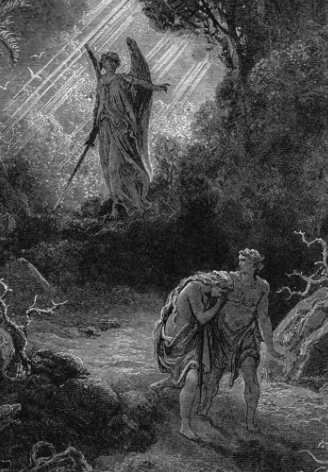
Milton, the greatest reader of Isaiah, in his epic-long Christian midrash on Genesis, sends his Adam and Eve from the Garden of Eden, into history, into time and death.
But the Edenic couple have their consolation: they carry within them a ‘paradise within, happier far.’ An inheritance from Isaiah, the inner paradise, what Hamlet calls the mind’s eye, illuminates the world through reading.
Inspired by Isaiah, we – it’s on us now – must be poets of the moment. Having learned to read, we must write poetry, new songs of light, for the darkness of our times.
‘For Zion’s sake we will not keep silent, for Jerusalem, we will not remain quiet.’ – Isaiah 62.1
Related Topics