The Forgotten Builders of American Jewry
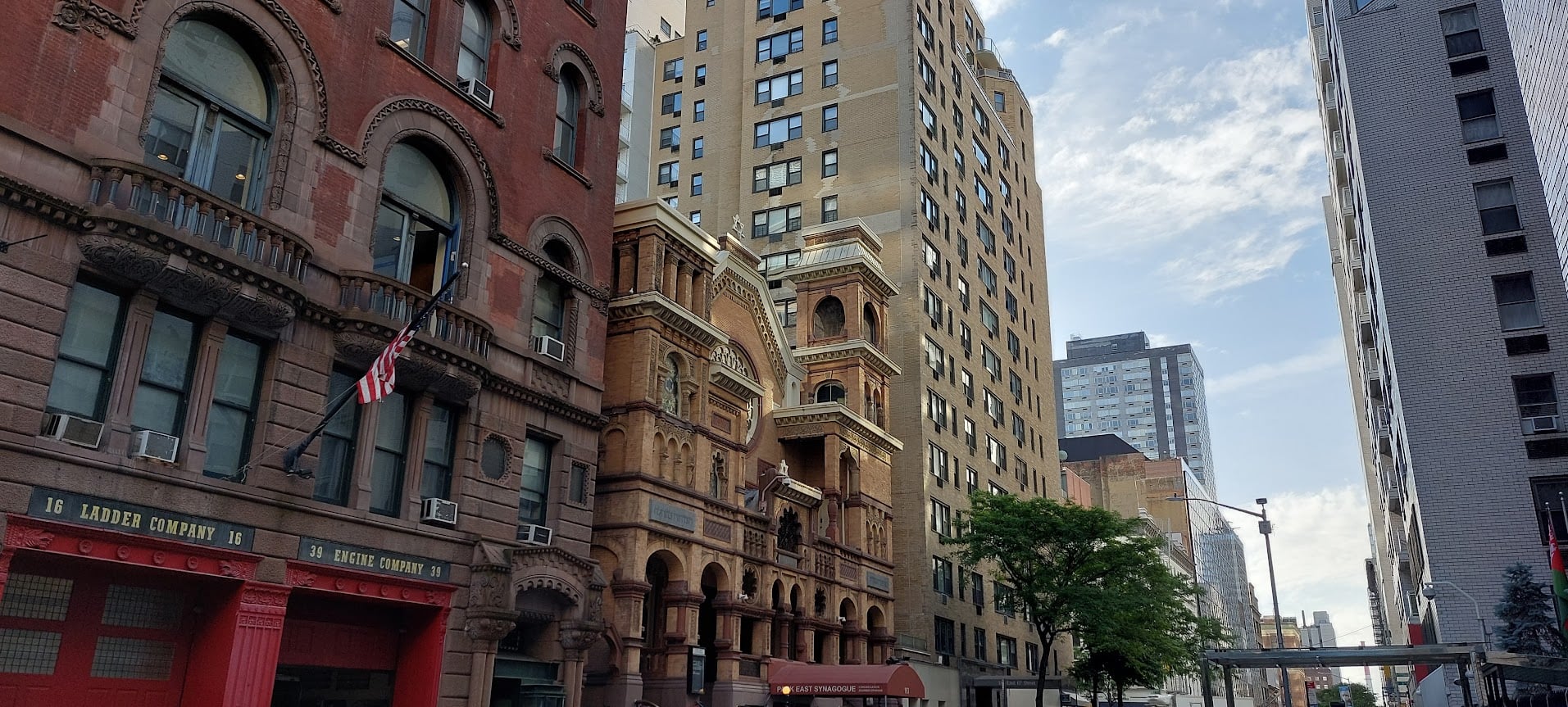
In March of 2023, I gave my last sermon from the podium at Park East Synagogue after serving as the interim assistant rabbi. The sermon I gave highlighted the pivotal role Rabbi Bernard Drachman, the founding rabbi of the synagogue, has played in making Jewish life in the United States possible. Here is what I said:
Standing at a podium that is 133 years old is humbling and awe-inducing. In the case of Park East Synagogue, it is not the fact that this same podium had countless world leaders speaking behind it. Standing here is most humbling because a man I just got acquainted with recently–Rabbi Bernard Drachman– a builder of American Judaism, is the one who stood here.
For those who do not know, Rabbi Drachman was born in Brooklyn, moved to Jersey City, and attended public school. His father, a Polish immigrant, made sure he taught his son basic Hebrew and Chumash at home.
After attending Temple Emanuel’s Hebrew school, members of the Reform stronghold decided they would send him to Germany to study rabbinics, academics, and get ordained. While in Europe, Rabbi Dratchman fell in love with Orthodoxy and its traditions, the path of Rabbi Samson Raphael Hirsch, and he came back and brought it to America.
In America, Rabbi Dratchman was out of a job. Orthodox Jews wanted a Yiddish-speaking Eastern European-trained rabbi, while Reform Jews wanted someone with Dratchman’s kind of education and upbringing but without his commitment to halacha, and Orthodox tradition.
After becoming the rabbi of the congregation Beth Israel on 72nd Street and Lexington Ave in Manhattan in 1887. Drachman caused a huge uproar by publicly resigning his position once the congregation abolished its women’s gallery and moved to a reform-style mixed seating format. Once again, Rabbi Drachman was out of a job.
In 1890 Rabbi Drachman became the rabbi of the congregation Zichron Ephraim, today known as Park East Synagogue, which was established by his father-in-law, Jonas Weil. From then and on to 1945, Drachman served in the congregation, laying the foundations for Jewish life in America. From making sure there are jobs for Jews who insisited on observing Shabbat and were being fired for not working on Shabbat, to relief work on behalf of Jews arriving in New York, to teaching in Yeshiva College and building educational institutions that would, creating the Jewish Welfare Board, heading The Jewish Sabbath Alliance, publically advocating for a five day work week, translate the works of Rabbi Samson Raphael Hirsch to English, and taking leadership positions in the Orthodox Union.
Yet it was not Drachman alone who made traditional Judaism possible in America. His work was only possible through his many partnerships–premeditated or not–with other American Jews. From the members of Temple Emanuel who sent him off on his rabbinic studies in Europe to Jonas Weil founding his synagogue, America’s growingly confident Jewish lay leadership was those laying the foundations for Jewish life in America.
Hailing all the way from the generations of Spanish and Portuguese Jews building Jewish communities with no rabbis at all, to Jonas Phillips paving the way for Jews to hold public office without taking an oath on a Christian Bible in 1787, American Jewish lay leadership was taking a growing role in making Jewish observance possible on this continent.
Jewish life in America became possible very much thanks to great people like Dora Golding and Jennie Miller Faggen, nicknamed “mother of all Yeshivas,” who made sure love for Torah and support for its scholars did not remain only on the eastern side of the Atlantic Ocean. It became viable because of entrepreneurs like the Feuerstein family in Massachusetts, who made sure their factories remained closed on Shabbat–helping pave the way to a five-day workweek. Judaism in America became possible thanks to philanthropists like my cousins, the Raskes family from St. Louis, Missouri, who supported Torah institutions and brought to America great Torah scholars like my great-grandfather and the Lubavitcher Rebbe.
Judaism in America became sustainable thanks to great business leaders like Harry Fischel, who helped pioneer Hebrew Free Loan societies, Beth Israel Hospital, HIAS helping Jewish immigrants, a Yiddish theater, Beis Midrash Hagadol, American Jewish Committee, who got President Taft to agree to a Kosher kitchen in Ellis Island, founded the Uptown Talmud Torah of Manhattan, the JDC Joint Distribution Committee, Yeshiva College, and countless other Jewish causes.
Traditional Jewish life in America became possible because of lay leaders from the Lower East Side who had independently founded America’s first Jewish Day School called Etz Chaim, which later evolved into Yeshiva University and other educational institutions; it became possible because of the lay leaders who founded Yeshiva Rabbi Chaim Berlin in Brownsville in 1904.
Observant Jewish life in America became possible through the devotion of countless simple Jews like Jacob Joseph Herman, who put their lives and livelihoods on the line, insisting that they eat Kosher and not work on Shabbat.
Revisionist history will tell you that Torah Judaism in America was built by a handful of great rabbis who came to America in the 1940s and 1950s–rabbis who unquestionably did a great deal for Torah Judaism in America–ignoring the countless sacrifices and foundations made for more than a hundred years prior to that.
Revisionist historians will point to this rabbi or that rabbi as founders of Yeshivot, Kosher food, and the observance of Shabbat in America, when in fact, much of that became possible through partnerships with visionary lay leaders who asked themselves how to lay the infrastructure that would ensure Jewish life can thrive centuries after they leave this world.
The price of this kind of revisionism, denying the role of lay leadership and their partners, has placed a dire price on our generation. As the Jewish community continues to grow, too few in our communities ask the difficult questions American lay leaders asked themselves a hundred and two hundred years ago, namely: how do we guarantee there will be a vibrant Jewish community here fifty or even one hundred years from now? Abdicating our responsibility to future Jewish generations to a miracle-working rabbi who might arrive on a ship from Europe or an airplane from Israel is convenient because it dismisses us from building America’s future Jewish infrastructure and allows the great works of previous generations to erode and dissipate. It is our sacred responsibility not only to respond to immediate crises our people face–and we sure face plenty of those–but rather to build long-term institutions which will allow us to look our grandchildren in the eye and say–here is what we have done for you.
I am reminded of Rabbi Abraham Isaac Kook’s visit to the socialist Kibbutz of Kinneret in 1927. On Shabbat, members of the socialist Kibbutz of in many cases, resented religion, made sure to turn the lights on and violate Shabbat in other ways that might offend the bearded rabbi, but to no avail. As Rabbi Kook was leaving on Sunday morning, he got to address the entire Kibbutz. While many Kibbutzniks thought the rabbi would reprimand them for being so hostile to religion–or at least try and encourage them to be more religious- he didn’t. Rabbi Kook commended them for the beautiful Kibbutz practice of all eating in the same dining room. His only command to them? Keep eating together–tochlu beyachad. Interestingly, in a recent interview, Shai Lifshitz from Kibbutz Ein Charod shared that in every Kibbutz, the moment the communal dining was discontinued, the entire fabric of the Kibbutz life unraveled. Why? Because nothing matters more than community than having a people.
There are many great leaders out there, yet there is no leader greater than God. Yet even regarding God as King of the world, we say on Rosh Hashanah ein melech belo am, there is no kingdom without having a nation. Part of God being an Almighty King is us being His people. If there are no people, it is much harder to refer to God as king.
And so, as we benefit from and take for granted so much of the communal infrastructure we enjoy here in New York, from schools to synagogues, Mikvahs, an Eruv, Kosher restaurants, and more– it is time for us to think about what it will take for Jewish life to thrive here in another 133 years from now.
Like Rabbi Drachman in his time, like Jonas Weil, members of Temple Emanual, plumbers and butchers in Brooklyn, Jews in Jersey City in the late 1800s, Rabbi Harry Periera-Mendes of the Spanish Portuguese synagogue who established the OU, Harry Fischel, Dora Golding, and so many others, it is time we ask how to come together with one another and how that togetherness can give life to a thriving Jewish community that will survive the perils of time and continues to thrive here in a hundred and thirty-three years. Asking these difficult questions of how Jewish life will look here in many decades is difficult. Yet we must do it. We owe it to previous generations who did the same. We owe it to ourselves and our legacies. We owe it to future generations.