Author of historical and contemporary novels
The Forgotten Disaster in Haifa Port
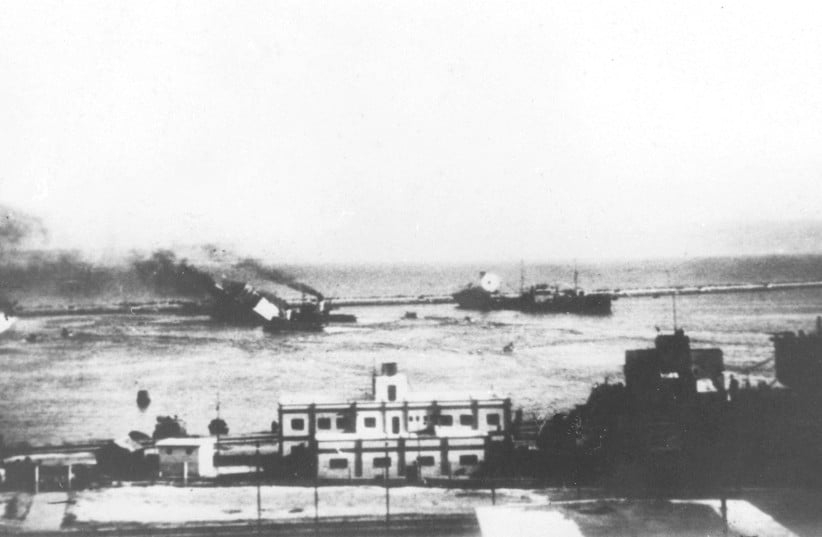
The Patria capsizing in Haifa Port, 25 November 1940. Photo: Ghetto Fighters' House Archives.
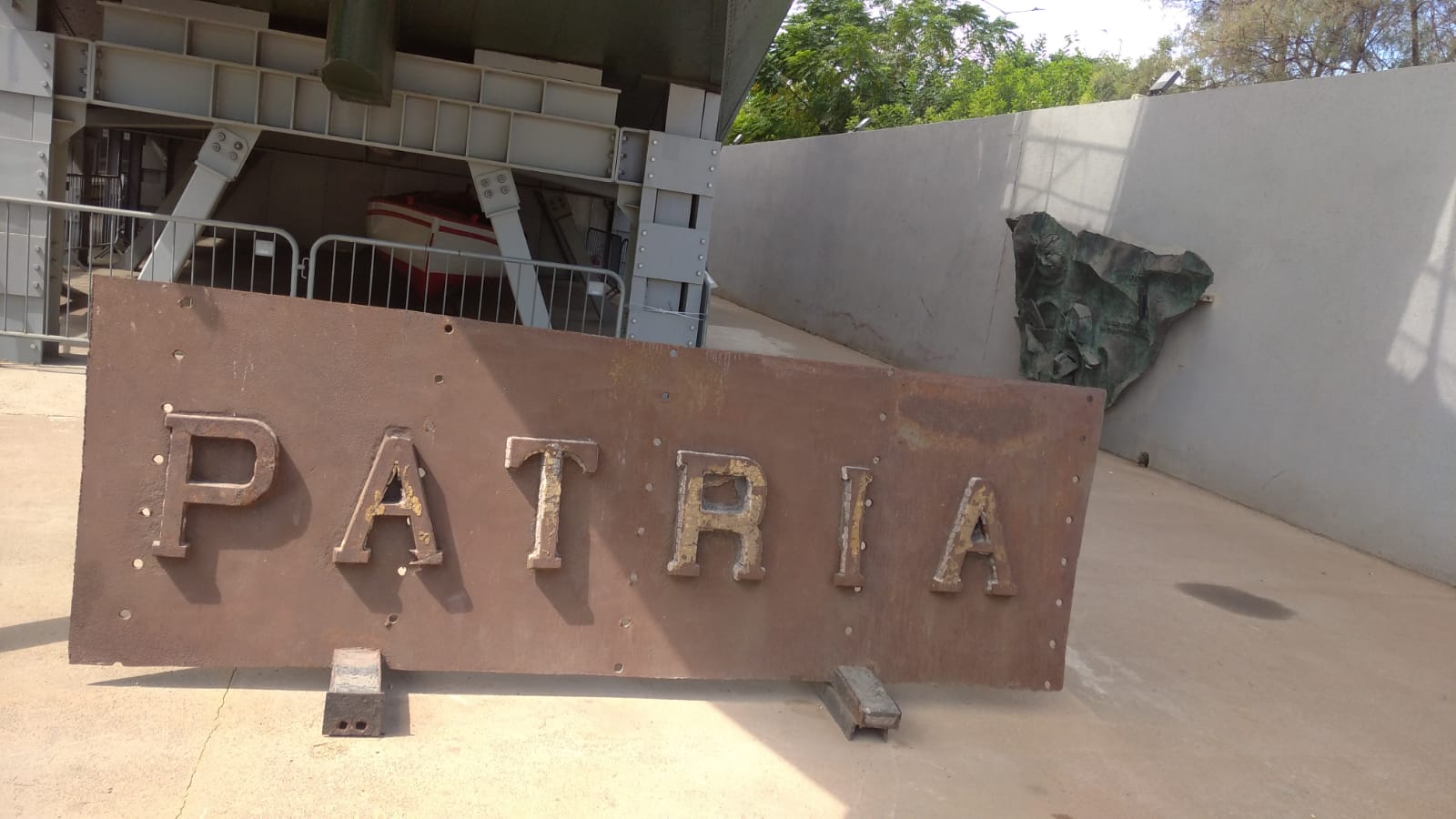
Eighty-six years ago a major disaster took place in Haifa Port that today is largely unknown. On November 25, 1940, just after nine in the morning, a dull explosion was heard from the SS Patria, a large ship moored in the port. On board were approximately 1,900 Jewish refugees who had escaped Nazi-occupied Europe. Almost at once, the ship began to tilt, people jumped overboard and tried to swim to safety. Within ten minutes, the Patria had heeled over onto its side. Some passengers tried to save themselves by climbing along the mooring ropes to the breakwater, while others were trapped in the hold below. After the alarm was raised, boats of every description raced to the scene to rescue them.
It is estimated that 267 people lost their lives or were declared missing, and 172 were injured. The majority were Jewish refugees, along with a few crew members and British guards. It became known as the Patria disaster.
The refugees had left Europe in three rickety ships, hoping to reach Eretz Israel, then British-controlled Mandatory Palestine. But they had no entry permits, and the British deemed them illegal immigrants. When the first two ships reached Haifa several weeks earlier, the British transferred their passengers onto the Patria under the pretext of quarantine. Only once on board did the refugees discover the British intended to deport them. They did not yet know the destination.
The refugees protested and went on hunger strike. A few tried to escape by swimming ashore, but almost none succeeded. Those caught were locked in detention cells. On November 24, the last ship of the transport, the SS Atlantic, arrived, and the British began transferring its passengers too. Over a hundred had crossed, with more being ferried over when the explosion came the next morning.
I too knew almost nothing about this little-known piece of history until I began researching my novel Another Shore, several chapters of which follow characters caught up in the disaster. While writing it, I also discovered a personal connection: my grandfather’s first cousin and his wife had been on board, and survived.
Following the disaster, no one knew who or what had caused it. A British commission sat for six weeks and heard from 58 witnesses. Its members suspected that some of the Jewish passengers were responsible, but could prove nothing. I read its report in full at the British National Archives.
The answer arrived only in 1957, when Munya Mardor, a member of the Haganah, the main Jewish defence organisation, published his own account. The refugees were forbidden contact with anyone on shore but managed to smuggle out a message to someone. The Haganah decided to stop the deportation by damaging the Patria just enough that it could not sail.
Mardor went to the port disguised as a workman. Unexpectedly, he learned that the Patria‘s baking oven needed repairing. This was his way in. On board, he established contact with the head of the Jewish refugees, but knowing that the British were watching him, he asked Hans Wendel, a leader of one group aboard, to take over. As Mardor worked, Wendel kept passing and lingering nearby with a girl who was posing as his girlfriend. He spoke to her in a loud voice, though his words were meant for Mardor.
By his own account, Mardor slipped the bomb into a bag with his lunch, sat down in the corridor to eat, and waited. Wendel and the girl came by, and a group of young passengers crowded round, apparently to watch the repair. The girl stooped, picked up his lunch bag, and walked away. The young men closed in around her so the guards could not see. Inside was a small explosive and a detonator wired to an alarm clock and a torch battery. It was meant to do just enough damage to keep the ship in port for repairs and force the British to bring the refugees ashore. Within an hour and a half, the bomb was hidden, and the lunch bag returned.
No one knew the Patria was in far worse condition than it looked. Its rivets had corroded, and the blast tore plates from its sides, so that water flooded in far faster than anyone had planned.
As for Hans Wendel, his name appears nowhere in the British commission’s papers. Its members suspected other leaders among the passengers, but his name never came up. Like everyone aboard, Hans had been looking forward to a new life in Eretz Israel. After the explosion, he ran to the detention room and broke down the door to free those held inside. He was last seen running down to the hold, to save many of his friends who were trapped after the ship turned over. His body was never recovered. May his memory be a blessing.