
A Liberal Atheist Who Supports and Studies Israel
The Gentile Problem: You’re blaming the wrong people
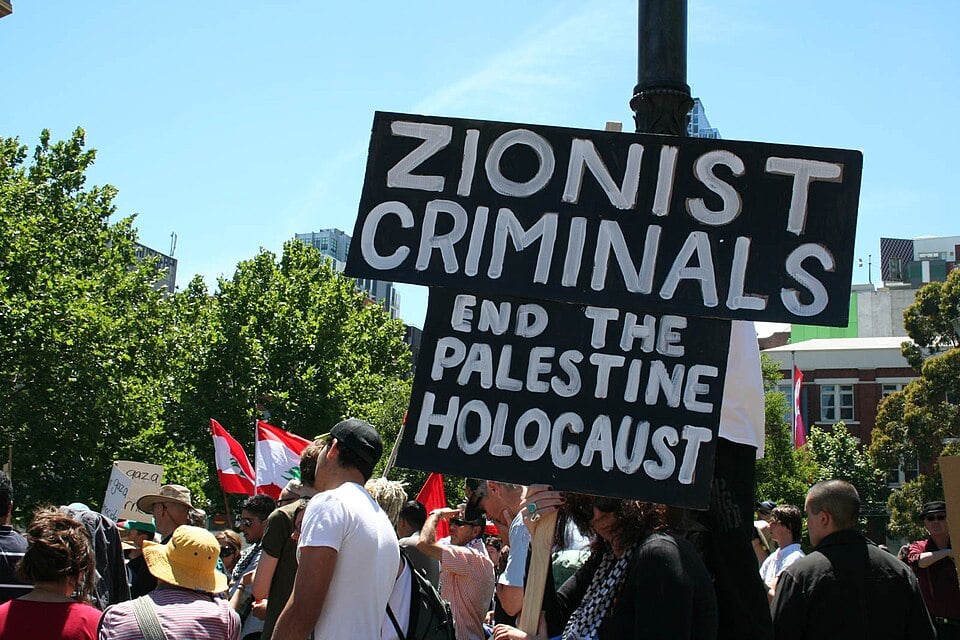
Creative Commons, Takvir 2009.
The Jewish world is fighting antizionism in a room the movement never enters. A defector’s map of outside, and the case that it’s gentile’s work, not a Jewish burden.
This past week the Jewish world went to war with antizionism on half a dozen fronts. A royal commission in Melbourne spent days taking testimony. In Dublin, a community split over a training session billed as “Anti-Zionism as the New Antisemitism.” Scholars have built a movement just to define the term.
In May, hundreds gathered in Toronto for the first-ever World Symposium Against Antizionism, organized by Dr. Naya Lekht, whose Three-Era’s helps explain this hatred. We learn that it’s not antisemitism expressed differently, it’s a form of Jew-hatred on its own. Several hundred rabbis have signed their warnings after Mamdani referred to AIPAC as “monsters.” Some signed after his boycott of New York’s Israel Day Parade—the first mayor to skip it since the march began in 1965.
It’s serious, important work being done. And it carries a flaw no amount of effort will fix. If you pay attention, you may notice nearly everyone is Jewish. The movement they’re fighting is almost entirely not.
That’s the whole problem, in one image. The people holding the line are the hatred’s targets, not its authors. The authors are not in the building, cannot be reached from inside, and are not listening to anything said. A fight waged entirely by its victims is a fight with the door bolted from the wrong side.
I can describe how the people outside that door think, because I was one of them. I came up on the academic left, in the seminars of Boston University and other cathedrals of the enlightened. Where Israel was the one country a person of conscience was expected to question. No one argued me into antizionism. I breathed it for years before I understood what it was doing to me—and then, slowly, after October 7, I walked out.
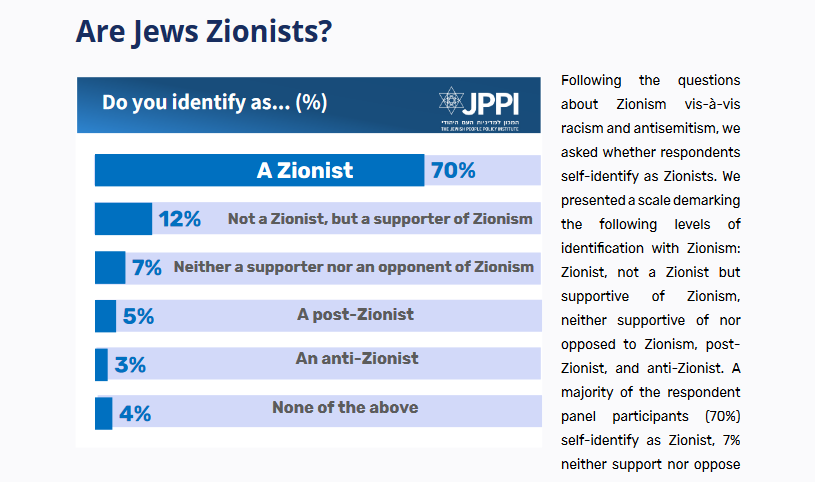
Start with who actually holds the position, because the answer cuts against the story antizionism tells itself. For a quarter century, Americans backed Israel over its adversaries by margins that often topped forty points—until this year, when Gallup found the public tilting toward the Palestinians for the first time since it started asking. Democrats now being lopsided the other way. A third of the country told pollsters Israel is committing genocide. Set that against the one community with its survival on the line, and the numbers switch. Nearly nine in ten American Jews still affirm the country’s right to exist. The people with everything to lose haven’t moved.
Two primary reasons carry most of this animus. The first is that the gentile antizionist feels no hatred in himself, he feels only courage. In his telling, he has enlisted against a militarized, murderous state propped up by an empire he already distrusts, and the cause reaches him as one connected to every honorable struggle he has learned to admire. He is Selma, he is the boycott, he is the resistance, and the resistance cannot be the villain. Tell him he has fallen in step with the oldest hatred there is, and he doesn’t hear a correction. He hears an attack on the finest thing he believes.
The second reason is obvious, and it should hold your attention longer. Most of these people have never met the thing on the line. Jews are two percent of America and a rounding error of the planet; roughly a third of Americans can’t name a single Jew they know. The mechanism is not subtle. Among non-Jews who know a Jewish person, warm views run to forty-two percent, about double the rate with those who don’t. The whole business runs on abstraction, on a Jew with no face. The abstract “Zionist.” It gets stuck the moment a face appears.
That second reason is the good news, and the thing the movement most needs. The antizionist mind and heart is not impenetrably fixed in place. Mine came apart, and it did in ways worth naming. First, no singular argument saved it. What helped was a double standard I could no longer live with and a Jewish friend of mine being treated as less than human in the days after October 7.
It may be cliche, but a single human being at close range undoes what a thousand arguments cannot.
Here is the one thing neither I, nor anyone should ask of you: to reform the people screaming at you. You have already gone further than anyone should have to, with commissions, training sessions, symposiums, rabbinic letters signed by the hundred, and all of it built and staffed and funded by the very community under attack.
It’s not your job to educate the people harming you.
It’s a strange cruelty to hand the target of hatred a second job as its tutor. To expect the victim to sit its carriers down and walk them, point by point, through why they should stop. That labor belongs on the other side: to the friend who lets it slide at dinner, the colleague who says nothing in the meeting, the parent who hears it from a child and looks away. Policing our own is gentile work, not yours. We’re the ones who end this, or no one does.
There’s no time to be precious about it, because the price of that silence is already here. The movement swore to globalize the intifada, and that is what it has done. Students in kippahs were driven off Columbia’s campus. New York’s own mayor became the first in sixty years to boycott the city’s Israel Day Parade, while tens of thousands marched past his absence anyway. In Washington D.C., a man screaming “Free, Free Palestine” shot two young Israeli embassy workers, Yaron Lischinsky and Sarah Milgrim. They laid dead on the pavement outside the Jewish museum. In Boulder, another set a group of elderly marchers on fire and burned Karen Diamond to death. She was 82. Whichever perspective holds the megaphone, which is the left currently, it’s the Jewish people that keep ending up on the floor.
I’ve been out six months now, and in that time I’ve met others who’ve made the same walk. A small number, but proof enough. That isn’t an argument for anyone here easing off, it’s a pointer to where the fault sits, and whose move needs to be next. None of this is the fault of Jews. There are too few of them to have a hatred this size, and far too hunted to be its authors.
Gentiles raised this movement, filled its marches, packed its lecture halls, and then walked off and left people to defend themselves.
Put the duty back where it belongs, with the people who built this, not the people who survive it. It falls to gentiles to police other gentiles, and to name that hatred in our own places, our own families, our own politics, before it turns lethal. We can hear it in places you are regularly unsafe to enter. We made it. It’s ours to end. You have done enough.
Related Topics
Related Posts