Creator of Hiking the Holyland
Featured Post
The geography of the Jewish soul
For these summer travelers, even America's grandest vistas can not rival the one place in the world 'upon which God's eyes are fixed'
The conversation happened in a New Jersey parking lot, outside a bustling shopping mall, somewhere during the fifth week of an extraordinary American adventure. We had spent three weeks exploring the country’s most magnificent national parks — kayaking on pristine mountain lakes, hiking through cathedral-like redwood forests, marveling at glaciers and wildlife that exist nowhere in our Middle Eastern homeland — followed by precious time with family from New Orleans to Connecticut. Every day had brought new wonders. The beauty was undeniable, the memories irreplaceable.
And yet.
“Does everything feel weird to you?” I asked my husband as we sat in the car. “Like everything is somehow… softer than usual?”
“Yeah,” he replied. “I think everything here just feels kind of… blah.”
That was it exactly. Despite being surrounded by objective beauty and conveniences that far exceeded our daily Israeli experience, something felt fundamentally different. Not unpleasant — simply muted, as though life were happening behind some invisible filter.
The feeling had been building throughout the trip. Near Olympic National Park, we spent one magical afternoon kayaking on a small lake after wildfire smoke forced us to abandon our original hiking plans. Families dotted the grassy shoreline — never too many, of course. The setting was perfectly uncrowded despite offering beauty that surpassed anything Israel could provide. I watched teen girls in colorful bikinis horsing around with boys wearing pink swim trunks decorated with cartoon sharks — that picture-perfect American summer afternoon my own children had only seen in movies. The lake stretched endlessly before us, punctuated by small waterfalls cascading into crystal-clear water.
We kayaked for hours, taking detours to explore hidden coves. The ancient forests surrounding us commanded deep respect — I loved them genuinely and completely. Yet somehow, even this profound natural beauty didn’t evoke the same soul-stirring response I experience walking Israel’s stark desert trails.
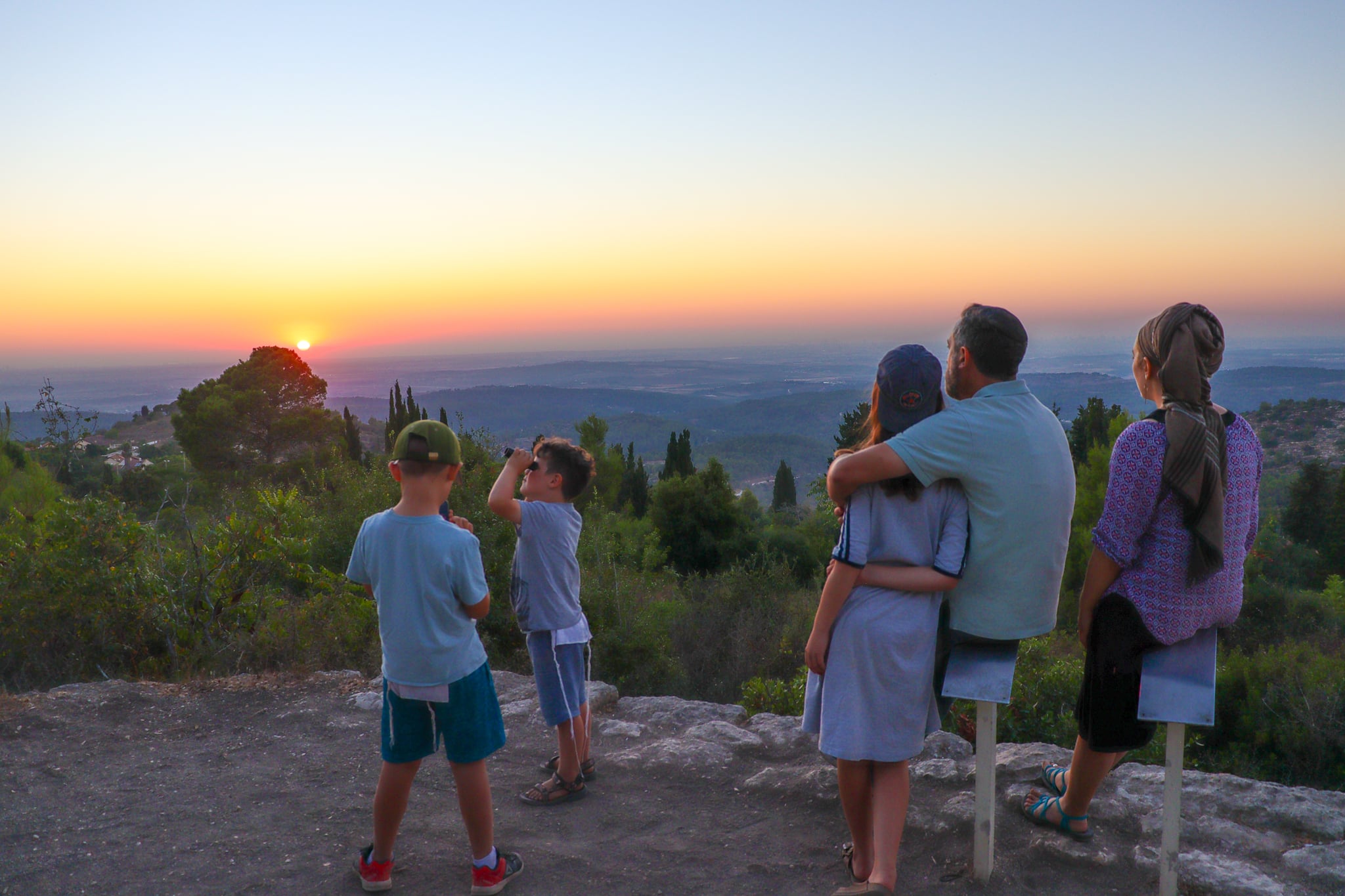
We witnessed spectacular sunsets from Washington’s Ediz Hook, looking out toward Canada across waters that shimmered like liquid silver. Another evening found us at a Redwood National Park lookout, watching the sun disappear into the Pacific in a blaze of oranges and purples that photographers dream of capturing.
“Sunsets seem more beautiful in Israel somehow,” my 17-year-old daughter observed during one of these moments.
Her comment surprised me with its accuracy. How could Israeli sunsets compete with this grandeur? Yet somehow, they did.
The feeling crystallized during a solo run through my childhood neighborhood in New Orleans. Audubon Boulevard remains one of America’s most elegant streets — wide sidewalks, that distinctive “neutral ground” median, homes with expansive front porches, intricate ironwork balconies, sprawling lawns dotted with ancient oak trees, and those signature Flambeaux — real flame lanterns gracing every pristine doorway. During my run, I witnessed a scene that could have been choreographed for a coming-of-age film. A luxury car pulled up, and out stepped a teenager in that unmistakably preppy style I remembered from my own New Orleans prep school days: perfectly pressed khakis, button-down shirt, tie knotted just so — the kind of “dressy casual” that would look completely foreign on any Israeli teenager. He joined friends gathered on elegant front steps, their conversation peppered with stylish slang as they prepared for some social event. Everything about the scene radiated privilege, beauty, and opportunity.
Yet watching this unfold, I found myself asking the same question that had haunted my own New Orleans adolescence: What are we living for?
Those words transported me back to my teenage years in that same city. Despite growing up in a strong Orthodox home surrounded by beauty and blessing, life had often felt painfully hollow. The question “What am I living for?” became a constant companion, only finding resolution during my year studying in Israel, where existence suddenly felt charged with purpose and meaning.
“I belong here,” I had thought while leaving Jerusalem, already planning my eventual return to what felt like my soul’s true home.
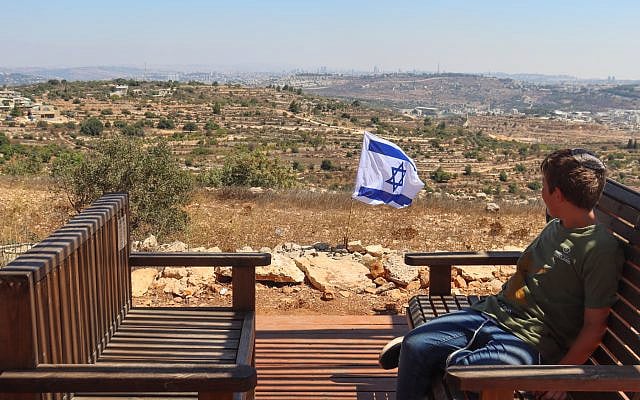
Now, decades later as a settled Israeli, I was experiencing that same existential emptiness again — not personally, but environmentally. America offered everything imaginable except the one thing that mattered most for me.
The spiritual dimension of this experience became clearest on a Shabbat morning in Connecticut. Rather than navigating services at an assisted living facility, I chose to pray alone in my brother’s backyard — green lawn, mature shade trees, carefully tended flower beds, birdsong. Settling onto the soft grass as is my custom during morning prayers, I found myself humming the melody of Elokai Neshama composed by Yehuda Becher, the young Israeli killed at the Nova festival on October 7th — a tune that has become ubiquitous in Israeli synagogues and study halls since.
Closing my eyes, I felt the morning sun warming my face exactly as it does at home in Israel. Yet something felt wrong. The sunlight seemed somehow dimmer, filtered. Opening my eyes, I surveyed my surroundings: blackbirds moved in the grass, massive trees swayed gently in the morning breeze, the entire setting bustled with summer life and beauty. But everything felt strangely hazy, as though I were experiencing reality through a spiritual filter. The disconnect between the objective beauty surrounding me and my internal experience was jarring.
I sat with that feeling for a long time after the prayers ended — trying to name it, turning it over. It wasn’t grief or homesickness exactly. It was more like trying to tune a radio and finding that the signal, however clear, was always coming through from somewhere slightly further away than it should be.
When my brother and husband returned from services, I shared this. My brother responded: “It’s certainly always shocking when I visit Israel. The desert environment is so stark and different.” His response reminded me that even short-term visitors often report experiencing something unique there, whether they attribute it to cultural differences, the unfamiliar terrain, or simply “vacation energy.”
Jewish tradition has language for what I was experiencing. The Torah describes the Land of Israel as a place upon which God’s eyes are fixed “from the beginning of the year until year’s end” — understood by generations of commentators not as poetry but as a description of spiritual physics. The Ramban explains that while God oversees the entire world, other lands operate through intermediate spiritual forces; only in the Land of Israel does divine providence function directly, without intermediaries. The Talmudic teaching that “the air of the Land of Israel makes one wise” points to the same reality — not atmospheric chemistry but the soul’s expanded capacity for connection in a place where the filter has been removed.
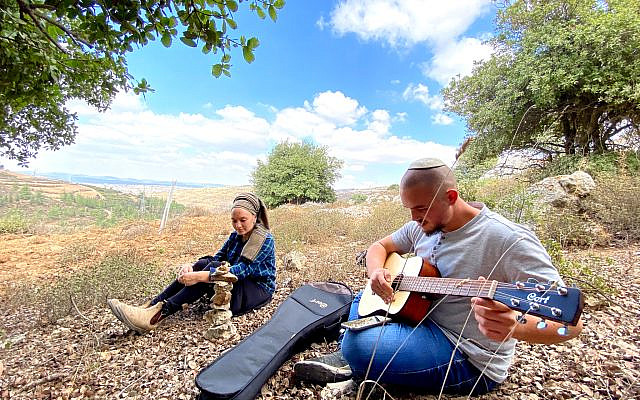
I had always known these teachings intellectually. That summer, I felt them in my body.
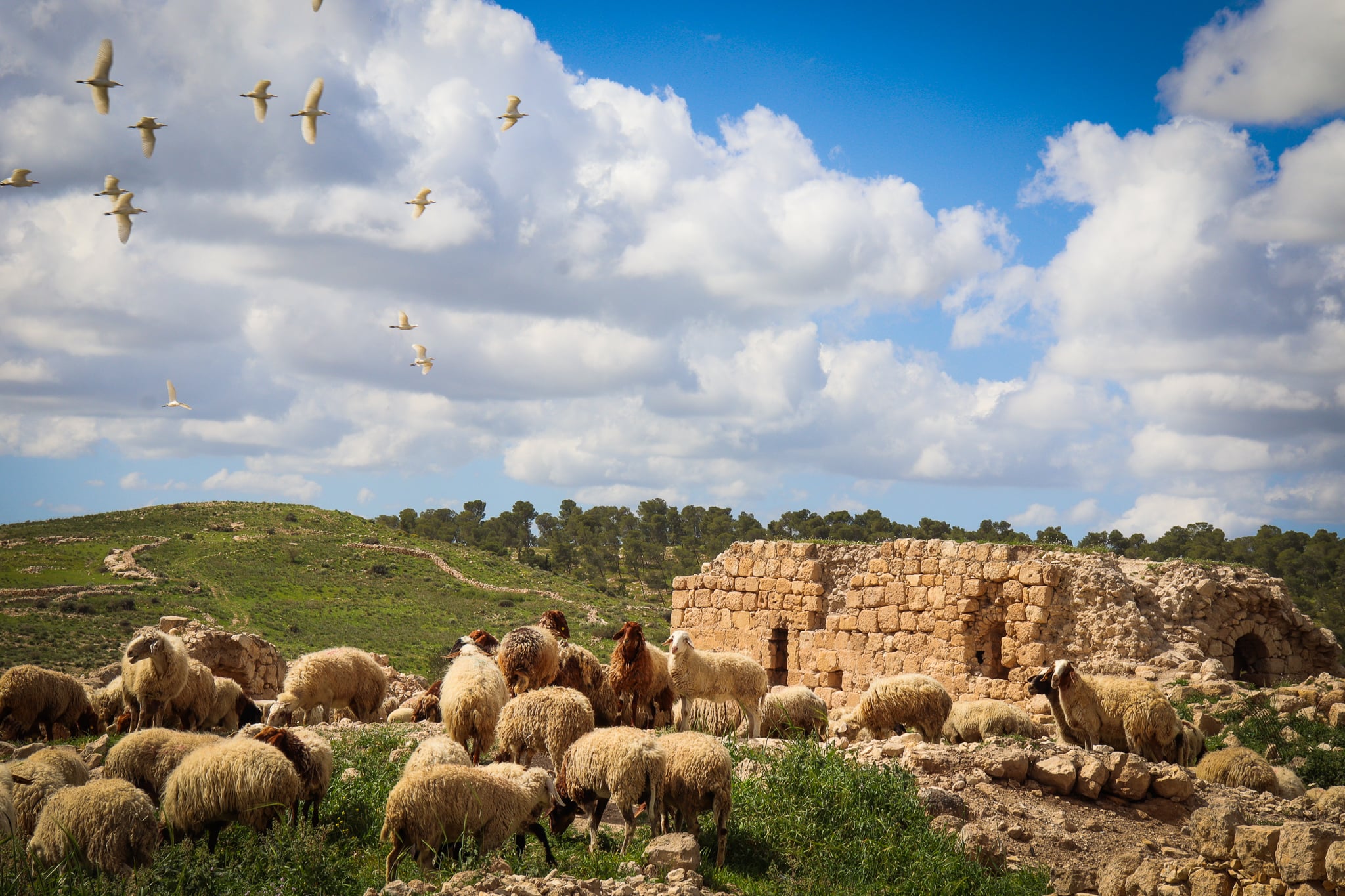
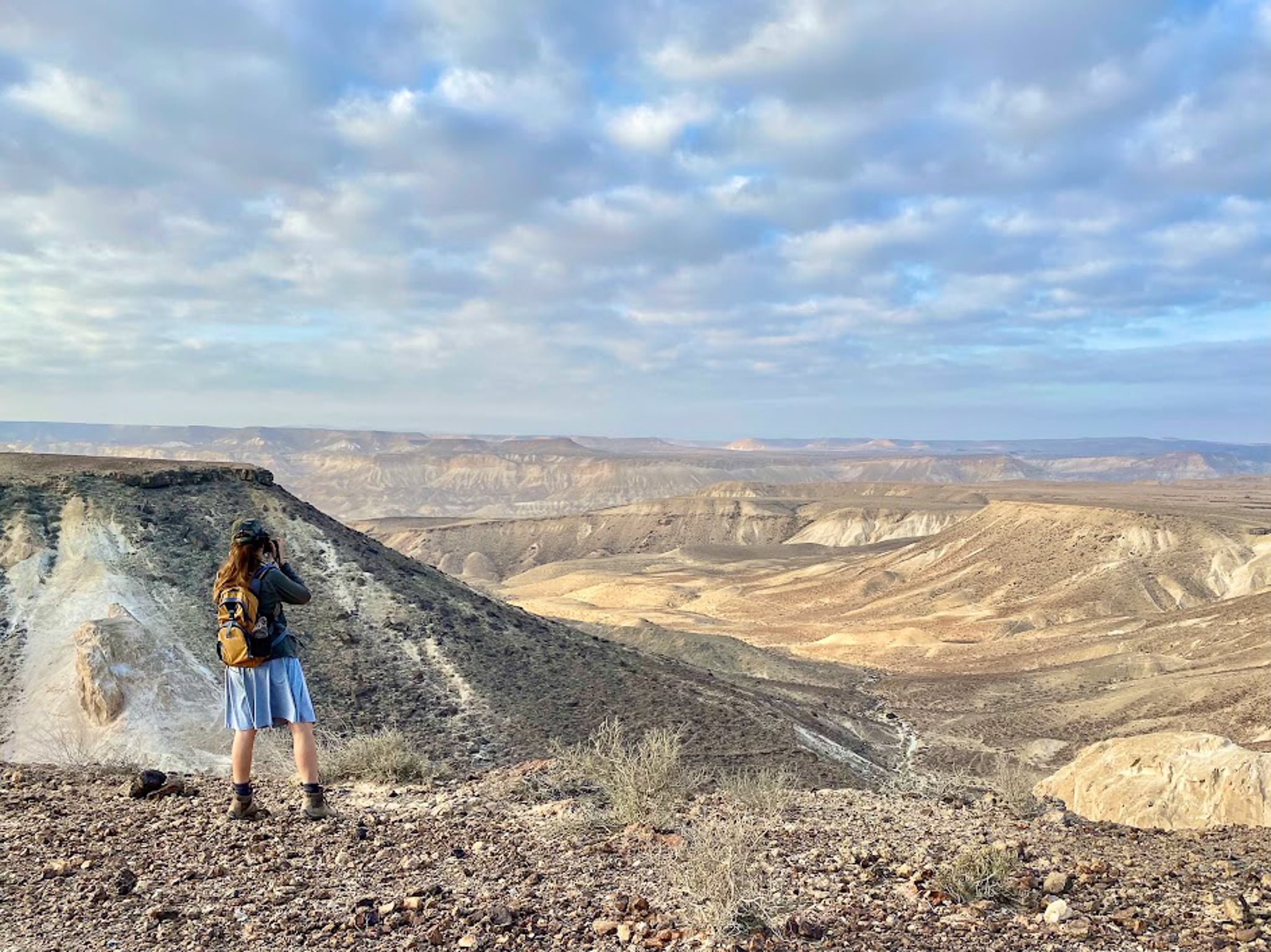
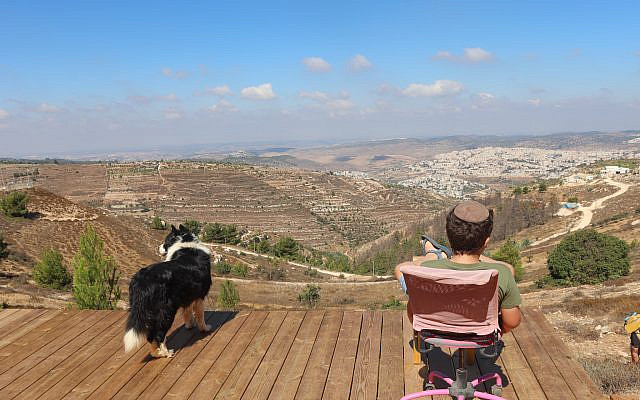
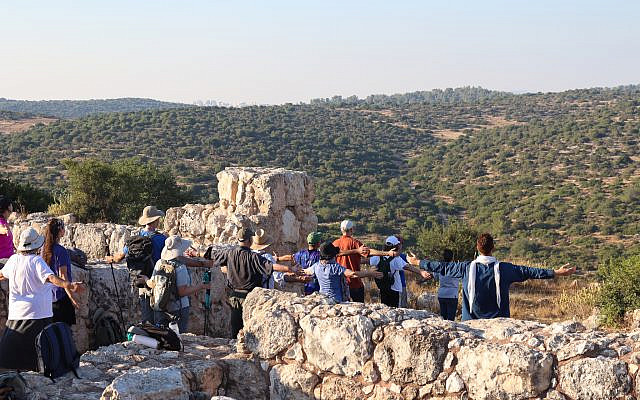
I remember our homecoming with perfect clarity. That first Shabbat back, I walked the Path of the Patriarchs, a trail that winds through some of Judea’s most characteristic landscape. Objectively, the scenery could hardly compete with what we had left behind. Summer heat had rendered everything dusty and yellow. Thorny plants dominated the hillsides. The occasional vineyard provided the only real green amid an otherwise parched terrain.
Yet every step felt like awakening from a long dream.
The rocks scattered beneath my sandals, the lizards scurrying away from the trail, the stark rolling hills dotted with ancient terraces — everything possessed a quality I could only describe as intensely, uncompromisingly real. Where America’s wildlife had been soft and appealing — those charming marmots and chipmunks of the Pacific Northwest — Israel’s creatures were tough and resourceful. Gnarly in the best sense. Adapted for adversity. Ready to be fully alive in a challenging environment. Walking those familiar trails, I felt what the Ramban was pointing at — not a theological abstraction but something I could feel in my feet, in the particular weight of these rocks, in the way the dry air carried the scent of sage and dust and something older than either.
I felt spiritual relief. Not because our travels had been unpleasant — quite the opposite. But because something essential had been restored. The filter had been removed. Reality felt immediate and unmediated again.
Our American journey gave us gifts: hidden coves, Pacific sunsets, ancient redwoods, and our own family gathered around tables from New Orleans to Connecticut. But it also gave us something else — the reminder of why we chose to build our lives in a place that doesn’t always photograph as beautifully but consistently feels spiritually alive.
On our return to Israel, I found myself understanding something I had perhaps always known: that the longing our ancestors carried for this land throughout centuries of exile wasn’t sentiment or habit. It was the soul’s accurate report of what it was missing.
Related Topics
Related Posts