Therapist and Clinical Director of Jerusalem Therapy Mental Health Clinic
The Gift of Becoming Unnecessary
A rather cruel blessing of parenthood is if you’ve done your job properly, at some point your children will stop “needing” you. This same indignity awaits good teachers, mentors, and therapists, although some have developed remarkably sophisticated methods of postponing the occasion. Chayei Sarah offers a magnificent illustration of this uncomfortable truth. The parashah bears Sarah’s name but begins with her death, and much of what follows concerns Avraham preparing a future in which neither of them will participate. He purchases a burial place, arranges for Yitzchak to marry, and dies himself. The man who’d been promised an entire land acquires his first permanent possession in only a grave. A devastatingly beautiful irony that Avraham spends his life preparing to possess a future that, in the end, he must leave to someone else. The story moves quietly from mourning to marriage, from burial to beginning, as one generation prepares the reward for another.
This peculiar achievement, in psychology, is called generativity. Erik Erikson understood mature adulthood partly through our willingness to invest in the flourishing of people who’ll outlive us. An orientation towards generativity gives a person a greater sense of purpose and enhanced well-being, although wanting to help the next generation isn’t quite the same as being willing to relinquish control over it. That’s where things become interesting. Parents want independent children who’ll still follow their advice. Teachers want brilliant students who’ll remember who taught them. We want to give people wings while retaining a modest interest in the flight plan. Yet Chayei Sarah puts the future of the Jewish people in the small hands of a young woman Avraham hasn’t even met. Rivkah’s character emerges not through some grand declaration of destiny but through an exhausting act of kindness toward a stranger and his camels. When asked whether she’ll leave her family, she answers simply, “Eilech”— “I’ll go” (Bereshis 24:58). Avraham’s legacy passes to someone with her own will, her own judgment, and a future he won’t be around to supervise. The test of generativity is whether we can, in the last, bear to let it become someone else’s.
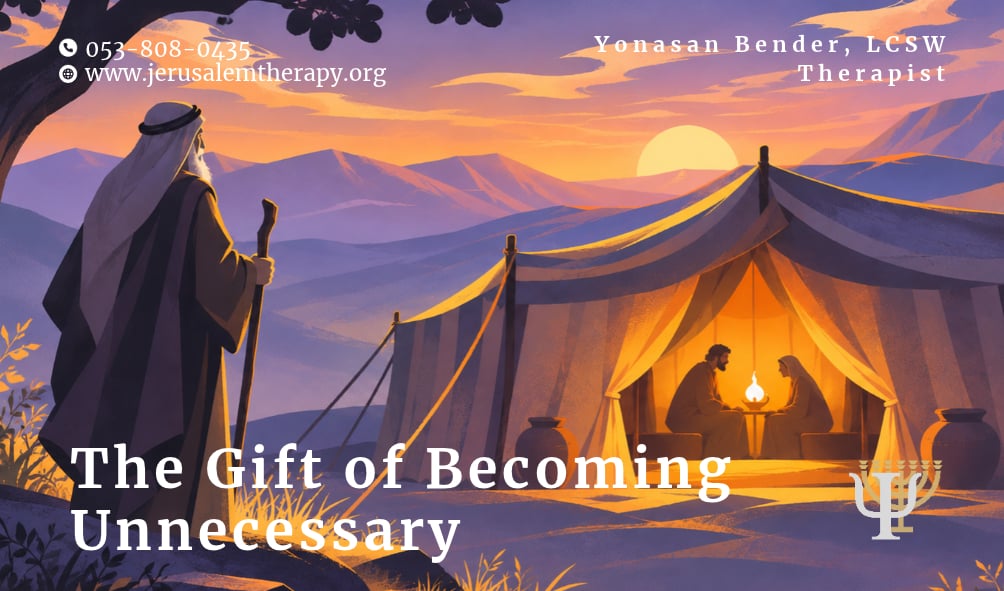
The most moving moment arrives when Yitzchak brings Rivkah into Sarah’s tent. The Torah tells us he loves her and finds consolation after his mother’s death (Bereshis 24:67). Rivkah doesn’t replace Sarah, and Yitzchak doesn’t forget her. The tent remains, but the life within it changes. That’s what makes the parashah’s title so extraordinary. Chayei Sarah, the life of Sarah, is a story about what happens when Sarah is no longer alive. We tend to imagine a successful life as one in which we’ve made ourselves indispensable, but indispensability is a poor inheritance. If everything collapses when we leave, we’ve only managed to build a monument to ourselves. The finest expression of selfless giving is a small, necessary surrender allowing those we’ve nurtured to become people whose lives no longer revolve around us. After all, the point of planting a tree isn’t to spend eternity standing beside it, reminding everyone who dug the hole. It’s to leave behind something that can grow without us and offer shade to people we’ll never meet.
Related Topics