
The Goldhagen Debate: Reflections on the merits of historical revisionism
A PARADIGM CHALLENGED
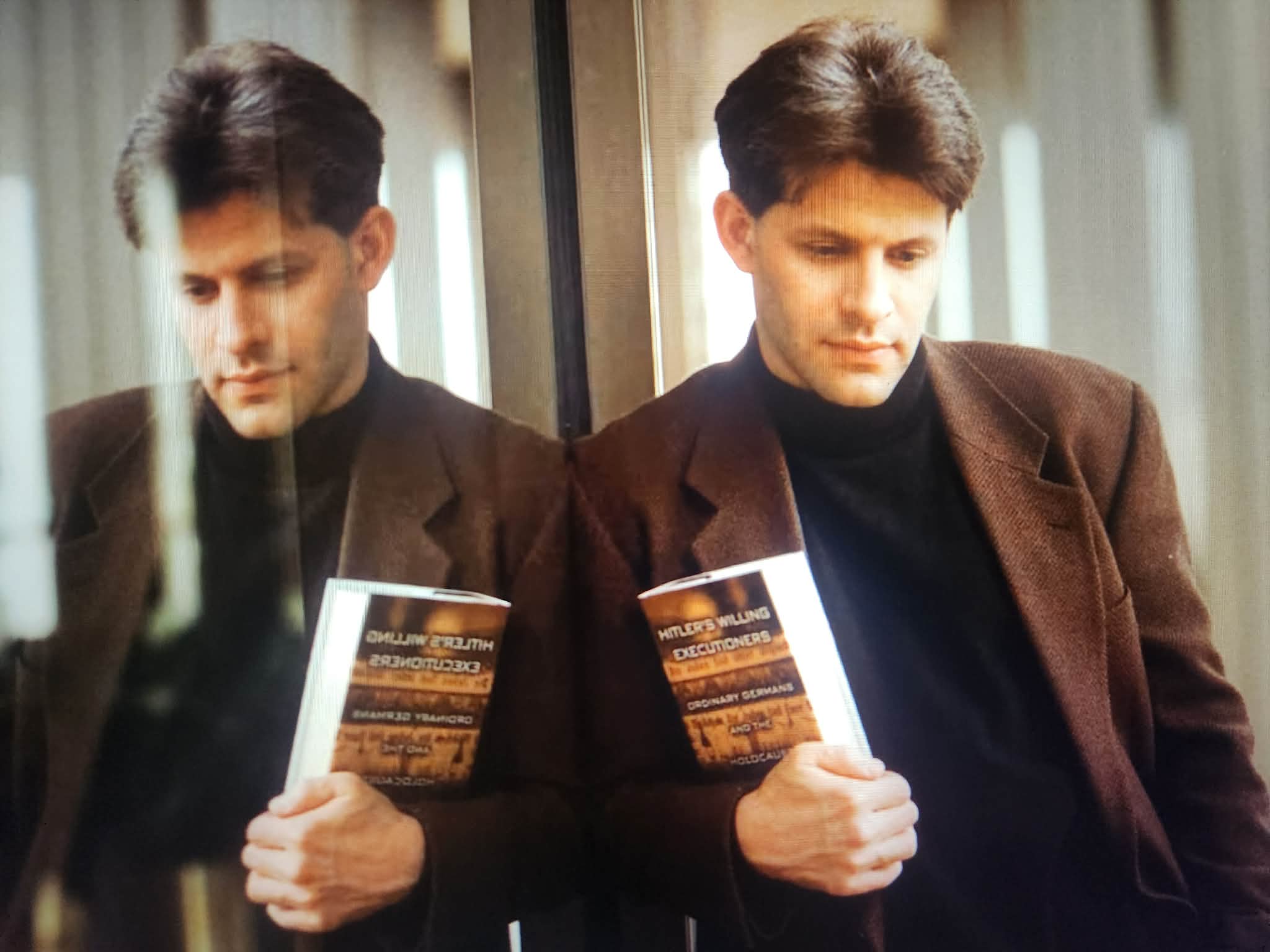
In the spring of 1996, Daniel Goldhagen openly challenged the prevailing scholarly interpretation of the Holocaust. The political scientist from Harvard had burst onto the American literary scene in a most unusual fashion. He published a book that was an extension of his doctoral dissertation, something that normally doesn’t attract the attention of anyone without a phD. But in writing Hitler’s Willing Executioners, Goldhagen ignited an international controversy that brought into question the objectivity of scholarly interpretation and the legitimacy of historical unanimity. His desire to take on the academic establishment would have impressed the British writer Christopher Hitchens, who once said, “Don’t take refuge in the false security of consensus.”
In Hitler’s Willing Executioners, Goldhagen argued that the Holocaust was the natural outcome of a longstanding “eliminationist anti-Semitism” against the Jews that became “exterminationist” in nature under the Nazi regime. Unlike many of the intentionalists that came before him, Goldhagen had confidently asserted that Adolf Hitler had not forced the Holocaust onto Germany. Instead, over the course of nearly 500 pages of narrative, the Harvard scholar claimed that Hitler was able to “unshackle” the “pre-existing, pent up” anti-Semitism of the German people, who were “of one mind” with the Fuhrer about the pressing need to solve the Jewish question once and for all.
In making his contentious case, Goldhagen cited the centuries-long history of anti-Semitism in Germany. In particular, he highlighted the lasting influence of Martin Luther, a Christian theologian who argued passionately for the persecution of Jews during the German Reformation. Goldhagen wasn’t the first author to make the connection, as a number of scholars documented the link between Lutheran theology and Nazism during and immediately after the war. While the ultimate impact of Luther’s anti-Semitic views on 20th century Germans continues to be debated, contemporary historians have tended to paint a more nuanced picture of the country during the Nazi period.
As soon as Hitler’s Willing Executioners graced the shelves of American bookshops, journalists and scholars from across the country began publishing commentaries refuting Goldhagen’s thesis. Even in Germany, where the book had yet to be published, many academics were scathing in their repudiation of what they considered to be shoddy scholarship on Goldhagen’s part. He was also accused of moralizing and ethnic parochialism. The general consensus at the time was that the Harvard professor had erroneously and conveniently identified a single cause for the Holocaust – deeply-ingrained German anti-Semitism – while ignoring a multitude of other possible explanations and contributing factors.
Because Goldhagen accused ordinary, everyday Germans – not just dedicated Nazis – of harboring an eliminationist anti-Semitism that he claims laid the foundation for the Holocaust, he was denounced for imposing a sense of collective guilt on the country. It was a charge that Goldhagen denied vehemently. He took great pains to say that the actions of individual Germans in the Nazi death camps aren’t reflective of a “timeless German character” that requires its citizens to accept blame for atrocities they didn’t commit.
To his credit, Goldhagen didn’t dodge the naysayers. In April of 1996, he took part in a symposium at the United States Holocaust Memorial Museum in Washington, D.C., where he was taken to task by four respected Holocaust historians. In addition, when the book was published in Germany in the summer of 1996, he went on an extensive tour of the country, participating in six well-attended panel discussions with German historians and public intellectuals. Goldhagen was also quick to respond to his critics via newspaper columns and journal articles.
The criticism of Goldhagen went well beyond debates over scholarship and historical interpretation. In addition to his contentious thesis, Goldhagen was quite dismissive of the work of other Holocaust historians. He said that existing scholarship was “deficient” and that his book was “a radical revision of what has until now been written.” Specifically, Goldhagen claimed that believing that the Holocaust was the result of a variety of situational, organizational, and social-psychological factors – in other words, the traditional functionalist view – was “unrealistic,” “ahistorical,” and “laughable.”
Goldhagen also had a tendency to be quite combative in his interactions with other scholars. His adversarial approach to engaging with his interlocutors – mostly in print – was, and remains, extremely unusual in public intellectual debates. In a 2013 interview with public affairs television host Richard Heffner, Goldhagen didn’t deny – in fact, embraced – his propensity to clash with his academic critics.
“My habit (is) to be as direct and plain as possible and not to pull punches, not to think about the fine sensibilities of people, but in fact to take my vocation seriously, which is to do my best to tell the truth as I understand it and to do it in (a) forceful and direct manner,” said Goldhagen.
TAKING AIM
Of all the historians who drew the ire of Goldhagen, Christopher Browning was at the top of the list. He had published a book in 1992 called Ordinary Men, which examined why the members of a German police battalion murdered Jews during the Holocaust. Browning argued that virulent anti-Semitism is insufficient as an explanation. Instead, he posits that group conformity, peer pressure, and obedience to authority are more relevant factors. He also cited additional causes, including years of anti-Semitic Nazi propaganda, careerism, and the polarizing effects of war.
While Browning’s book wasn’t directly cited in the narrative portion of Hitler’s Willing Executioners, Goldhagen made dozens of critical references to it in the footnotes. His tone was often hostile and condescending. Browning, who always took the high road in the fierce public debates that followed, was clearly caught off guard.
“The degree to which he was dismissive of virtually every historian in the field shocked a lot of people,’ said Browning. ‘Of course, since I was the number one target, I felt more beleaguered than others.”
The celebrated Austrian-born Holocaust scholar Raul Hilberg went as far as to say that Hitler’s Willing Executioners was a “calculated attack” on Browning. In Hilberg’s estimation, Goldhagen targeted Browning because the thesis of Ordinary Men directly contradicted the argument he was making. Browning concurs.
“My book, which came out four years earlier, was a target of his because I had a different interpretation and I had gotten there first,’ said Browning. ‘So I had to be dispatched for reasons of chronology, as well as for interpretation.”
Goldhagen has also been condemned for ascribing political motivations to his academic critics. In the forward to the 2012 German paperback edition of Hitler’s Willing Executioners, Goldhagen claimed that western scholars had good reason to advance explanations that fail to identify widespread anti-Semitism as the primary factor in the Holocaust. He said that minimizing the anti-Semitic nature of Germany’s war crimes stemmed from a desire to portray the country as a civilized ally in the early stages of the Cold War.
For Goldhagen, academics like Christopher Browning, who identified a multi-causal explanation for the Holocaust, were simply trying to maintain good public standing by harboring a politically desirable opinion that had little foundation in fact. Goldhagen went as far as to say these scholars “made and massaged their careers” working within the contours of a conventional view. He accused them of being “ideologues… masquerading as scholars.”
Goldhagen didn’t stop there. He insinuated that the desire to discount the definitive role of anti-Semitism in the Holocaust may actually have a racist inspiration in some cases. He claimed that academics are more than willing to acknowledge the role of ethnic hatred in calamities like the Armenian genocide of 1915, as well as more recent genocides in Cambodia and Rwanda. To not recognize similar motivations in the perpetration of the Holocaust was, for Goldhagen, a glaring example of a dubious historical double standard.
“That people automatically accepted the facts about non-Jewish victims of genocide and about African or Asian perpetrators, but not about Jews and ‘civilized’ white Christian Europeans respectively, was and remains disturbing,” said Goldhagen.
UNANSWERED QUESTIONS
Not surprisingly, Goldhagen’s tendency to treat his intellectual opponents with disdain had its consequences. While the three books he published after the release of Hitler’s Willing Executioners sold well, his reputation in the scholarly community suffered greatly. More than one scholar has observed that the merits of Goldhagen’s ideas were often trumped by his combative and adversarial approach to academic debate.
“The historical profession has moved on from Goldhagen, perhaps not least because his subsequent work reflected increasing intemperance,” said Peter Hayes, a former chair of the Academic Committee of the United States Holocaust Memorial Museum.
While Hayes has little regard for Goldhagen as a scholar, he admits that the political scientist made a valuable contribution to Holocaust literature by helping to refocus attention on anti-Semitism as the driving impulse behind the Holocaust. In the years leading up to the publication of Hitler’s Willing Executioners, Hayes said historians had been too focused on other causal factors, including spatial planning for the occupied East and power struggles among Nazi officials.
“Goldhagen reminded people that this murderous operation was driven by fearful fantasies about Jews, and that these fantasies had a long history and pedigree,” said Hayes.
Even Christopher Browning, whom Goldhagen excoriated in the footnotes of his book, gave his adversary credit for inquiring about the astonishing cruelty exhibited by many of the perpetrators of the Holocaust. In particular, Browning acknowledged the light Goldhagen shined on the brutality of the death marches, which had been greatly understudied at the time. In the afterword to the 1998 paperback edition of Ordinary Men, Browning asked, “Is a culture of hatred the necessary precondition for such a culture of cruelty? Goldhagen has posed an important question. I do not believe that we have yet found a satisfactory answer.
ECHOES OF THE PAST
The fact that Goldhagen was so confident about the accuracy of his thesis certainly contributed to the success of Hitler’s Willing Executioners upon its release. Goldhagen’s American publisher, Alfred Knopf, mirrored the conviction of the author by boldly proclaiming on the book’s dust jacket that the volume “demands a fundamental revision of our thinking about the years 1933-1945.” That impressive claim was echoed by a litany of columnists and book reviewers in 1996, one of whom now wishes she could have a do-over.
Susan Miron, who spent 15 years reviewing books for a number of major publications, produced a glowing write-up of Goldhagen’s book. Her review blurb, which is found on the dust jacket of the hardcover and paperback editions, can be charitably described as fawning in nature.
“The most important book ever published about the Holocaust… Eloquently written, meticulously documented, impassioned… A model of moral and scholarly integrity.”
“I was young and impressionable,” Miron said looking back at her generous endorsement. “You read things differently when you’re young. I’m embarrassed.”
Because she wasn’t inclined to write critical reviews, Miron was a book author’s dream. As a former concert harpist, she was keenly aware of how hurtful public criticism could be. In hindsight, Miron believes Knopf’s effective marketing campaign, along with Goldhagen’s charming personality, heavily influenced her opinion of Hitler’s Willing Executioners.
“He had a lot of things going for him,” she said. “Of course, he had the Harvard name. He was sort of good-looking. He thought he had it made with this book.”
Miron’s words carried a lot of weight with her readers. They were especially significant considering that the Holocaust had received extensive treatment from a wide array of distinguished scholars for decades. Raul Hilberg and Yehuda Bauer were among the academics who had published well-regarded books on the topic, so to label a volume “the most important book ever published about the Holocaust” was high praise, indeed.
“Would I give the same review now? No,” said Miron. “I’ve had 30 years to think about it and I don’t think it’s the most important book. I think the picture is more complex than he painted it.”
THE PERILS OF SIMPLICITY
The complexity of the Holocaust is something that continues to fascinate – and perplex – historians to this day. More than 80 years after the completion of World War 2, scholars continue to debate the causal factors behind the greatest genocide in human history. For Daniel Goldhagen, the matter was settled in 1996 with the publication of Hitler’s Willing Executioners. As he put it, “With regard to the motivational cause of the Holocaust, for the vast majority of the perpetrators, a monocausal explanation does suffice.” Goldhagen said that single cause is the “demonological antisemitism” that “was the common structure of the perpetrators’ cognition and of German society in general.”
For the overwhelming bulk of historians, that explanation is too simplistic. Because not all of the killers were Germans and not all of the victims were Jews, a uniquely German anti-Semitism is generally regarded as insufficient to explain the magnitude of the Holocaust. The causal debate has raged for over 80 years with no end in sight. As scholars continue to study the Nazi era and as more documentation emerges, the full picture of the Holocaust will likely get even more muddled than it is now.
In trying to understand the phenomenal success of Hitler’s Willing Executioners upon its release, some observers have noted that the book’s thesis, while not satisfactory in the scholarly community, was extremely accessible to members of the general public. Academics are accustomed to spending years of their lives trying to understand the past, methodically piecing together fragments of evidence in hopes of gaining a clearer understanding of events that are often difficult to fully comprehend.
The average layreader, on the other hand, often doesn’t have the time or the wherewithal to conduct thoughtful investigations of historical matters. Scholars who probe the archives and carefully engage with the existing literature are relied upon to do the work for them, and to provide detailed, yet accessible explanations for why notable events took place. In that sense, it’s easy to appreciate how Goldhagen’s book became an international best-seller. By furnishing a clear, straightforward explanation for the most horrific slaughter the world has ever seen, Goldhagen did something historians had failed to do prior to 1996.
In Germany, the book struck a nerve with young people who resented their parents and grandparents for their complicity in the Holocaust. As Christopher Browning put it, “There was a generational rage at the older generation that had continued to deny personal involvement and to deny their own anti-Semitism. Goldhagen became the weapon that they could beat the older generation with.”
German publisher Josef Joffe believed that Hitler’s Willing Executioners would die a quiet death once the dust settled following the author’s German speaking tour. Writing in the New York Review of Books in November of 1996, Joffe said that Goldhagen’s book “collapses a great many possible explanations of human history into one huge explanation that falls flat even when examined by an intelligent layman.” However, it seems quite clear, based on the strident criticism that Goldhagen received from a legion of historians, that the scholarly community felt otherwise.
If academics really believed in 1996 that the truth of the Holocaust would come out in the wash, despite the resonance of Goldhagen’s thesis with the American public, they likely wouldn’t have bothered to administer such a thorough public flogging of the Harvard scholar. The assault happened at a time when the notorious British Holocaust denier David Irving was trying to get his biography of Joseph Goebbels published, and scholars were especially determined to ensure that Goldhagen’s revisionism didn’t find fertile ground in the public imagination.
“The public’s appetite for simple, sensational stories and interpretations is a never-ending problem,’ said Peter Hayes. ‘The more a subject commands attention, the worse it gets.”
A MIXED LEGACY
The problem, of course, with historical interpretation, is that it’s virtually impossible to make a definitive case that settles a long-disputed subject. Because new scholarship emerges almost daily, historians are constantly relitigating the past. The process is never-ending, but it’s often slow and tedious. Consequently, it takes time for historians to reach a general consensus in regards to the explanation of historical events, if they ever do.
In Hitler’s Willing Executioners, Daniel Goldhagen set out to decisively settle the enigma of the Holocaust. His self-assuredness, combined with his refusal to accept the legitimacy of decades of Holocaust literature that preceded his book, took a toll on his own legitimacy. As an academic, Goldhagen was a bull terrier in a land of golden retrievers, giving no quarter to his intellectual opponents. It’s quite conceivable that a more congenial scholar who wrote the same book would have been taken more seriously.
The legacy of Hitler’s Willing Executioners is mixed. Despite Raul Hilberg’s confident proclamation that “much of the academic world had wiped Goldhagen off the map” by the end of 1996, reputable historians continue to cite the book, many of whom have been quite critical of the author’s thesis. Regardless of the veracity of Goldhagen’s argument, his unabashed willingness to challenge orthodox historical conventions has inspired many authors – and scholars – to venture into the crowded field of historical revisionism.
Results on that front are equally mixed. The internet was in its infancy when Hitler’s Willing Executioners was released, and the advent of long-form podcasting has allowed conspiratorial cranks of all shades to promulgate a variety of historical absurdities. Holocaust denial and distortion, in particular, has become a profitable online enterprise, a stark reminder that there’s no business like Shoah business. Generally speaking, however, the careful reinterpretation of the past – the historian’s raison d’etre – is a noble endeavor when it’s done with appropriate scholarly rigor. The impartiality of historical interpretation depends on such rigor, as it ensures intellectual honesty and allows for reasonable disagreement.
Historical revisionism gets a bad name for many reasons, not least because it’s often associated with the advancement of a political agenda. In reality, carefully researched revisionism is the essence of the historical enterprise. Its goal is to correct misconceptions and offer thought-provoking alternatives to accepted versions of historical events, thereby refining our understanding of the past. Daniel Goldhagen’s Hitler’s Willing Executioners was one such attempt.