
The Good, the Bad and the Sad: Trump, Bibi, and the 21 Point Plan
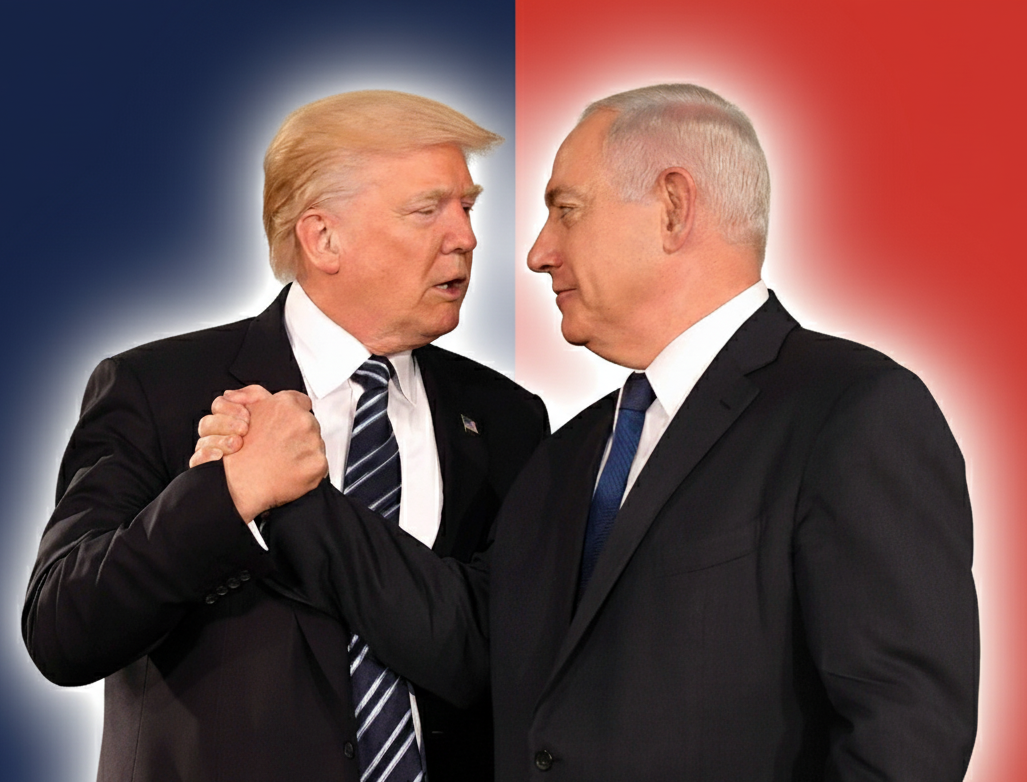
The Trump-Netanyahu press conference, in which the two presented the highlights of the “21 Points Plan,” was designed to shift the balance of power and pressure Hamas into agreeing to a deal. It was framed as a dramatic breakthrough, or in the words of the US President himself, “Peace in the Middle East” and “potentially one of the greatest days in the history of civilization.” And yet, peace in the Middle East was not exactly forged before our eyes, and despite the fact that this was hardly a historic milestone, it was nonetheless an important shift in direction—one that could lead to another step, and then another, which maybe-maybe-maybe could lead to ending the war. Or, in Churchill’s words: “This is not the end. It is not even the beginning of the end. But it is, perhaps, the end of the beginning.”
The Good
The main achievement of the agreement was not its actual implementation (as of writing these lines, it is still unclear whether and when Hamas will sign on) but rather the change in the rules of the game—and especially, the players on the field. No longer the narrow triangle of Israel-US, Qatar and the Hamas representatives, but rather the involvement of a coalition of Arab and Western states backing the deal. The commitments of Turkey, Egypt, the UAE, Saudi Arabia, Jordan, Pakistan, and Indonesia—together with Western powers—shifted the diplomatic burden squarely from Israel onto Hamas.
And it will not be easy for Hamas to agree.
In a distinctly Israeli fingerprint, the agreement’s spirit is crafted around principles Netanyahu can sell at home as “victory.” The return of all hostages within 72 hours, no full military withdrawal, continued Israeli security control, and an international administration under Trump (instead of the PA/Hamas) as Gaza’s initial sovereign—these are bitter pills for Hamas to swallow. Just as bitter is the disappearance of the words “Palestinian state.”
The Bad
And there is a reason a Palestinian state is not mentioned. Netanyahu, frustrated by the Western leaders declarations recognizing a Palestinian state, has done and will continue to do everything in his power to erase the option from the table. He insisted it not be mentioned in the agreement itself and made sure to stress in his speech that statehood was not up for discussion.
But.
If it walks like a duck and quacks like a duck—it’s a duck. And short of spelling it out, the document unmistakably winks at a political process with sparks of Palestinian autonomy and self-determination. The last two points of the agreement (and there is a clear reason why they are the last) read:
- After reconstruction progresses and the PA reforms are completed, there may be a pathway to Palestinian statehood, conditional on fulfilling those reforms.
- A U.S.-facilitated dialogue between Israel and the Palestinians to establish a political horizon of peaceful coexistence.
This may not be the “state” that Hamas’s few surviving remnants dreamed of, but “statehood” might just be good enough.
And here lies the Israeli government’s fatal weak spot: Smotrich and Ben Gvir cannot and will not compromise. For them, politics is a zero-sum game, and any agreement that exacts a political price—or even hints at a process with the Palestinians—is inherently illegitimate. It was no coincidence Smotrich said: “Perhaps the enemy’s refusal will save us.” Smotrich, who pins his ideological hopes on Hamas’s refusal to stop fighting, who justifies continued bloodshed so that fallen soldiers blood will not be “in vain,” is living in a bleeding reality from which it will be very hard to escape.
As for Netanyahu, commentators noted that the way the agreement was crafted—by trampling Israeli “dignity,” bringing in a multitude of external actors, and even making a humiliating apology call to the Qatari Emir—sends a morally flawed and unacceptable message to the very state that bankrolled Hamas. There is truth to that. But it is ironic that those who screamed “a deal at any cost” are incapable of acknowledging the actual cost. In my view, Netanyahu, wisely, was willing to send that flawed message if it raised the chances of a comprehensive deal.
Another message, however, seriously damages Israel: the agreement strengthens the positions of Britain, France, and Canada. Written sarcastically or not, in the unfolding of events Starmer, Macron, and their pitiful Canadian and Spanish counterparts will now be able to say: “We told you that recognizing a Palestinian state would bring the hostages home and lead us closer to peace. A week after our recognition, the sides reached a deal that brings us toward a sustainable agreement. So what Israel refuses to see,” these submissive leaders will say, “we saw.”
Good luck explaining to them that this was a purely Trump maneuver.
The Sad
This Trump maneuver may not have come from the Western powers, but it certainly empowered the Arab states. The two biggest winners were Qatar and Turkey. Netanyahu, despite his critics, risked and lost much. He risked his government, dependent (at least for now) on Smotrich and Ben Gvir, and he lost honor -in a neighborhood where honor is everything- to the Qatari Emir and the Turkish tyrant. That groveling, apologetic phone call to the Qatari Emir may have been critical to leveraging Qatar against Hamas, but it also sent a dangerous and submissive signal that should never be sent in the Middle East.
Trump’s lavish praise of Arab leaders, and especially of Erdoğan—whom he called “my friend, a strong man but also a good man”—should alarm every Israeli official. Erdoğan is not merely aiming for renewed involvement in the Palestinian arena but is eager to position Turkey as a regional hegemon on the edge of resurrecting the Ottoman Empire.
The declaration will also not save Israel from the PR disaster it has dug itself into. Trump’s “blank check” of support, in case Hamas refuses, will not change global public opinion. Beyond the steady American airlift of ammunition, the world’s view of the war—and its lack of empathy—will not shift. To illustrate just how catastrophic the reputational damage has become: in a recent New York Times poll, 60% of Americans supported ending the war—even without the release of the hostages. The agreement may signal a shift in where diplomatic pressure is applied, but it absolutely does not signal a shift in public opinion.
If Hamas refuses, the terror group may face more political pressure, but the academic, cultural and financial pressure will only intensify on Israel.
The name of the game, for both sides, is a “victory image,” and the current American proposal is the closest both sides have come to presenting one to their people. Yet within it lies the core of the problem: and if we’ve learned one thing over the past two years, it is this—when it comes to Hamas, we must keep our expectations very, very low.