
Writing on Jewish life, relationships, trauma, and resilience
The Grievance Economy
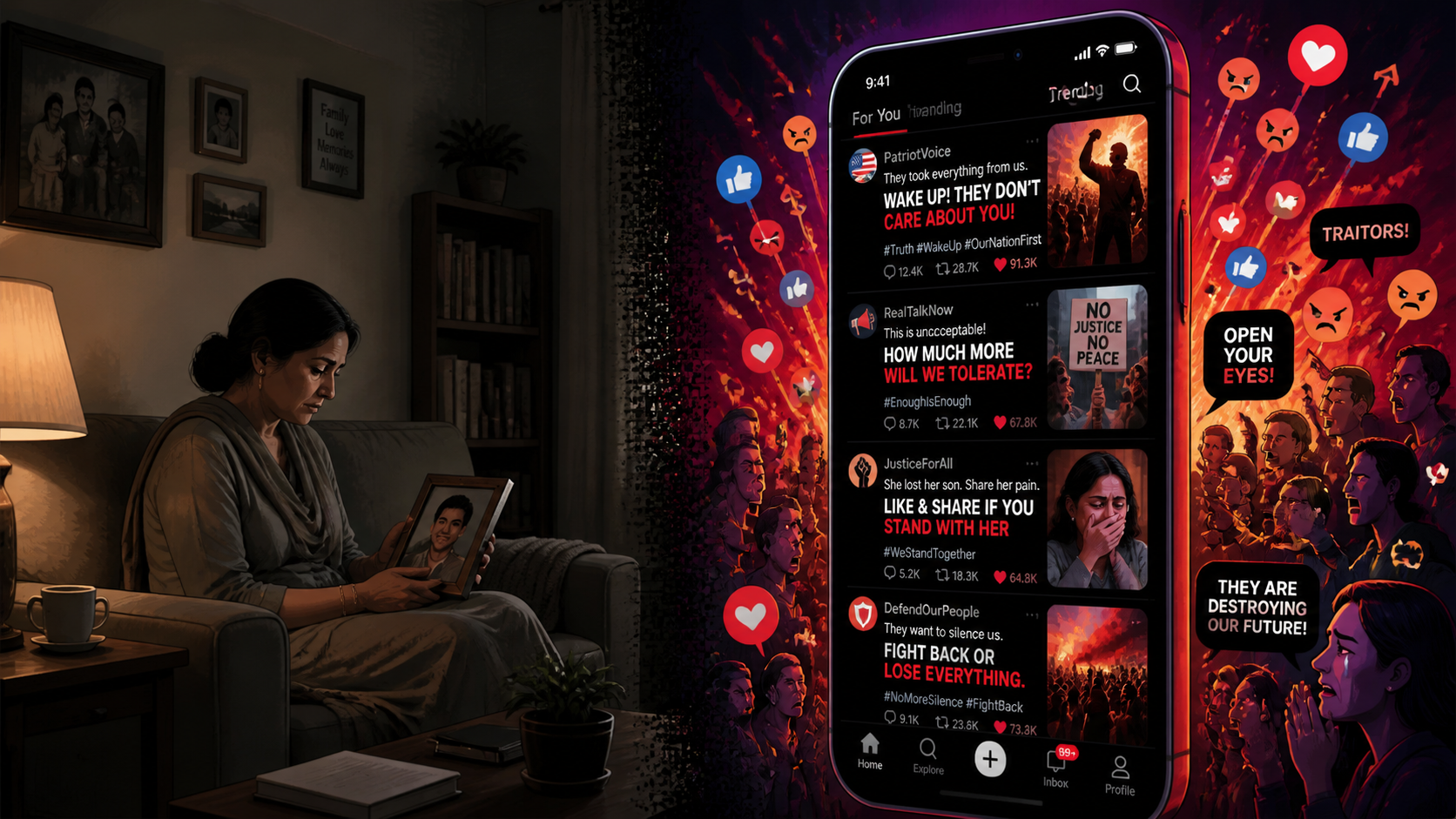
Illustrative. Grief in a living room. Outrage on a screen. How media and algorithms turn private loss into public grievance. Created by the author.
This essay is part of an ongoing series on “peace preparation” — the emotional, relational, and narrative work that political agreements cannot do on their own. Earlier pieces traced how grief becomes identity and identity becomes grievance; this one asks how modern media and algorithms turn that grievance into a system, and what it would mean to build “media preparation” as a real pillar of any future peace.
How Media Turn Grief into Grievance
We often speak of grievance as though it were only a feeling or an ideology. But grievance is also a system. It is produced, amplified, distributed, monetized, and rewarded.
That is one reason it is so difficult to interrupt.
Grief in a Marketplace
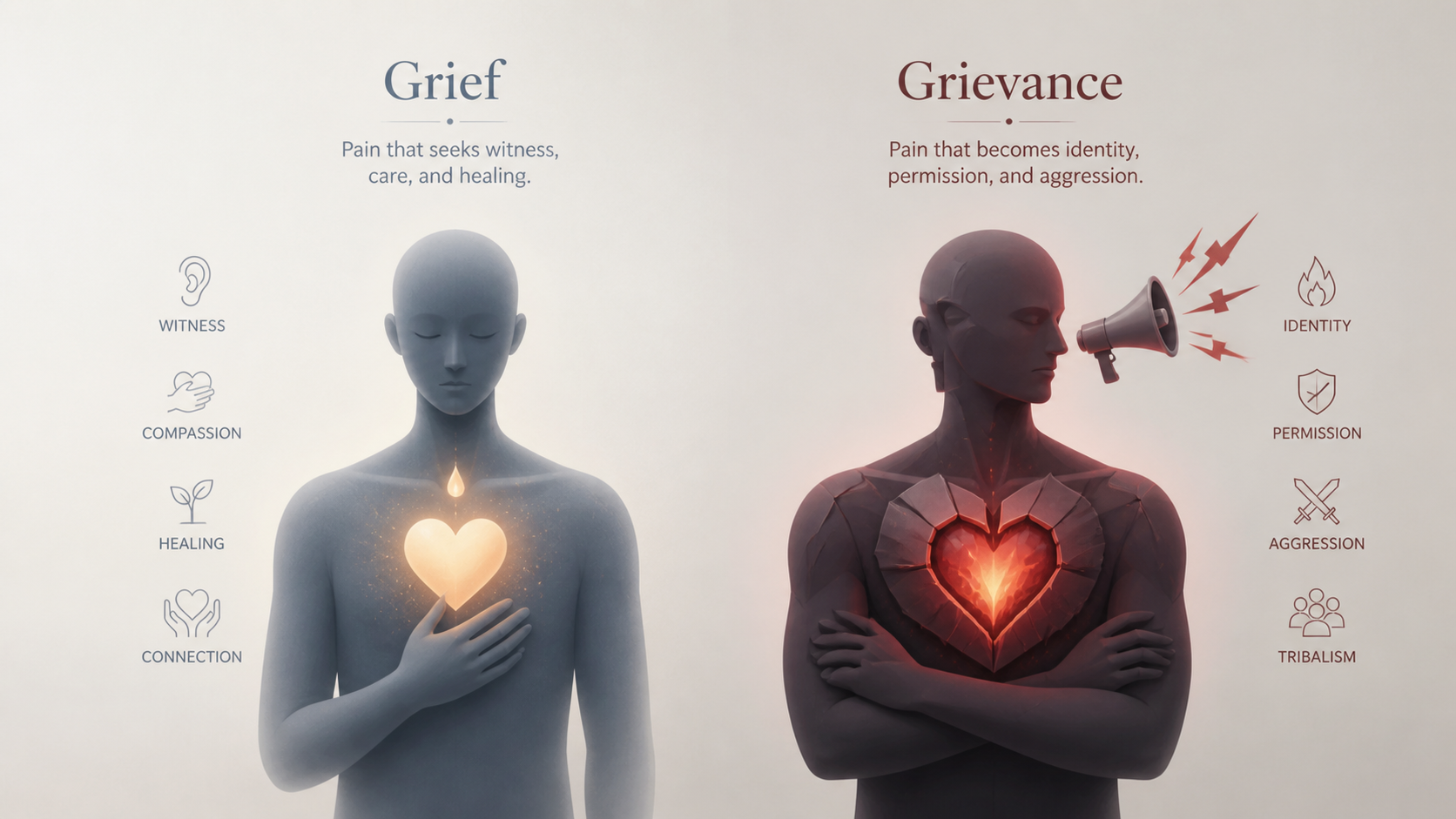
Grief and grievance are not the same.
Grief tells the truth about pain. It says: something precious was lost, and that loss matters. It asks for witness, memory, justice, repair, and, when possible, healing.
Grievance begins near grief but does not remain there. It turns pain into a permanent dwelling place. It shifts from “This hurt us” to “Because this hurt us, others must suffer.” Mourning becomes identity. Identity becomes permission. Permission becomes politics.
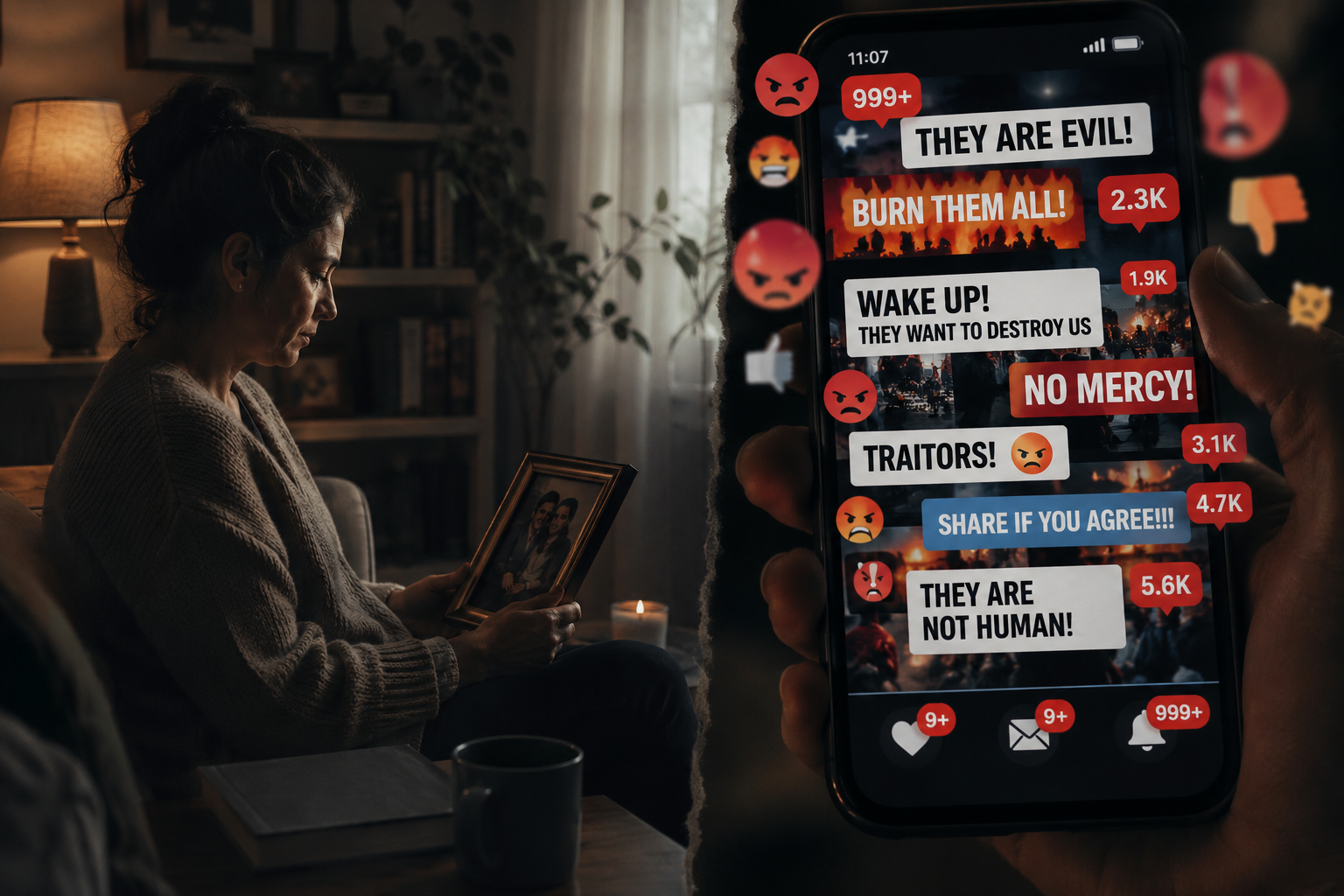
That transformation is psychological. It becomes political. Today, it is increasingly digital.
Modern communication systems do not simply report conflict. They sort it, sharpen it, dramatize it, and return it to us in emotionally profitable forms.
This is more than intuition. Research consistently shows that today’s information environment favors emotional intensity over careful judgment. Brady and colleagues found that moral-emotional language spreads political messages more widely online. Vosoughi, Roy, and Aral showed that false news travels farther and faster than truth. Mooijman and colleagues found that moralized online language can contribute to conditions associated with violent collective action.
Taken together, these findings suggest a troubling dynamic: digital systems do not merely transmit public emotion. They often reward the forms of emotion most likely to harden identities, simplify moral judgments, and intensify conflict.
Outrage frequently travels farther than sorrow. Humiliation attracts more attention than complexity. Threats, denunciations, and dehumanizing language often outperform quieter expressions of grief, restraint, accountability, or repair.
This is the grievance economy: an attention environment in which escalation is often more visible, more profitable, and more politically useful than moral discipline.
Why Extreme Language Spreads
When a public figure declares that an entire population should burn, or warns that a civilization must be erased, the statement rarely spreads because it is persuasive. It spreads because it is combustible.
It gives supporters a slogan.
It gives opponents something to condemn.
It gives journalists a headline.
It gives influencers a clip.
It gives platforms engagement.
And it gives frightened people the temporary relief of certainty.
Extreme rhetoric simplifies the moral universe. We are innocent; they are monstrous. Our dead are sacred; theirs are strategic. Our fear proves reality; theirs proves manipulation.
That simplicity is emotionally seductive. It is also politically dangerous.
None of this means the pain beneath such rhetoric is false. Usually it is not.
Israeli grief is real. Palestinian grief is real. Lebanese grief is real. Iranian grief is real. American grief after terrorism and war is real.
The danger lies elsewhere.
Political actors, media systems, influencers, and digital platforms can transform authentic grief into political fuel.
After atrocity, people naturally reach for language equal to what they have experienced. That is profoundly human. Yet our public communication systems do very little to help grief remain grief. They are far better at rewarding the emotional habits that allow grief to harden into grievance.
A Case Study in Dangerous Amplification
One of the clearest historical examples comes from Rwanda.
During the 1994 genocide, Radio Télévision Libre des Mille Collines did more than reflect hatred. It helped organize and intensify it. Economist David Yanagizawa-Drott’s landmark 2014 study found that exposure to the station’s broadcasts significantly increased participation in killings by both militia members and ordinary civilians.
Rwanda was not a social-media story. It was radio, not algorithms.
But the lesson remains deeply relevant.
Communication systems become dangerous when they repeatedly normalize dehumanization, elevate threat, and reward participation in collective rage. Under those conditions, media cease to function merely as observers. They become part of the social machinery through which violence becomes thinkable.
Not every inflammatory broadcast—or viral post—produces mass violence. Human beings are never simply programmed by media. But repeated exposure can lower moral resistance. It can make cruelty appear realistic, restraint appear naïve, and entire populations appear less fully human.
Media do not create hatred from nothing.
They can, however, make hatred easier to normalize, easier to justify, and easier to spread.
How Platforms Train Grievance
Anyone who has followed Israeli, Palestinian, Lebanese, or Iranian feeds during war has seen this sorting in real time.
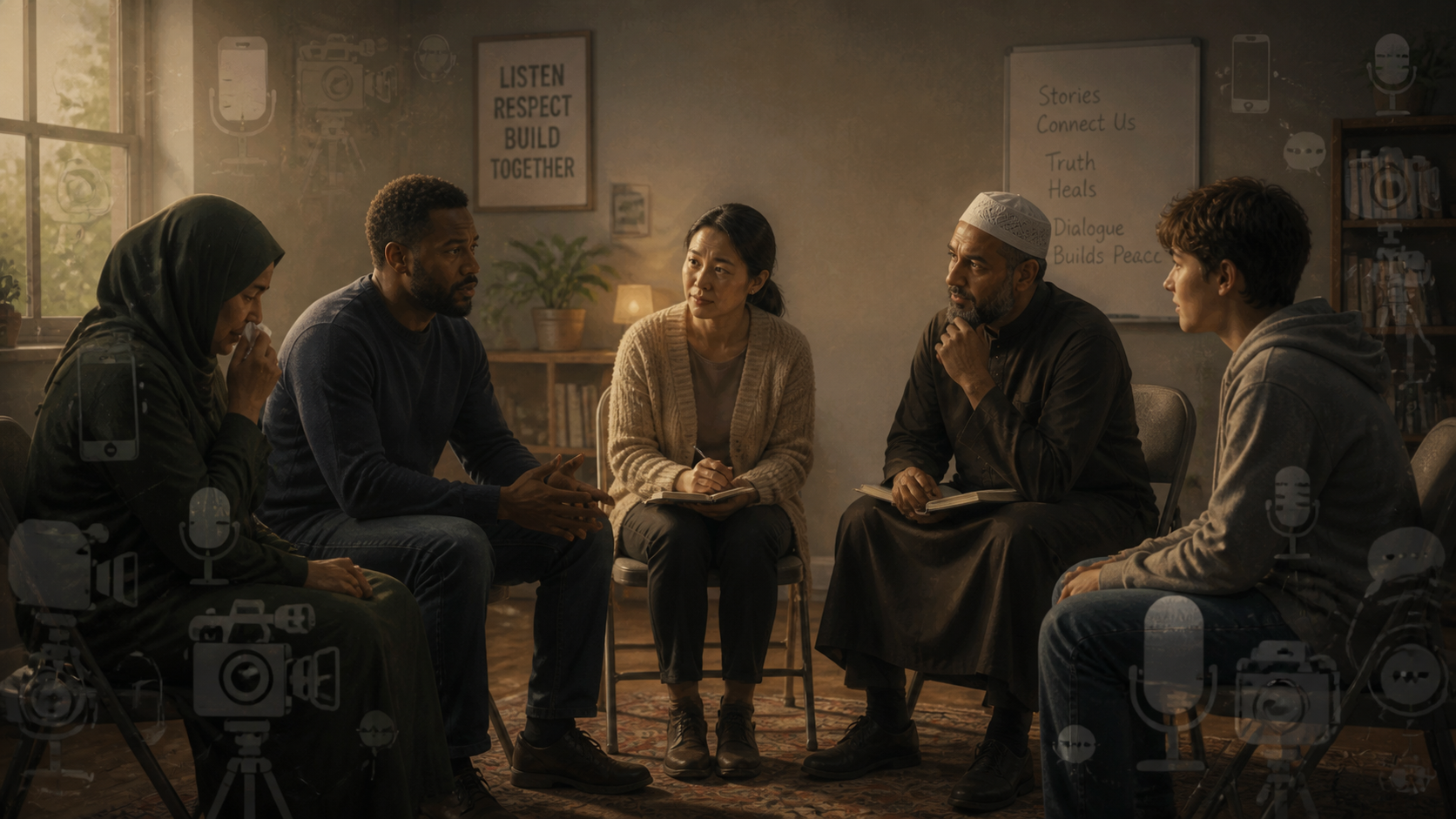
One person is shown the most terrifying threats from the other side. Another is shown the most humiliating images of civilian suffering. Another is shown extremists speaking as if they represent millions.
Each feed may contain real material. But the pattern of selection can teach a false emotional lesson: that the other side is reducible to its cruelest voices, most violent images, and most unforgivable moments.
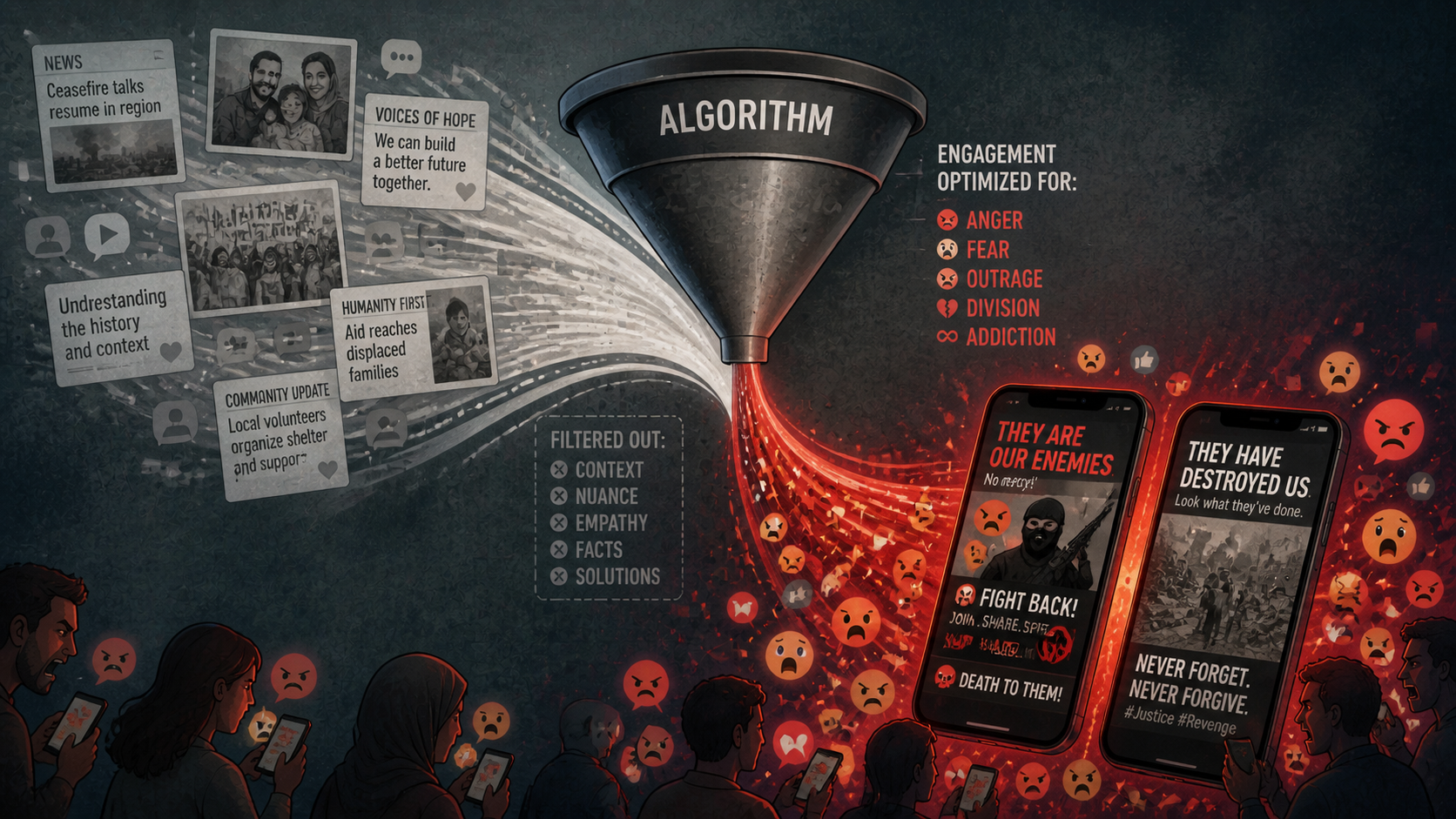
Social platforms are not neutral windows onto reality. Increasingly, they function as emotional training systems.
They reward what keeps people watching, reacting, reposting, and returning. Over time, users learn which forms of expression bring attention, affirmation, and belonging.
That training matters in conflicts like ours.
If an Israeli sees a feed dominated by threats from Hamas, Hezbollah, Iran, or their supporters, and almost none of the grief of ordinary Palestinians, Lebanese, or Iranians, the lesson is clear: there is no human world over there, only danger.
If a Palestinian sees endless images of destruction, humiliation, extremist Israeli rhetoric, and almost nothing of Israeli bereavement except in militarized form, the lesson is equally clear: there is no human world over there either, only domination.
The result is not simply disagreement.
It is emotional narrowing.
Each side becomes more fluent in the other side’s worst representatives and less able to recognize the other side’s ordinary human beings.
Complexity Loses Online
A society in pain needs language that can hold more than one truth at a time:
Yes, we were attacked.
Yes, we are terrified.
Yes, we must protect our people.
Yes, civilians on the other side still matter.
But complexity is a weak competitor in attention markets.
“We must deter those attacking us while protecting innocent life” does not travel the way “burn them all” does.
This is not because people are stupid. It is because attention is scarce, fear is immediate, and moral certainty is easier to share than moral discipline.
Media Are Not All the Same

It is important to distinguish among different actors.
Newsrooms are not algorithms. Journalists are not influencers. Editors are not political operatives. Public broadcasters, legacy newspapers, partisan cable shows, Telegram channels, TikTok accounts, and X feeds do not operate by the same rules.
But they increasingly compete inside the same attention environment.
Traditional media institutions were built around editorial judgment, verification, and hierarchy. Many still take those obligations seriously. But even responsible journalism now lives beside social feeds, podcasts, clips, livestreams, and on-demand platforms where immediacy, shareability, audience retention, and emotional force shape what gets produced, promoted, and repeated.
A threat is easier to headline than a reconciliation effort.
A minister promising vengeance circulates faster than bereaved families refusing hatred.
A dehumanizing quote is easier to package than a careful explanation of trauma, memory, fear, and responsibility.
This does not mean every editor is cynical or every platform engineer malicious. It means even decent institutions can become structurally vulnerable to grievance logic.
The loudest, harshest, most absolutist voices become the public face of a conflict, while slower forms of courage become nearly invisible.
The Necessary Role of Anger
There is an important objection: not all outrage is destructive.
Moral anger has exposed injustice, mobilized resistance, challenged indifference, and forced societies to confront harms they preferred to ignore. Anger can clarify. It can break through denial. It can insist that suffering be seen.
The problem is not anger itself.
The problem is anger detached from conscience.
Anger becomes grievance when it stops seeking accountability and starts seeking humiliation. It becomes dangerous when it no longer distinguishes perpetrators from populations, defense from domination, justice from revenge, or grief from permission.
A healthy society does not demand that victims speak softly about their pain.
But it does need moral boundaries around what pain is allowed to justify.
Why This Matters for Peace Preparation
Peace preparation requires more than treaties. It requires emotional conditions in which agreements can survive.
That means at least three kinds of work: healing and emotional safety, narrative and memory work, and daily cooperation that changes how people feel about one another.
Media and digital platforms shape all three.
A person whose nervous system is saturated with fear does not become more open to complexity by consuming an endless stream of provocation. They become more brittle, more reactive, and more convinced that annihilation is one headline away.
A community whose stories are organized entirely around its own innocence and the other side’s barbarism will experience mutual recognition as betrayal.
And daily cooperation depends on repeated signals that the other side includes teachers, parents, doctors, children, workers, mourners, and dissenters — not only fighters, fanatics, and threats.
If media systems overwhelmingly reward the most inflammatory representatives of every community, the emotional groundwork for cooperation is steadily eroded.
The Cycle of Escalation
Grievance politics and grievance media reinforce one another.
Politicians supply dramatic content. Platforms reward it. News outlets amplify it. Influencers brand themselves around it. Audiences respond to it. That response teaches politicians what to say next.
The cycle repeats, often with a slightly higher dosage each time.
One does not need conspiracy to see the pattern. Incentives are enough.
A leader learns that measured language sounds weak beside theatrical rage.
A producer learns that escalation outperforms sobriety.
A platform learns that users stay longer when they are agitated.
A citizen learns that indignation brings belonging.
Before long, large parts of the ecosystem are organized around the emotional monetization of threat.
Who Pays the Price
And who loses in that ecosystem?
Not usually the men with microphones.
Not the politicians who rise by promising humiliation for enemies. Not the influencers who turn conflict into branding. Not the platforms selling attention. Not the commentators whose certainty grows with every crisis.
The people who lose are those already carrying the heaviest burdens: the Israeli parents who cannot hear a siren without panic, the Palestinian children learning to read the sky for danger, the Lebanese families living under permanent threat, and civilians everywhere whose grief becomes raw material for someone else’s narrative.
A society does not become safer merely because its anger is more visible.
Sometimes it becomes less safe, because grievance rhetoric blurs the line between deterrence and emotional escalation.
Deterrence says: we will stop attacks and impose clear costs.
Grievance says: our pain entitles us to imagine limitless suffering for you.
The first may sometimes prevent war.
The second enlarges the moral space for it.
Selective Outrage
Selective outrage is especially dangerous.
When people believe only their own dead are fully visible, fully mournable, and fully real, grievance deepens. When one community’s sorrow is amplified while another community’s suffering becomes background noise, media systems are doing more than conveying information. They are participating in moral sorting.
Peace preparation therefore cannot ignore media. It must ask a harder question:
What kinds of public communication help societies metabolize grief without converting it into grievance?
When Grievance Protects Memory
At this point an important objection deserves an answer.
Some grievances are not only understandable—they preserve history.
A people that forgets genocide, slavery, terrorism, ethnic cleansing, or persecution becomes vulnerable to repeating it. Memory is not the enemy of peace. Honest remembrance is often one of its foundations.
The danger begins when memory ceases to be a source of responsibility and becomes a source of permission.
Communities need stories that remember injustice without teaching that suffering grants moral exemption. The purpose of memory is not to sanctify revenge. It is to deepen wisdom, vigilance, and conscience.
Grief says, “Never again should this happen.”
Grievance quietly changes the sentence:
“Never again—and therefore anything we do is justified.”
That is the moral crossing this essay seeks to illuminate.
What Healthier Media Could Do
Healthier media would not deny violence or sanitize evil. It would not pretend there are no terrorists, extremists, ideologies of destruction, or genuine threats requiring force.
But neither would it flatten entire peoples into abstractions.
In practice, that could mean editorial standards that distinguish perpetrators from civilians after atrocities. It could mean resisting headlines that make collective punishment sound inevitable or reasonable. It could mean treating dehumanizing rhetoric not as colorful candor but as evidence of moral and strategic danger.
It could also mean giving more attention to those whose stories rarely become viral: bereaved families across divides, trauma workers, teachers, physicians, religious leaders, hostage families, displaced families, bridge-builders, dissidents, and ordinary people struggling to retain their humanity under extraordinary pressure.
Digital platforms face different responsibilities.
They cannot eliminate hatred. Nor should they become arbiters of every difficult political question.
But they do shape the incentives that determine which voices become most visible, most profitable, and most influential.
That responsibility begins with refusing to reward explicit calls for extermination or collective punishment simply because they generate engagement. It also means slowing the viral spread of inflammatory content and providing context where emotional intensity is likely to outpace understanding.
Just as importantly, media can decide which kinds of stories deserve public attention.
Conflict is not made up only of soldiers, militants, and politicians. It is also made up of parents, physicians, teachers, aid workers, clergy, survivors, and neighbors who continue choosing humanity under extraordinary pressure. Journalists, filmmakers, and civic organizations regularly document acts of courage across communal lines: families mourning together, doctors treating strangers and enemies alike, volunteers risking themselves for civilians they were taught to fear, and survivors refusing to let trauma become permission for hatred.
These stories rarely dominate the news cycle.
Yet they remind us of something indispensable: violence is never the whole story.
None of this asks societies to suppress grief.
It asks them not to confuse grievance with strength.
Our Role in the System
Institutions matter.
But so do ordinary people.
Each of us is now, in some small way, a curator of public emotion.
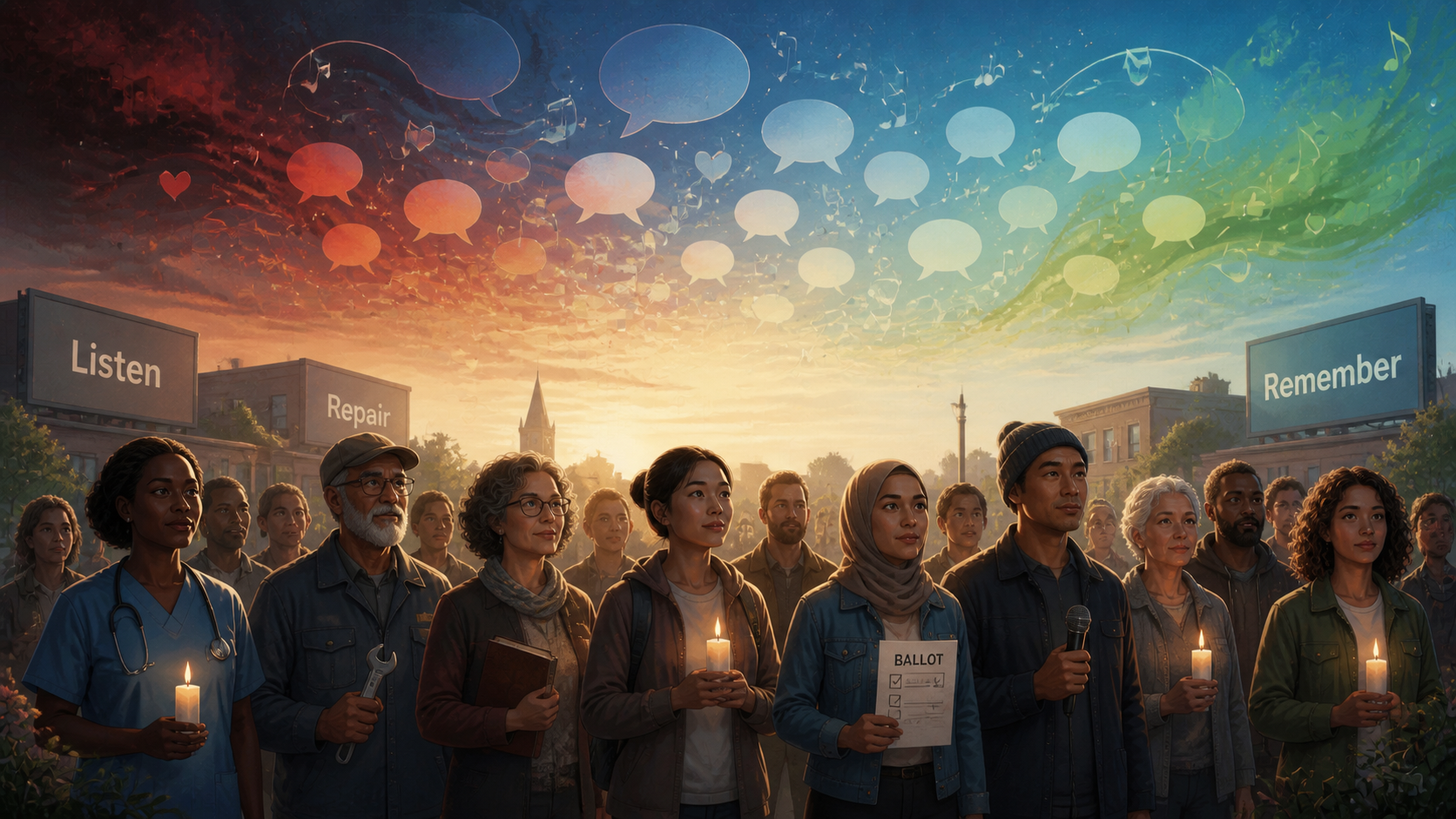
Every clip we share, every slogan we repeat, every threat we amplify, every moment of attention we reward helps decide which emotional habits become normal.
We are not only consuming media.
We are teaching one another how to feel.
That teaching can move in more than one direction.
We can normalize the belief that another people’s grief is propaganda unless it serves our cause.
Or we can insist that recognizing another people’s dead never diminishes our own.
We can reward the loudest voices because they satisfy our anger.
Or we can recover an older, more demanding idea of strength:
that courage is measured not only by what we are willing to fight,
but also by what we refuse to become.
This is not sentimentality.
Some enemies are real.
Some wars are unavoidable.
Some force is necessary.
But even under those conditions, societies still decide what kind of emotional life they will cultivate.
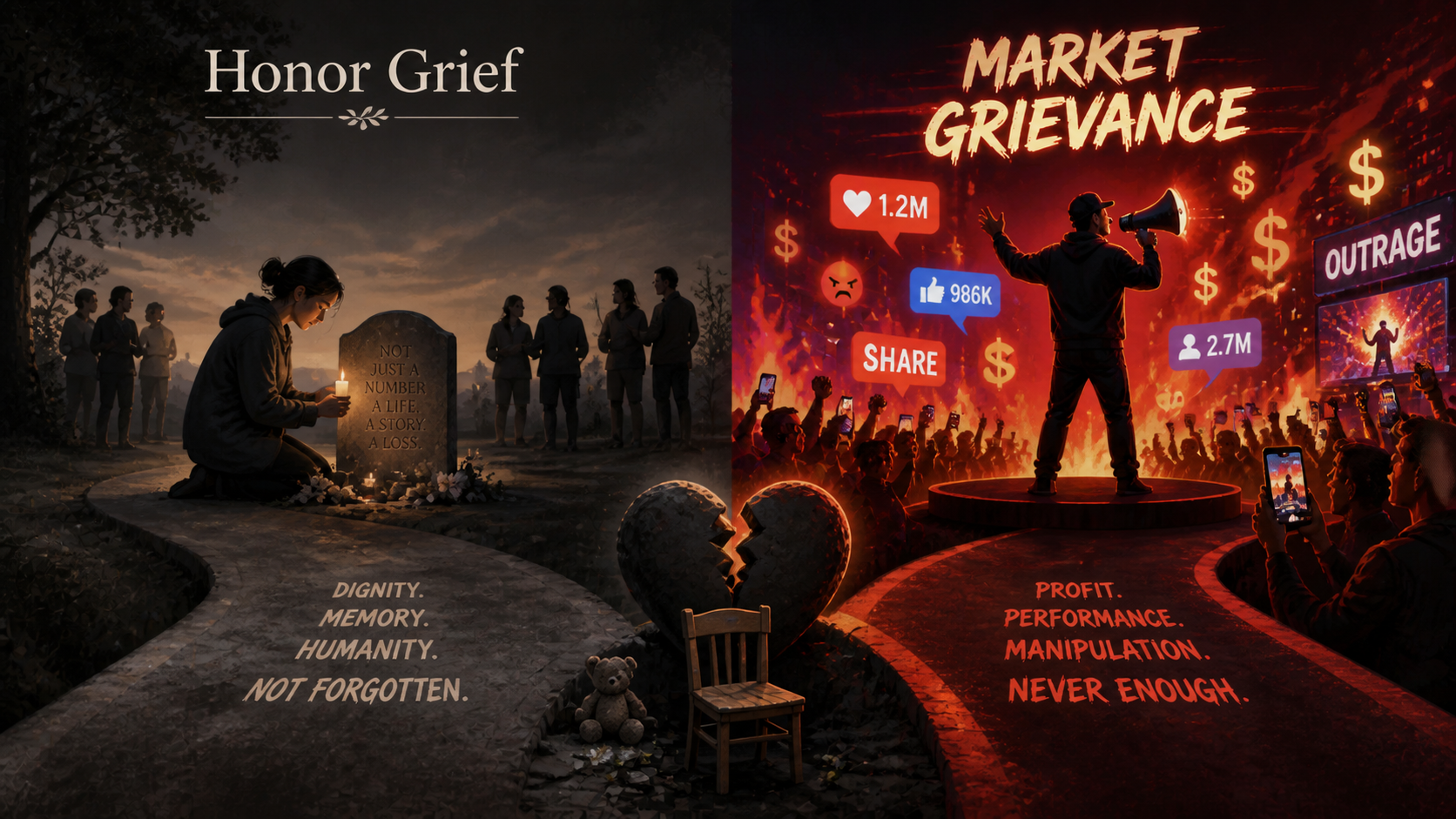
Will they honor grief—
or market grievance?
Will they elevate those who discipline pain into responsibility—
or those who convert pain into permission?
Will they teach children that strength means keeping one’s humanity under pressure—
or that strength means learning to enjoy fantasies of erasure?
These questions are no longer peripheral to peace.
They are among its preconditions.
From Peace Preparation to Media Preparation
Political agreements may someday redraw borders, verify ceasefires, release prisoners, establish security arrangements, or create pathways toward sovereignty and recognition.
But if the information environment continues rewarding humiliation, absolutism, and tribal intoxication, those agreements will land on emotionally mined ground.
Peace preparation in the digital age must therefore include media preparation.
People must learn how outrage is engineered.
How algorithms shape attention.
How grievance is rewarded.
And how each of us can resist becoming its unpaid distributor.
Political agreements can stop wars.
Only cultures can sustain peace.
That is why media preparation is no longer separate from peace preparation.
It has become one of its essential forms.
Because every society must eventually answer the same question:
What will we do with our grief?
Will we discipline it into wisdom—
or weaponize it into grievance?
Grief asks for witness.
Grievance asks for an audience.
Peace begins the moment we stop confusing the two.
Related Topics
Related Posts