The Holocaust Witness Who Predicted its Denial
This week, the world is commemorating Holocaust Remembrance Day. But there is little joy for anyone witnessing the rise of brazen antisemitism worldwide.
From the outright delusional remarks of Candace Owens to the hate spread by Tucker Carlson and Jackson Hinkle, and from the denial or ignorance of the Holocaust to open support for Hamas among some progressives, the situation is deteriorating—quite literally—by the day.
In Kraków, Poland—one of the cities most devastated by the atrocities of the Holocaust and home to the Schindler’s Factory—there is a minuscule museum. It is located at the corner of Plac Bohaterów Getta, the central square of what was once part of the Kraków ghetto.
It is called the Apteka pod Orłem (Eagle Pharmacy), a pharmacy once run by Tadeusz Pankiewicz, a man who tried to save Jews from their inevitable deaths and who witnessed Nazi horrors en masse.
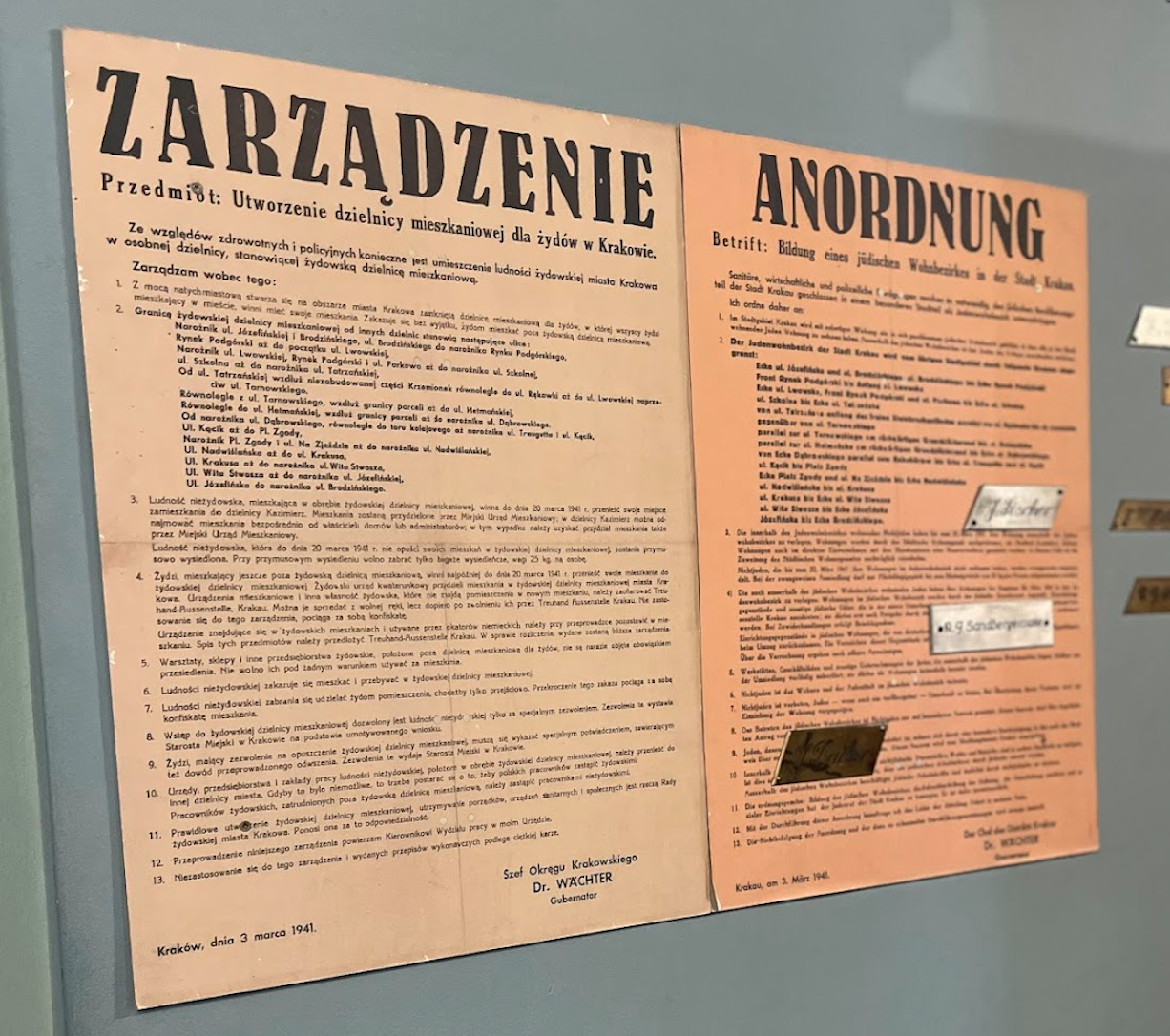
I happened to visit the pharmacy over a year ago, and I found it both cozy and deeply disturbing. Alongside old medicine bottles—which are visually appealing to those who appreciate echoes of the past—were placards in Polish and German announcing the creation of a “living place for Jews in Kraków,” as well as signs removed from the doors of Jewish residents.
But the real horror was not the objects, the photographs, the stories, or even the names. It was the words written by Pankiewicz in his seminal memoir, The Kraków Ghetto Pharmacy, which he subtitled A Testimony to the Holocaust.
I consider myself a woman of strong mental resilience, yet even I felt deeply unsettled reading Pankiewicz’s accounts of Nazi officers beating pregnant Jewish women, forcing them onto routes leading to death, and dehumanizing entire swathes of people who had done nothing wrong to them.
These unparalleled levels of cruelty defied all logic of what it means to be human. While an animal tearing another animal apart is a matter of survival, this was nothing but a conscious choice that has little to no explanation.
The intensity only grew when Pankiewicz described the liquidation of the ghetto and, in graphic detail, the decaying corpses hidden under coal and eaten by maggots—among them children poisoned by their own parents before being forcibly taken away to the camps.
Yet it was not the accounts, no matter how utterly despicable, that struck me most, but a rather casual paragraph in which Pankiewicz recounts a conversation with a man about what he witnessed in Kraków during the ghetto years.
After listening carefully, the man made a suggestive remark indicating that he did not quite believe Pankiewicz and thought he was exaggerating, so to speak.
“I wondered how many people around the world thought like him,” Pankiewicz wrote.
Sadly, 80 years later, the answer is many. In fact, too many—and still counting.
The only hope is that they’ll remain outnumbered by the Pankiewiczs of this world.