
The Hostage State: Tehran’s Cynical Gambit in Lebanon
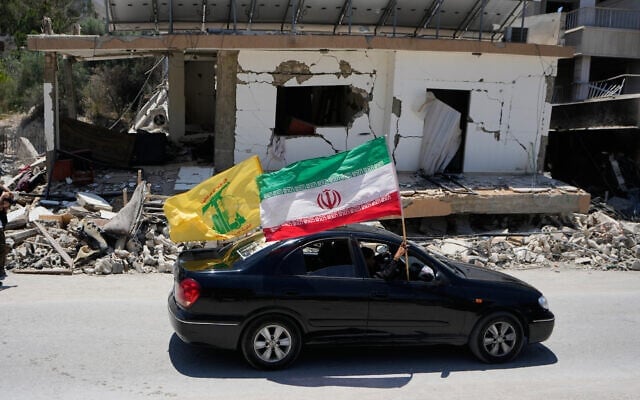
In the high-stakes theater of modern statecraft, the Islamic Republic of Iran has perfected a singular, ruthless art form: the conversion of sovereign nations into expendable bargaining chips. As we witness the ongoing regional instability, it is becoming increasingly clear that Lebanon—a state already teetering on the precipice of collapse—is not merely a victim of local sectarian strife. It is, by cold, calculated design, the latest instrument in Tehran’s desperate struggle to secure its survival in the shadow of a changing international order.
For those of us who believe that Israel’s security and long-term viability depend on clear-eyed strategic assessment, the recent revelations regarding Iran’s demands in its nuclear negotiations with Washington should serve as a wake-up call. According to reports from the Lebanese government itself, Tehran has attempted to tether a bilateral nuclear agreement to the cessation of Israeli military operations against Hezbollah in Lebanon.
To the uninitiated, this might seem like standard diplomatic posturing. To the student of Middle Eastern power dynamics, it is a transparent act of geopolitical hostage-taking.
The Weaponization of Sovereignty
The logic Tehran employs is as audacious as it is hollow. By inserting a third-party conflict—the Israeli-Hezbollah war—into its nuclear talks with the United States, Iran is attempting to manufacture a non-existent connection. Israel’s confrontation with Hezbollah is a matter of immediate national security, a response to a belligerent force on its border. It is entirely distinct from the enrichment cycles and sanctions relief discussions currently occupying the P5+1 and Iran.
However, Iran’s strategy is not driven by logic; it is driven by tactical necessity. With Hezbollah’s military infrastructure significantly degraded by Israeli Northern Command operations, the group is no longer the formidable “deterrent” Tehran once touted. Thousands of operatives lost, command structures shattered, and stockpiles depleted—Hezbollah has lost its utility as a conventional military threat.
In response, Tehran has performed a strategic pivot: it has repurposed the proxy. If Hezbollah cannot win a war, it will be used to win a negotiation. By demanding that Israel unilaterally halt its operations, Iran is attempting to achieve what its proxy could not do on the battlefield: a secured survival via diplomatic fiat.
A Three-Pronged Strategy of Contempt
The weaponization of Lebanon is not accidental; it is a calculated effort to achieve three immediate objectives, each of which serves to weaken the international consensus against the regime:
-
Reframing the Narrative: By framing Israeli military action as the primary obstacle to a wider regional peace or a nuclear deal, Tehran attempts to cast Israel as the obstructionist. It seeks to place the burden of continued conflict on Jerusalem, effectively blaming the victim for defending its territory.
-
Engineering Discord: Tehran is actively trying to drive a wedge between Washington and Jerusalem. By making the survival of Hezbollah a prerequisite for the nuclear deal, Iran creates an impossible dilemma for the United States—forcing it to choose between its nuclear containment goals and the security concerns of its primary regional ally.
-
Distraction as Defense: Every hour spent in diplomatic corridors debating the status of the Lebanon front is an hour that the international community is not spending on the critical issues of Iranian enrichment levels, prohibited weaponization activities, and the opacity of its nuclear program. Lebanon is a diversionary tactic writ large.
The Indignity of a Puppet
Perhaps the most egregious aspect of this situation is the utter contempt Tehran shows for Lebanese sovereignty. The Lebanese state, despite its fragility, has signaled its desire to move beyond the shadow of the Iranian-backed militia. President Joseph Aoun has explicitly accused Iran of using his country as a bargaining chip, and he has championed a phased plan to disarm Hezbollah and restore a state monopoly on force—a goal that should be supported by anyone interested in regional stability.
Instead, Tehran chooses to override the expressed will of the Lebanese government, insisting that the fate of the Lebanese people remains tied to the survival of a militia that has effectively held the country hostage. It is a humiliation of a state, performed with the cynical indifference of an empire that views all borders as permeable and all nations as disposable.
A Strategic Imperative
For those of us who are deeply concerned about the future of Israel—who see the need for a realistic, proactive approach to regional threats—we must recognize this moment for what it is. The regime in Tehran has demonstrated that it is not a rational actor seeking integration into the international order. It is a power that survives by hollowing out its neighbors.
The disarmament of Hezbollah and the restoration of Lebanese sovereignty are not just “domestic Lebanese issues.” They are a fundamental requirement for the security of the entire region. As long as Tehran retains the ability to use Lebanon as a lever, neither peace nor stability can be more than a fleeting illusion.
We must articulate this clearly to our international counterparts: the normalization of the Islamic Republic’s behavior is impossible as long as it continues to treat sovereign states as currency. The regime’s strategy has been laid bare by its own proxies. Now, it is time for the international community to stop indulging the fiction that an agreement can be reached with a power that holds a fourth nation hostage to win a bilateral argument. We must stand for the sovereignty of our neighbors, for in doing so, we ultimately stand for the future of our own state.