
The ICJ Opinion on Israel’s UNRWA Ban: Legal Limits of Domestic Law
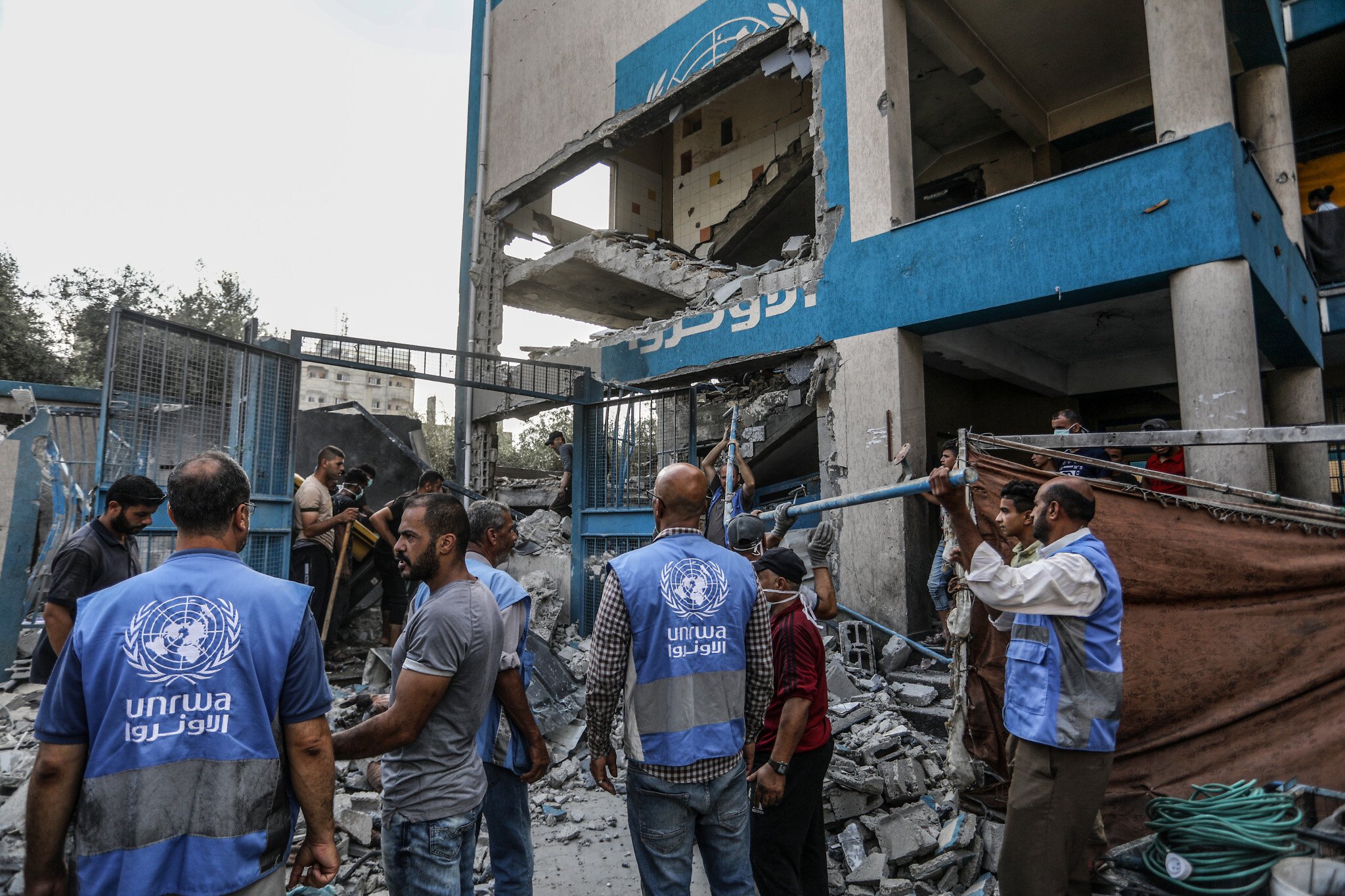
On 22 October 2025, the International Court of Justice (ICJ) issued an advisory opinion in response to a request from the UN General Assembly, addressing the legal consequences arising from Israel’s prohibition of UNRWA activities within its sovereign territory. Although advisory and not binding, the Court’s opinion carries substantial normative weight under international law. This case raises critical questions at the intersection of international obligations, domestic legislation, and the role of international organizations in occupied territories.
1. The Israeli Law and the Context
In October 2024, the Israeli Knesset enacted the Law to Cease UNRWA Operations in the Territory of the State of Israel, 2024, which explicitly prohibits UNRWA from maintaining any presence, providing services, or conducting activities—directly or indirectly—within Israel’s sovereign territory. The law’s stated purpose is “to prevent any activity of UNRWA in the territory of the State of Israel.”
This domestic measure triggered widespread international criticism, particularly given the context of Israel’s ongoing obligations in the Occupied Palestinian Territory (OPT)—including East Jerusalem, the West Bank, and the Gaza Strip—where UNRWA provides critical humanitarian and civil services to Palestinian refugees. Although Israel argues that the law applies only within its sovereign territory, the ICJ examined the broader implications of such a ban within the framework of international humanitarian law and the UN Charter.
2. The ICJ’s Findings
The ICJ held that Israel, as an occupying power, continues to bear legal obligations toward the Palestinian population under occupation, including ensuring access to humanitarian assistance. The Court emphasized that UNRWA is a subsidiary organ of the UN General Assembly and plays a unique role in delivering education, health, and relief services to over five million Palestinian refugees.
By restricting UNRWA’s ability to operate—even within areas where Israel claims sovereignty but which affect cross-border logistics or coordination—the ICJ found that Israel impedes the fulfillment of humanitarian functions, which violates customary international law and specific provisions of the Fourth Geneva Convention.
3. Domestic Law vs. International Obligations
A key legal question is whether a domestic statute can override international legal commitments. According to Israeli legal doctrine, the Knesset holds supreme legislative authority and may enact laws that contradict international obligations. As clarified in Israeli jurisprudence (HCJ 2587/04 – Yitzhak Buchris et al. v. Hadera Tax Collector et al.):
“It is presumed that the purpose of every law is to be consistent with the state’s international obligations. Indeed, “it is proper to interpret the Freedom of Information Act, when it is implied here and there and its content does not require a different interpretation, in accordance with the provisions of international law” (Judge Agranat in Case 336/61 Eichmann v. the Attorney General, P.D. 16 2033, 2041). I have stated this elsewhere when I said: “It is presumed that the purpose of every law is to fulfill international law and not to contradict it.”
The dualist approach followed by Israel means that treaties do not have binding force domestically unless adopted through explicit legislation. This principle was affirmed in Israeli jurisprudence such as AA (Tel-Aviv-Jaffa) 50855-10-12- Israel Rathaus et al. v. Slovak Republic slovenska republika et al., where the Court stated:
“Where there is a conflict between the provision of domestic law and the provision of international law, and the content of the domestic provision is not implied here and there, the court’s duty is to prefer the provision of the domestic legislature and give it effect: according to 336/61 Adolf Eichmann v. the Attorney General, P.D. 16(3) 2032, 2037, section 7(2) (29.5.1962); HCJ 279/51 H. “
However, the ICJ reminded states that invoking internal law does not absolve them of international responsibility. Citing Article 27 of the Vienna Convention on the Law of Treaties:
“A party may not invoke the provisions of its internal law as justification for its failure to perform a treaty.”
The Court thus concluded that Israel cannot rely on its domestic statute to justify non-cooperation with UN organs or obstruction of humanitarian assistance.
4. Israel’s Obligations Under Occupation Law
Another core issue addressed is whether Israel has ongoing obligations in Gaza and the West Bank, given its argument that it “withdrew” from Gaza in 2005. The ICJ reaffirmed that effective control, not formal withdrawal, determines the applicability of occupation law.
Israel’s own Supreme Court has acknowledged these principles. In High Court 1308/17 – Municipality of Sluid vs. Knesset, the Court stated:
״It has already been ruled that, in terms of the belligerent perception prevailing in the region, and in the absence of “streamlined” legislation that enshrines in Israel’s domestic law international treaty norms, the main norms applicable in the region are those contained in the Regulations Concerning the Laws and Customs of War on Land of 1907, annexed to the Fourth Hague Convention of 1907 (hereinafter: the Hague Regulations) and which are of a customary nature (Duikat case; Jama’it Askan case, at p. 793; Beit Sourik case, at p. 827; Gaza Coast case, at p. 584; Yoram Dinstein, The International Law of Belligerent Occupation 5 (2009) (hereinafter: Dinstein)). These laws can be supplemented, in appropriate cases, by norms drawn from international human rights law (HCJ 769/02 Public Committee Against Torture in Israel v. Government of Israel, PD Sab(1) 507, 547-545 (2006); HCJ 3969/06 Al-Kharov v. Commander of IDF Forces in the West Bank, paragraph 10 (22.10.2009); Report of the Public Committee to Investigate the Maritime Incident of May 31, 2010 63/58 and the references cited therein (Part Two, February 2013)).״
The ICJ reiterated that Palestinians in the OPT remain “protected persons” under the Fourth Geneva Convention, and thus Israel holds positive duties to ensure access to aid, education, health, and safety—duties frequently implemented by UNRWA. Israel’s obstruction of UNRWA operations, therefore, constitutes a violation of its obligations under international humanitarian law.
Israel argued before the Court that UNRWA’s activities are compromised by the involvement of individuals affiliated with terrorist organizations, particularly in the Gaza Strip, and that this undermines the agency’s claim to neutrality and its legitimacy as a humanitarian actor. Israel cited incidents where staff members were allegedly involved in militant activity and claimed that UNRWA educational content fosters incitement.
In its advisory opinion, the ICJ acknowledged the seriousness of these allegations, stating that:
“Allegations regarding the neutrality of UNRWA must be addressed with due seriousness. However, the existence of such claims does not in itself justify a general prohibition on the agency’s activities, nor does it absolve states from their obligations under international humanitarian law.”
The Court noted that UNRWA has established internal accountability mechanisms, including investigations, staff dismissals, and cooperation with donor states. Importantly, the Court distinguished between isolated misconduct and the overall legitimacy of the organization’s mandate.
The ICJ concluded that allegations of abuse must be addressed through appropriate legal and administrative channels, but that unilateral restrictions imposed on a UN body operating under General Assembly mandate constitute a breach of international law when they obstruct the delivery of essential humanitarian services to protected populations.
6. Consequences and Recommendations
The ICJ concluded that Israel must reverse measures that prevent UNRWA from carrying out its mandate and must comply with its obligations toward the Palestinian population. It further stated that UN member states have a duty not to recognize or assist actions that impede the operations of UN agencies in occupied territory.
This echoes the Court’s stance in Legal Consequences of the Construction of a Wall (2004), where it emphasized the duty of third states not to recognize illegal situations arising from breaches of international law.
Conclusion
The Court did not ignore Israel’s allegations that UNRWA has been infiltrated by terrorist elements. It acknowledged that such claims are serious and require investigation, but stressed that individual misconduct does not justify dismantling an entire humanitarian framework. The ICJ emphasized that UNRWA operates under oversight mechanisms and within the UN system. Any legitimate security concerns must be addressed through targeted, lawful responses, not blanket prohibitions.
Finally, the Court reiterated the responsibility of all UN member states not to recognize illegal situations and to support the continuity of humanitarian aid until a political solution is reached. In this context, the decision affirms that sovereignty does not shield a state from its duties under international law, especially when civilian lives are at stake.
The Court’s opinion serves as both a legal and moral directive: international cooperation and respect for humanitarian mandates must prevail over unilateral legislative acts.