Articles Crafted for Action
The Inheritance My Father Never Put in His Will
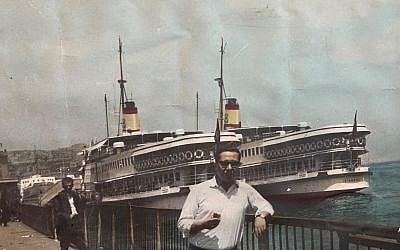
There is a kind of inheritance no lawyer can draft and no court can distribute. It is not measured in dollars, deeds, or possessions, nor can it be divided equally among siblings. It is transmitted quietly, through thousands of ordinary moments that seem insignificant at the time. Only years later do you realize that someone else’s values have become your instincts. It was only after my father passed away on the 10th of Sivan, following an eleven month battle in the intensive care unit, that I fully understood this was the greatest inheritance he had left our family. His passing also explains my absence from writing over the past year. My place was beside him, and in those long months I witnessed that while illness can weaken a body, it cannot diminish a life built on enduring principles.
In the days after his funeral, people spoke about the life he had lived. They remembered his integrity, his generosity, and the remarkable journey that brought him from Beirut to Montreal, where he built a successful business and an even greater reputation. They spoke about his honesty, his kindness, and the quiet dignity with which he endured extraordinary hardship. Every tribute was deserved. Yet after the mourning ended and life slowly resumed, I found myself returning to a different question. What, exactly, had my father left us?
The obvious answers came first. He left us our traditions, our family stories, our faith, and countless memories. But as the weeks passed, I realized those were only the outward expressions of something much deeper. My father had left us a way of living. He taught us that being Jewish was never simply an identity to cherish. It was a responsibility to embrace. Loving the Jewish people was not something you proclaimed. It was something you demonstrated. It meant feeling personally responsible when another Jew was in pain, preserving our history before it disappeared, and refusing to remain indifferent when our people faced injustice. At the same time, his devotion to the Jewish people never diminished his respect for anyone else. Whether someone was Jewish or not, affluent or struggling, influential or unknown, he treated every person with dignity because he believed every human being is created in the image of God. For him, there was never any contradiction between loving your own people deeply and honoring the humanity of others. One conviction strengthened the other.
That lesson feels especially relevant today. We live in an era in which public expressions of conviction are often mistaken for conviction itself. Social media has made it remarkably easy to appear engaged, compassionate, and committed while asking very little of ourselves. More and more, we risk confusing visibility with virtue and performance with responsibility. My father belonged to a generation that understood the difference instinctively. He never felt the need to announce his values because they were evident in the way he lived. He believed that the truest measure of what we believe is not what we say when others are watching, but what we quietly do when no one is keeping score.
During my father’s eleven month stay in the intensive care unit at Montreal’s Jewish General Hospital, my brother learned of an elderly Jewish woman who had passed away. Her son did not fully understand the significance of a traditional Jewish burial, and he lacked the financial means to arrange one. As a result, cremation had been planned. It would have been easy to assume that someone else would intervene. Instead, my brother quietly stepped in. He advocated on her behalf, made countless phone calls, connected with people who could help, and worked tirelessly until she was given the proper Jewish burial she deserved. He never sought recognition, never publicized what he had done, and never considered it extraordinary. When I heard the story, I realized it was about far more than a single act of kindness. It was the continuation of an inheritance. No one had instructed my brother to act in that particular circumstance. Our father had left no written instructions and delivered no final speech about what his children should do after he was gone. He did not need to. After a lifetime of watching him quietly assume responsibility whenever someone was in need, that sense of responsibility had become instinct.
That moment changed the way I understood my own work as well. Over the past several years, I have found myself drawn to preserving the stories of forgotten Jewish communities, writing about the Jews of Syria and Lebanon, interviewing ambassadors who are building unlikely friendships with Israel, and speaking out whenever I believe the Jewish people are treated unjustly. I used to think these were simply interests I had developed through experience. I now see them differently. They are not hobbies or even professional pursuits. They are the natural expression of an inheritance that my father never consciously handed me but imparted through the example of his life.
This is, perhaps, one of the enduring secrets of Jewish continuity. Our survival has never depended solely on governments, institutions, or even great leaders. Those have all played indispensable roles, but they have never been enough. Judaism has endured because ordinary parents quietly transmitted extraordinary responsibilities to their children. Long before a child understands theology or history, he or she learns what matters by observing what the adults around them refuse to ignore. In that sense, the greatest inheritance in Jewish life has never been material. It has always been moral.
That truth has taken on renewed significance since October 7. Across Israel and throughout the Diaspora, countless Jews who never imagined themselves as advocates suddenly discovered they could not remain silent. They began educating friends, comforting grieving families, supporting soldiers, combating antisemitism, and defending Israel in conversations they once would have avoided. Many experienced this as a new calling. I wonder whether it was something else entirely. Perhaps they were simply discovering an inheritance that had been quietly waiting within them all along.
Israel itself rests upon that same inheritance. Its strength is certainly reflected in its military, its innovation, and the resilience of its people. Yet beneath all of those achievements lies an older and more enduring Jewish principle: that we are responsible for one another. That conviction sustained our people through exile, persecution, and dispersion long before we regained sovereignty in our ancestral homeland. It remains one of the defining moral foundations of the Jewish state and of the Jewish people everywhere.
My father never left me a letter explaining any of this. He left something far more enduring. He left me a love for my people that demands action rather than applause, a respect for every decent human being, and the conviction that preserving Jewish history, defending Jewish dignity, and responding to injustice are not someone else’s responsibilities. They are ours. If my brother’s quiet decision to save one Jewish woman from cremation revealed anything, it is that the truest measure of a parent’s legacy is not what they leave behind, but what their children cannot help carrying forward. That was the inheritance my father never put in his will, and I have come to believe it is one of the greatest inheritances the Jewish people possess.
If this inheritance continues through those who knew and loved him, then his legacy lives on. May the soul of Salim Argalgi continue to ascend, and may his memory forever be a blessing.
Related Posts