
The Iranian Nuclear Debate – Lessons from Ukraine
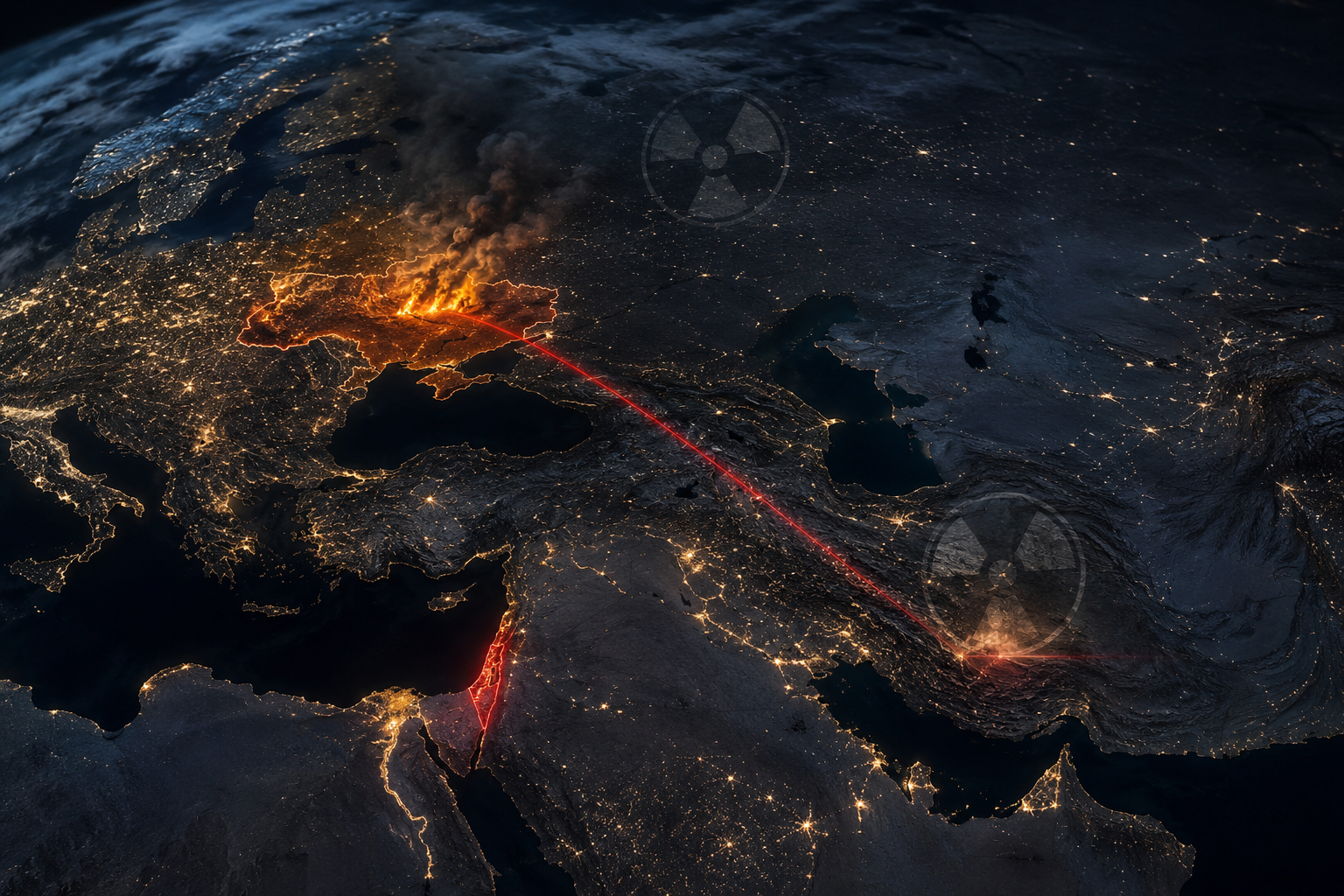
Living in Israel over the past several years, I have witnessed firsthand the escalating confrontation between Israel and the Islamic Republic of Iran. The direct clashes of June 2025 and since March 2026 revolved around a single issue that has shaped Middle Eastern geopolitics for decades: Iran’s nuclear program.
The positions are familiar.
Israel argues that the Iranian regime is pursuing the capability to produce nuclear weapons and that such a development would pose an existential threat to the Jewish state. Given Tehran’s longstanding hostility toward Israel and repeated calls for the elimination of the “Zionist entity”, Israeli leaders insist they cannot afford to wait until that capability is fully realized.
Iran, meanwhile, maintains that its nuclear program serves exclusively civilian purposes. Critics of Israeli military action therefore accuse Jerusalem of escalating a conflict based on assumptions rather than proven intentions.
Yet there is another way to approach the debate.
Instead of asking whether Iran seeks nuclear weapons, perhaps we should ask a different question: What lessons would any authoritarian regime draw from the war in Ukraine?
For me, this question carries a personal dimension. In 2019, I spent twelve months deployed to Ukraine as part of the European Union Border Assistance Mission.
The answer to that question might be deeply uncomfortable.
For more than four years, the world has witnessed a devastating war in Eastern Europe. Western governments have provided Ukraine with financial aid, intelligence support, advanced weaponry, training, and diplomatic backing. Without this assistance, Ukraine might not have survived the initial stages of the Russian invasion.
Yet, despite overwhelming sympathy for Ukraine and repeated declarations of solidarity, one thing has remained constant: no Western nation has directly entered the war.
The reason is obvious.
The U.S. and Europe possess overwhelming conventional military superiority over Russia. If the alliance fully committed its forces to the battlefield, Russian troops in Ukraine would likely be unable to withstand them. Yet such intervention remains unthinkable. Why?
Because Russia possesses the world’s largest nuclear arsenal.
Since February 2022, Russian officials and propagandists have repeatedly reminded Western audiences of this fact. Discussions of nuclear strikes against European capitals have appeared on Russian television. Whether these threats were serious or merely psychological warfare is ultimately irrelevant.
The risk of nuclear escalation imposes limits that even the most powerful military alliances are reluctant to test.
The result is a strategic reality that governments around the world cannot ignore. Russia’s nuclear arsenal has not guaranteed victory in Ukraine. It has, however, significantly constrained the options available to those seeking to oppose Russian aggression.
The lesson becomes even clearer when viewed through the lens of the 1994 Budapest Memorandum.
Following the collapse of the Soviet Union, Ukraine inherited the world’s third-largest nuclear arsenal. In exchange for security assurances and guarantees of territorial integrity, Kyiv agreed to relinquish it.
Looking back today, it is difficult to imagine many Ukrainians believing that surrendering their nuclear arsenal was a wise strategic choice. Had Ukraine retained a credible nuclear deterrent, Moscow’s calculations would almost certainly have been different.
Iranian leaders have watched the events in Ukraine unfolding since 2022. They have seen a non-nuclear state invaded by a nuclear power. They have seen international law and alleged security assurances evaporate. They have seen the West limiting its own involvement because of the risks associated with nuclear escalation.
What conclusions should we expect them to draw?
From Tehran’s perspective, regime survival is the highest priority. Iranian leaders remember the fate of Saddam Hussein in Iraq and Muammar al-Gaddafi in Libya. They also see a nuclear-armed North Korea whose regime remains firmly in power despite decades of sanctions and international isolation. Nuclear capabilities are the ultimate tool of survival for dictatorships of the 21st century.
None of this proves that Iran is pursuing nuclear weapons. But the strategic incentives are undeniable.
The crucial question is therefore no longer: Why would Iran seek a nuclear deterrent?
The crucial question is: What resources is Iran prepared to deploy and what risks is the regime willing to take, to achieve this tool that would eventually secure its survival?
Any agreement, any memorandum with the current Iranian regime to limit its nuclear capabilities will become null and void the moment the Iranian side believes it has acquired sufficient power to disregard it – just as Russia did with the Budapest Memorandum.
Any government and international organization – the Obama administration, the Trump administration or the UN nuclear watchdog in particular – believing that a “deal” would end the Iranian nuclear weapons program for good is repeating a mistake of historical proportions. A mistake that future generations will pay the price for. First and foremost, in Israel but eventually beyond.
The Iranians learned their lesson from Ukraine. The West should finally do the same.