
The Israel American Jewry Loved No Longer Exists
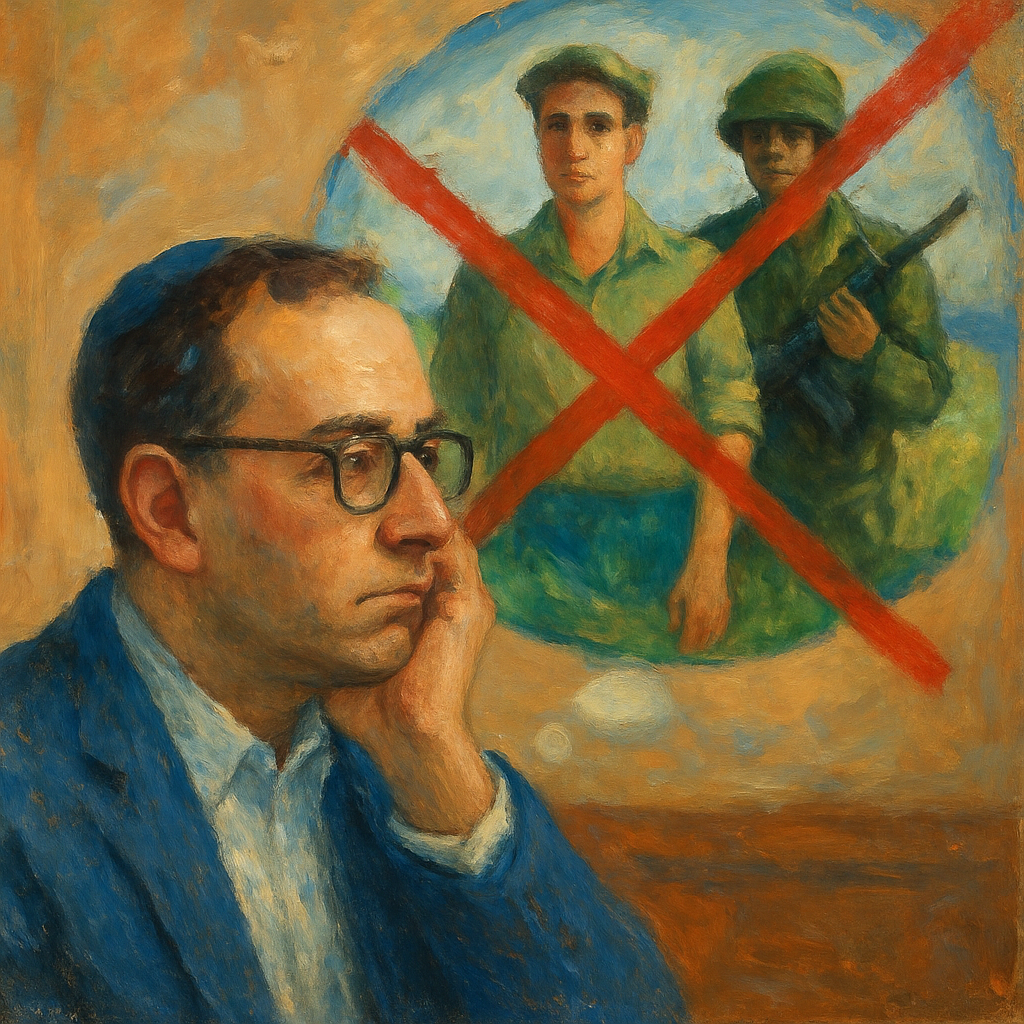
Until 1995, American Jews believed in an Israel of hope, democracy, and possibility—a country that reflected their values and aspirations. The assassination of Yitzhak Rabin shattered that vision. Today’s Israel—Ashkenazi, Mizrahi, Russian, religious, secular, fragmented—no longer resembles the country American Jews once felt spiritually aligned with. And if Israel looks like it is at war with itself, it is because it truly is.
For nearly half a century, American Jews—80% Democratic and 20% Republican—embraced a powerful, romanticized image of the Jewish state. It was the Israel of Exodus: Paul Newman’s idealism, sunlit kibbutzim, egalitarian pioneers, and the hard-won triumph of democracy over adversity. It was a secular, socialist frontier society animated by pluralism, justice, courage, and Jewish rebirth led by leaders such as David Ben Gurion, Golda Meir, Moshe Dayan, Abba Eban, Menachem Begin, Shimon Peres and Chaim Weizmann.
Most of all, it was the Israel embodied by Yitzhak Rabin, whose quiet strength and moral restraint reassured American Jews that Israel was guided by the same civic and ethical compass that shaped their own identity. Rabin made it easy for American Jews to say: Israel reflects us.
Then, on November 4, 1995, Rabin was murdered—not by Hamas, not by an external enemy, but by an Israeli Jew.
In that moment, the dream collapsed. The illusion of internal unity evaporated. And the Israel American Jews imagined revealed itself to be far more fractured, far more complex, and far more Middle Eastern than they had ever understood.
After Rabin, Israel Became a Different Country
Since 1995, Israel has evolved into a multi-tribal, multi-trauma society in which internal divisions shape national life more than any external threat. To understand why American Jews increasingly feel estranged from Israel, we must first understand who actually lives in Israel today—not the Israel of American Jewish nostalgia, but the Israel that exists.
The Major Components of Israeli Society
1. Ashkenazi Israelis
30–35% of Jewish Israelis Founders of the state, culturally Western, secular, and historically dominant. Today they remain highly visible in academia, media, high-tech, and the judiciary, but their political power is diminishing. They are the group most culturally aligned with American Jewry—even as they lose influence in shaping Israel’s direction.
2. Mizrahi (Sephardi/Oriental) Jews
~50% of Jewish Israelis (including mixed heritage)
Immigrants from Middle Eastern and North African countries who endured discrimination under the Ashkenazi establishment. Their identity is traditional, proud, nationalist, and shaped by a demand for dignity long denied. Mizrahim form the political backbone of Likud and Shas. Many view American Jews as privileged, naïve, and dismissive of their story.
3. Russian-speaking Israelis
~15% of Jewish Israelis (around 1 million people)
Arriving from the former Soviet Union in the 1990s, they brought scientific expertise, secular toughness, and deep skepticism toward liberal, Western moral frameworks. They tend to be nationalist, security-focused, and indifferent to Diaspora opinion. For many, American Jewish liberalism seems detached from Middle Eastern reality.
4. Religious Zionists (Dati Leumi)
12–15% of Jewish Israelis
The ideological heirs of Rabbi Kook, this mostly Ashkenazi group forms the ideological core of the settler movement. They believe in Jewish sovereignty as a divine mission and mistrust the secular courts and Ashkenazi liberal elites. Many see non-Orthodox American Judaism as religiously invalid.
5. Ultra-Orthodox (Haredi) Jews
13–14% today, projected to reach 25–30% in coming decades
Insular, Torah-centered, and rapidly growing. Politically powerful through Shas and United Torah Judaism, they seek autonomy in education and public life. Most do not regard American Judaism as legitimate; American Jews are often viewed through the narrow lens of philanthropy rather than partnership.
6. Arab (Palestinian) Citizens of Israel
20–21% of Israel’s population
Indigenous communities including Muslims, Christians, Druze, and Bedouin. They face structural inequality, political marginalization, and contested national identity. Their story is almost entirely absent from American Jewish imagination—and they often see Diaspora Jews as indifferent to their struggles.
7. Ethiopian Israelis
1.5–2% of Jewish Israelis
Air-lifted from Ethiopia in the 1980s–1990s, they remain deeply Zionist but face racism and socioeconomic challenges. They are largely invisible in Diaspora narratives.
These Groups Do Not Want the Same Country
Each of these communities carries its own pain, fears, history, and vision for Israel. And here is the part American Jews rarely grasp: none of these factions centers American Jewish values in their worldview.
Some harbor indifference; others hold outright disdain.
- Many Mizrahim see American Jews as cultural snobs.
- Russians view them as weak and naïve about power.
- Religious Zionists dismiss their Judaism as religiously meaningless.
- Haredim dismiss it entirely.
- Even secular Israelis often see Diaspora criticism as naïve moralizing from afar.
The love affair American Jews felt toward Israel was never fully reciprocated—and today, it barely registers.
Why American Jews Feel Lost
American Jews loved an Israel that reflected their own deepest values:
- liberal democracy
- secular pluralism
- humanistic universalism
- equality before the law
- separation of religion and state
- and Rabin’s sober voice of reason
But Israel has moved in directions they never imagined:
- more Middle Eastern
- more tribal
- more religious
- more nationalist
- more polarized
- and far more indifferent to Diaspora sensitivities
The Israel of kibbutzim, egalitarian pioneers, and the Rabin peace ethos was only one chapter in Israel’s story. That chapter ended in 1995, and it has not returned.
A New Relationship Begins With Honesty
The task now is not to mourn but to understand.
American Jews must accept that the Israel they loved was real but temporary.
Israel must acknowledge that Diaspora Jews are not merely donors or cheerleaders but an essential part of the Jewish future.
But honesty comes first:
Israel is not united. It is at war with itself.
And American Jews are not central to its internal battles.
This leads to one final, uncomfortable truth: it has become increasingly difficult—perhaps impossible—for American Jews to counter rising anti-Zionism when the Israel they are asked to defend is a country they no longer fully understand. The moral language and liberal values that once anchored American Jewish advocacy now reflect only a minority current within Israel itself. American Jews are still fighting for the Israel of Rabin, of Exodus, of their childhood Hebrew schools, while Israel has moved on to battles shaped by Mizrahi trauma, Russian nationalism, religious zeal, and demographic forces utterly foreign to the American Jewish experience.
How American Jews Can Respond Today
Given this deep and widening gap between American Jewish values and contemporary Israeli realities, many American Jews understandably feel unprepared—and often unwilling—to answer hostile or manipulative questions about Israel. They are frequently pressed to defend policies they oppose, leaders they reject, or complexities they cannot untangle. In these moments, the most effective response is neither debate nor improvisation. It is clarity.
One strategy—used by diplomats, public figures, and anyone who refuses to be cornered—is simple: answer the question you can answer, not the one someone is trying to trap you into answering. When faced with adversarial questioning about Israel or Palestinians, respond with the one truthful, principled statement that reflects your core commitment without binding you to every Israeli policy or political agenda:
“I support Israel as the Jewish homeland and its right to defend itself.”
This is your message.
This is the ground you stand on.
Nothing requires you to go further.
Whether the question is about Gaza, Netanyahu, settlements, the Supreme Court, Palestinians, genocide accusations, or the occupation, your answer remains the same:
“I support Israel as the Jewish homeland and its right to defend itself.”
If they press again, repeat it.
If they shift the question, repeat it.
If they try to drag you into a moral or political labyrinth, you do not follow.
And only after you have asserted your foundation do you add—if you choose to engage further:
“If you’re interested in an honest, respectful conversation about anything else, I’m happy to share my perspective.”
This simple two-part response does several powerful things:
-
It keeps you from being forced to defend positions you do not hold.
-
It establishes boundaries around what you will and will not discuss.
-
It deprives adversaries of control over the narrative or the emotional terrain.
-
It asserts Jewish peoplehood and Jewish safety without entangling you in Israeli politics.
-
It invites genuine conversation and exposes those who seek only confrontation.
In a time when American Jews are increasingly targeted for Israel’s actions, and when Israel itself no longer reflects the values once shared across the ocean, this disciplined clarity offers something rare: a way to stand firm without being pulled into arguments you cannot win, explanations you do not believe, or identities that no longer fit.
It is not the job of American Jews to resolve Israel’s internal conflicts—or to justify its every decision.
But it is reasonable to assert one simple truth:
Israel is the Jewish homeland and has the right to defend itself.
Beyond that, we can talk—if the conversation is honest, and if it is truly a conversation.