The Israeli Peace Dividend — The Fragility of Unity
The Israeli Peace Dividend — The Fragility of Unity
This week’s Torah portion reminds us that societies can be destroyed by their own choices. The fate of Sodom and Gomorrah is not only a tale of individual sin but of civic failure—proof that a community can unravel from within when justice, compassion, and shared responsibility collapse. Hold that warning in mind as we consider Israel’s present crossroads.
Israel’s recent story can be told in one word: unity. When we have it, we endure the unendurable and astonish ourselves with what we can build. When we lose it, we fray, stall, and sometimes teeter on the edge of squandering what we’ve made.
Before October 7, our unity was thinning. A parliamentary democracy without a formal constitution, we leaned for decades on the poetry and promises of 1948—beautiful words, insufficient scaffolding. The arguments of 2023 were not only about courts or coalitions; they were about who gets to define the character of the state. We were shouting across widening canyons.
Then came the massacre, the war, the funerals, the reserve call-ups; the volunteers at every junction, the casseroles and coffee, the strangers who became family; the therapists, medics, farmers, techies, teachers, and drivers who stitched a torn fabric back together because survival demanded it. Under fire, unity returned—not because we solved our differences, but because reality left us no choice.
That is unity’s Israeli paradox: catastrophe summons it; calm dissolves it. We know how to hold fast when the sirens sound. We are less sure of ourselves when the sirens fall silent.
As talk of ceasefires and diplomatic frameworks drifts closer to the realm of the possible, it is tempting to think that quiet will heal us. But peace peels the plaster off the fractures war had covered. If we mistake the absence of rockets for the presence of solidarity, we will discover too late how much of our togetherness was borrowed from emergency.
Unity in Israel has never meant uniformity. We are many Israels inside one—secular and religious, Arab and Jewish, Mizrahi and Ashkenazi, center and periphery; tractor sheds and tech campuses; yeshivot and universities. Our argument is part of the miracle. But argument without agreed ground rules corrodes institutions, turns appointments into sieges and legislation into battering rams. In the past two years, that truth has been carved into us.
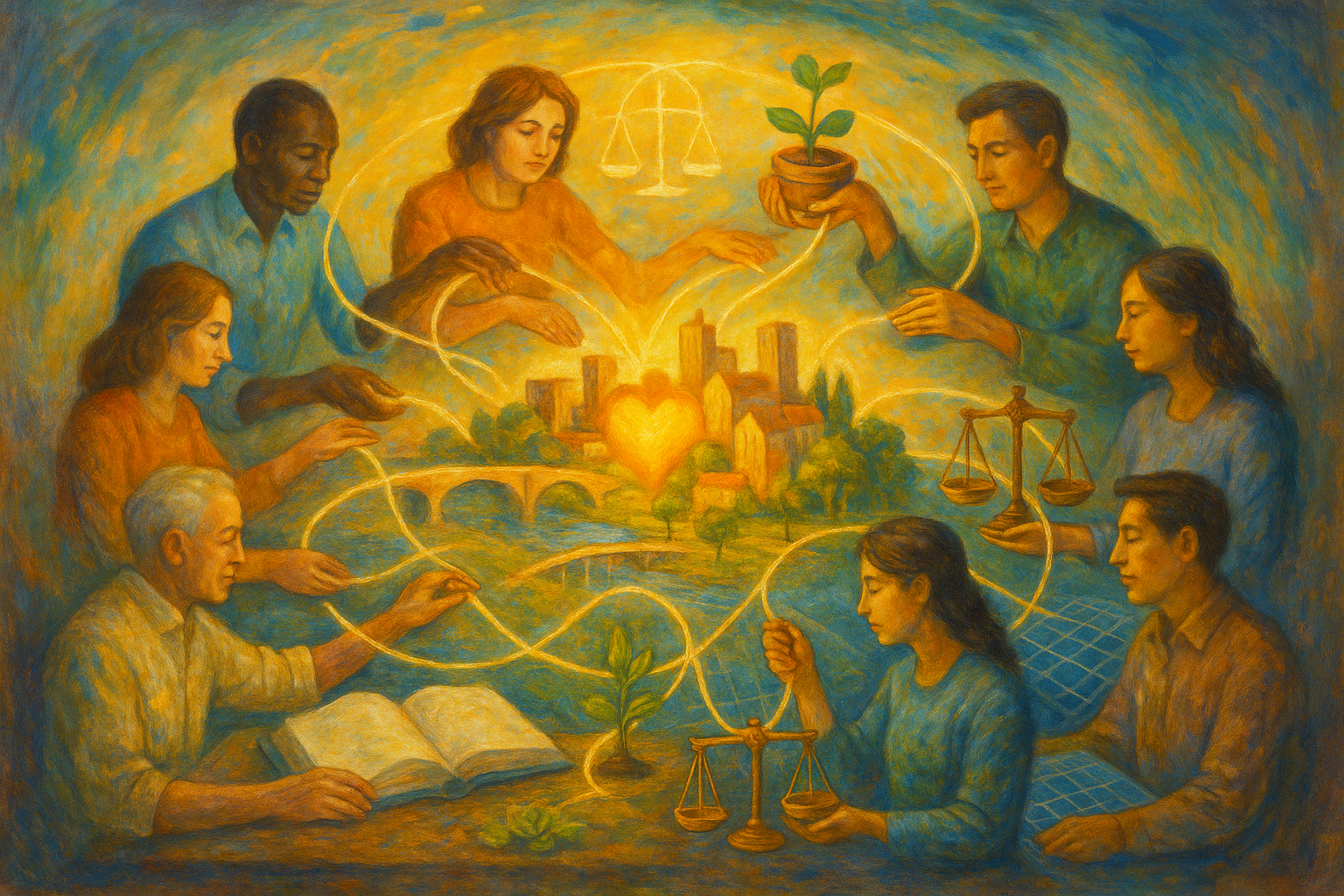
The surprising grace of wartime life was how ordinary people behaved when the stakes were inescapable: reservists knitting units out of strangers; evacuees sheltered by families they had never met; harvests rescued by volunteers who had never seen a grove; Haredi logistics teams working alongside Arab paramedics, Druze trackers, and national-religious coordinators. We rediscovered the muscle memory of mutual responsibility—standing shoulder-to-shoulder without first solving every philosophical dispute. That is the muscle we cannot afford to let atrophy.
There is also a wider horizon beyond our internal quarrels. In diaspora homes—from Los Angeles to Paris to Sydney—private conversations increasingly include a hard, quiet calculus: in an era of rising antisemitism, does emigration make sense? The oldest story in Jewish life—danger abroad, refuge in Zion—has returned to the dinner table. If Israel is to remain the worthy destination our grandparents heard in the call “come build with us,” it cannot sound like “come referee our fracas.” The Jewish homeland must feel like a home.
Unity is not a mood; it is a discipline. It asks us to prefer a shared future over the temporary thrill of humiliating a rival camp. It asks leaders to treat opponents as constituents of the same nation, not enemies to be crushed. It asks citizens to keep one civic promise to those they oppose: I will not seek a victory that makes you feel homeless in your own country.
We know the alternative. When contempt replaces disagreement, the center cannot hold. Fatigue feeds extremism. Trust evaporates. And then—only then—do our enemies unify us again. Outsourcing our cohesion to those who wish us harm is a miserable civic model and an unsustainable one.
A genuine peace “dividend,” if it arrives, will not merely be budget lines redirected from tanks to classrooms. It will be the choice to carry our wartime habit of showing up for one another into the stillness that follows. To speak to each other as citizens first, factions second. To argue about means while affirming ends: a Jewish and democratic state where no child wonders whether their family belongs.
In quieter moments, another reality insists on being named: the Declaration of Independence was an act of moral imagination, but it was not a constitution. For seventy-seven years we have lived by improvisations—some noble, some expedient, all fragile. We do not need to rehearse the specifics to admit the obvious: a more formal constitution is now a necessity, not a luxury. Everyone knows it. We have known it for years. Completing that unfinished promise of 1948 is how we convert emergency brotherhood into everyday citizenship, so unity does not depend on incoming fire.
If a peace horizon opens, let the dividend we chase be simple and human: a society that chooses unity without waiting for tragedy to force it upon us. We will still argue—thank God—but the argument will belong to a people confident enough in its common house to keep the front door open for every Jew who needs it, and for every Israeli who already calls it home.
And perhaps—perhaps—we can aspire to a modest shalom bayit, a measure of “peace in our house,” in our Jewish homeland. Not unanimity, not uniformity—just enough shared quiet to live together with dignity while we keep building the country we promised ourselves.