The Jewess Patriot - Issues That Unite, Don’t Ignite
The Jewess Patriot: The Rabbi’s Table – The Truth is Rarely Comfortable
There are plenty of places left to hear people argue. There are far fewer places where people can actually talk.
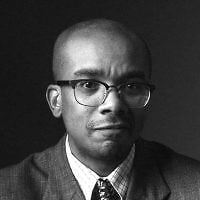
That distinction is at the heart of Rabbi Michael Barclay’s The Rabbi’s Table, a weekly radio show and podcast built around a deceptively simple idea: “Dialogue, Not Debate.” In an era when political disagreement is increasingly treated as evidence of bad character, Barclay has created something increasingly unusual: a forum where difficult subjects can be discussed without requiring everyone at the table to begin from the same ideological position.
That matters because some of the most consequential questions facing America today are also the questions people seem least willing to discuss honestly. Israel. Antisemitism. Islam. Immigration. The transformation of the Democratic Party. The growing influence of democratic socialism. The future of America’s relationship with the Middle East. These subjects do not need less conversation. They need more of it.
Barclay is hardly pretending to be a neutral observer. He is an unapologetic defender of Israel, and his writings since October 7 have made that position unmistakable. His account of the war is rooted not only in politics but in his identity as a rabbi and his understanding of Israel as part of a 3,700-year Jewish story. Yet his defense of Israel does not require him to pretend that Israelis, Israeli politicians or the Israeli military are incapable of making mistakes.
In fact, one of the more revealing things about Barclay’s writing is his willingness to acknowledge those mistakes. When Israeli soldiers mistakenly killed three Israeli hostages during the war, he did not try to explain away the tragedy. He examined the moral and operational realities of fighting an enemy that deliberately embeds itself among civilians while still recognizing the horror of what had happened. That is a far more intellectually serious position than the increasingly common assumption that supporting Israel requires either blind allegiance or silence.
This is particularly important because, in my opinion, the American media’s coverage of Israel and the broader Middle East has become increasingly hostile to Israel in both tone and framing. That is an opinion, not a claim that every journalist or every publication is anti-Israel. There are certainly reporters doing serious work and outlets offering competing perspectives. But the broader conversation increasingly seems to begin with Israel as the defendant and work backward from there.
Words such as “genocide,” “apartheid” and “occupation” increasingly appear not as claims to be examined but as assumptions from which the discussion begins. Hamas terrorism, Iranian aggression, the history of Jewish persecution and Israel’s security concerns can become secondary considerations, if they are considered at all.
Barclay has spent years pushing back against that narrative, and his writing frequently asks readers to look beyond the simplified version of Israel presented in much of the political and media conversation. He has also written extensively about antisemitism and the way old anti-Jewish ideas can reappear dressed up in contemporary political language.
But the most compelling thing about Barclay’s work is that he does not appear interested in creating another echo chamber for people who already agree with him. That philosophy becomes especially valuable when the conversation turns to the Democratic Party’s dramatic ideological shift.
The Democratic Socialists of America are no longer an obscure organization that most Americans have never heard of. Their influence has grown substantially, and their candidates and policy ideas have moved increasingly into mainstream Democratic politics. The DSA’s own platform is remarkably explicit about its positions on Israel, capitalism, American foreign policy and the political system.
Yet the Democratic Party is not formally the DSA, and not every progressive Democrat is a DSA member. That distinction is important. It is also worth asking how meaningful the distinction becomes when politicians reject the label while embracing significant portions of the underlying agenda.
Look at Michigan’s Abdul El-Sayed.
El-Sayed’s recent Democratic Senate primary victory is a fascinating case study in where the party may be heading. He is not a member of the DSA, but he has emerged as one of the clearest examples of the progressive movement’s growing influence inside the Democratic mainstream. He has campaigned on Medicare for All, sharply criticized American support for Israel and described Israel’s actions in Gaza as genocide. His victory was backed by prominent progressive figures including Bernie Sanders and Alexandria Ocasio-Cortez.
And that is precisely where the conversation becomes more complicated.
El-Sayed could become the first Muslim U.S. senator, which would be a historic development. His faith alone should not determine whether anyone supports or opposes him. Muslim Americans, like Jewish Americans, Christian Americans and Americans of no faith, are not a monolith.
The legitimate political question is what a candidate actually believes and what policies he intends to pursue.
El-Sayed’s campaign provides plenty of material for that conversation. His positions on Israel and American foreign policy are considerably to the left of where the Democratic Party stood only a few years ago, while his economic agenda places him firmly within the progressive wing that increasingly overlaps with the priorities of the democratic socialist movement. His primary victory demonstrated that these ideas can win a Democratic nomination even in a state that is hardly synonymous with New York or San Francisco-style progressive politics.
That raises an uncomfortable question: What happens when politicians understand that some ideas are more electorally attractive when the ideological label is removed?
The DSA can advocate positions openly. A Democratic candidate can distance himself from the organization while embracing many of the same policy objectives. Voters are then left to determine whether the distinction is substantive or merely rhetorical.
I would describe that phenomenon, deliberately provocatively, as a kind of political “taqiyya.” I am not using the term as a theological accusation against Muslims, nor am I suggesting that Muslim Americans as a group operate this way. I mean it strictly as a political metaphor for the practice of softening, disguising or strategically repackaging an ideology when the unfiltered version might be less appealing to the broader electorate.
Say the moderate thing to the general electorate. Signal the more radical thing to the ideological base. Let the labels change while the underlying objectives remain.
That is worth examining regardless of who is doing it.
And this is exactly where a program like The Rabbi’s Table becomes useful. Barclay does not have to pretend that he has no opinions. He is a rabbi, a Jew, a defender of Israel and a man with a clearly articulated worldview. His public writing makes all of that obvious.
Objectivity does not mean pretending every side is equally correct. It means being willing to examine your own side honestly and challenge the other side without caricaturing it.
Barclay’s own public apology over his earlier criticism of John Fetterman’s casual clothing offers an almost perfect example of that principle. He publicly acknowledged that he had been wrong and connected the experience to the Jewish teaching that we should not judge by appearances.
That is the kind of intellectual humility missing from so much of modern political discourse.
We have created an information culture in which Americans increasingly consume people they already agree with, repeat arguments they already believe and treat disagreement as evidence of moral failure. Israel is one of the clearest examples. So are questions about Islam, antisemitism, immigration and the changing ideological composition of the Democratic Party.
Those are precisely the subjects where Americans need somebody willing to say: Let’s talk about it. Not because the answers are easy. They aren’t.
Not because everyone will leave the table agreeing. They won’t.
But because democracy cannot survive if the only acceptable conversations are the ones in which everyone already knows what they are supposed to say.
That is the space Rabbi Michael Barclay has created with The Rabbi’s Table. It is a place where Israel can be defended without pretending Israelis are infallible, where media narratives can be challenged without claiming every journalist is dishonest, and where the Democratic Party’s ideological transformation can be examined without reducing every Democrat to a socialist.
Most importantly, it is a place where difficult questions can actually be asked.
Pull up a chair and know that the conversation is going to get uncomfortable at times. That may be exactly why we need it.
Related Topics