The Jewish Experience: Knowing What We’re Fighting For
Since the Jewish State was attacked on October 7th the soldiers of Israel have fought with unparalleled courage to defend Am Yisrael. In the diaspora, Jewish organizations have mobilized as well – rallying in the streets, lobbying governments, and waging battle on social media against the rise of anti-Semitism. But there is another front, quieter yet just as critical, that we must not ignore: making sure we know what we are fighting for.
What about Judaism is worth defending?
This question—once avoided by many—has been forced into the open. Since October 7th, less affiliated Jews have been asking: what does it mean to be Jewish? Why is it worth defending?
At Manhattan Jewish Experience (MJE), we and other outreach groups have seen a surge of young Jews seeking answers. When your people are attacked simply for being Jewish, you can’t help but ask: what about my Judaism makes it worth the fight?
Whether you are a beginner taking your first steps or a seasoned yeshiva graduate, this is the time to lean in—not shrink away. This is the time to deepen our Torah knowledge and root our pride in something deeper and unshakable. Only then can we withstand the constant barrage of anti-Israel venom. Without this educational foundation, our Judaism risks becoming defined solely by resistance to hate.
And that misses the point entirely. Because we don’t pursue Judaism to fight anti-Semitism. We fight anti-Semitism so we can pursue our Judaism.
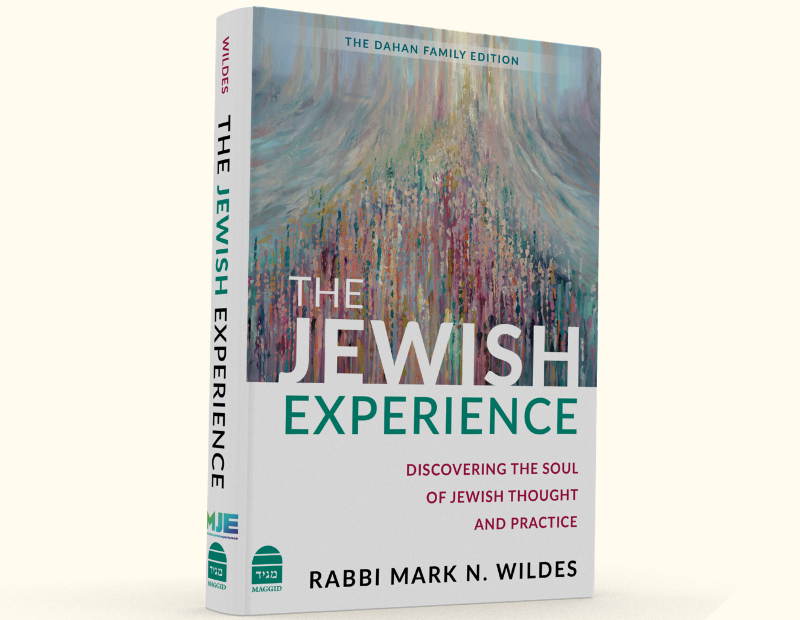
That is why I wrote The Jewish Experience: Discovering the Soul of Jewish Thought and Practice (Koren Publishing). It’s the first volume in a 3-part series—a roadmap into six fundamental areas of Jewish life: God, Torah, Prayer, Acts of Kindness & Charity, Shabbat and Tikun Olam. The content is drawn from my Basic Judaism classes with decades of real conversations with my students – smart and curious young Jewish professionals. The book has multiple “Kabbalah Corners” in every chapter, places to “Stop and Reflect”, memorable quotes, stunning images and chapter summaries to bring it all home. It is my humble effort to create a modern-day counterpart to Herman Wouk’s This is My God, Rabbi Hayim Donin’s classic To Be a Jew and Rabbi Aryeh Kaplan’s Handbook of Jewish Thought—something that is clear, compelling and vibrantly alive for our generation.
Below is a glimpse into each chapter, six gateways into the soul of Judaism:
- Finding God: In an age of doubt, can we believe in a supernatural and personal God? As I’ve discussed with my skeptical but curious students over the years, there are different ways to develop such faith. From the miraculous survival of the Jewish people against all odds, to the intricate design of the human body, to the stirrings of the soul deep within—we explore how Judaism insists there is more to us than flesh and bone. Faith is not only rational—it is intuitive. The chapter also explores the Torah’s unique view on the soul and how the mitzvot reveal its essence.
- Torah: It’s hard to take the Torah as seriously, if we see it as human made. This chapter makes the case for the Torah’s Divine origin, shares the rebuttals and responses and clarifies the indispensable Oral Tradition – which both beginners and Yeshiva graduates are often confused. Finally, we discuss how studying Torah enables one to achieve dveikut (spiritual intimacy) and makes Judaism truly ours.
- Prayer: Prayer is not recitation—it is transformation. It cultivates mindfulness and enables us to create a deeper bond with God. To explain how this all happens, we dive into the four parts of the daily Tefilah or prayer service: Birchot Hashachar (Morning Blessings), P’sukei D’zimra (Psalms of Praise), Shema U’birchoteha (The Shema and its blessings) and the Amida (Silent Devotion) so this fundamental part of Jewish life can come alive.
- Kindness and Charity: We are worth what we are willing to give. This quote from philanthropist Sir Moses Montefiore captures the essence of Judaism’s vision for giving. But what does Judaism exactly demand of us toward our fellow Jews and towards all humanity? This chapter explores the textual sources and how Judaism’s laws and traditions on hospitality, visiting the sick, mourning the bereaved, and donating to the poor transform us from one who acts kindly into a kind person.
- Shabbat: More Jews have found their way back to their roots through Shabbat than through any other mitzvah. In our frantic, screen-saturated age, Shabbat is not just a commandment—it is salvation. This chapter outlines the Torah and rabbinical sources taking readers on a journey through the traditions of a full Shabbat experience, showing why it is the beating heart of Jewish life.
- Tikun Olam: The Torah, in several places, calls on the Jewish people to be a light among the nations. What responsibility does this impose upon Jews to repair a broken world, especially in a post October 7th world which has largely turned against Israel and Jewish people?
Fortifying our Jewish knowledge base so we can properly appreciate our Judaism and know why it’s worth defending, is critical at this time. What greater response could there be to the darkness of Jewish hate than to transform it into a love for Jewish thought and practice, and a renewed devotion to our people and our faith.
[The Jewish Experience: Discovering the Soul of Jewish Thought and Practice (Koren Publishing) will be available in Jewish bookstores, online and at MJE after Labor Day.]
A Book Launch will take place Wednesday – September 10th, 7pm at MJE – 131 West 86 Street, 10th Floor. To join the Book Launch RSVP at: https://www.eventbrite.com/e/the-jewish-experience-book-launch-tickets-1626399918939