The Jewish people are cracking at the Western Wall
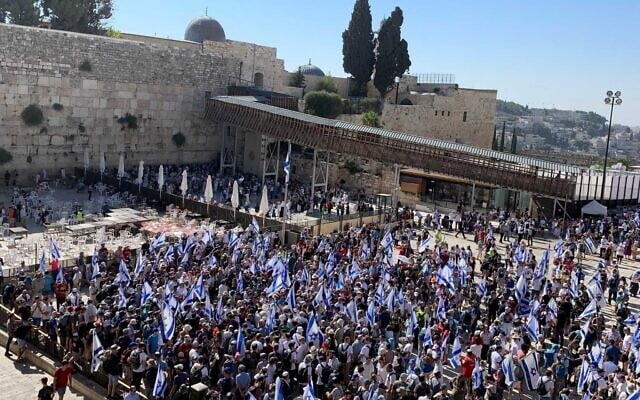
This week, the Knesset advanced a decision stating that anyone wishing to approach the stones of the Western Wall must conduct themselves solely according to the rules of the Israeli Orthodox Rabbinate. Anyone who does not comply could face a fine or even imprisonment. The decision specifies that this authority will apply along the entire Wall, including the small, peripheral section that was previously allocated to non-Orthodox Jews.
The continued advancement of this legislation is creating a crack that could turn into a deep fracture between Diaspora Jewry and Israel. How are millions of Jews around the world supposed to support a state whose parliament renders them unwanted and illegitimate at the holiest site in Judaism? Can Israel truly afford a rupture with the Jewish communities beyond its shores? How many Members of Knesset who supported this proposal actually read the full text of the law that risks becoming a stain in the eyes of our brothers and sisters abroad?
When I served as head of the local council in Efrat and met with Jewish delegations from overseas, I took pride in the community we had built, strong, united, and respectful of every individual and their Jewish religious worldview. Later, when I was responsible for international advocacy for the Yesha Council, I again had the privilege of representing the community from which I come. As my encounters with Diaspora Jewry deepened, I was exposed to meaningful conversations with Reform, Conservative, Modern Orthodox, secular, Haredi, and many other Jews. Each and every one of them carries a deep and unwavering love for Israel. They are committed to it.
Hundreds of thousands gathered in Washington only weeks after October 7 to demonstrate powerful support for Israel in front of the White House. It was very cold — about seven degrees — but Jewish hearts were burning. The home was burning. The commitment was burning.
The exile forced upon us created different streams within Judaism, shaped by key figures and often influenced by geography. Yet alongside the differences, there are anchors we all share: Yom Kippur, the Bible, Bar and Bat Mitzvah, the longing for Jerusalem, and the perception of the Western Wall as sacred to every Jew.
During Ottoman rule and the British Mandate, restrictions were imposed, yet we have abundant documentation of Jewish men and women clinging to the stones of the Wall, praying, yearning for the day when it would be in Jewish hands, free of limitations.
In June 1967, millions of Jews in Israel and across the Diaspora wept as broadcaster Rafael Amir described the battles in Jerusalem and the moment the Wall was liberated: “At this very moment, I am descending the steps to the Wall… I am not a religious man, never have been, but this is the Wall, and I am touching the stones of the Western Wall!” In the background, soldiers could be heard reciting, “Shehecheyanu… who has kept us alive and brought us to this time.”
I have met countless Jews who describe that moment as the most moving and meaningful of their lives. In their eyes, they almost saw the Messiah emerging. In Gaza, soldiers described how in nearly every home there hangs a drawing or picture of the Temple Mount. Are we prepared for Jews to remove from their walls pictures of the Western Wall because they have been pushed away from it?
In later years, the plaza at the Wall was formally regulated. Separate areas for men and women were designated, and authority over the site was defined. When additional Jewish streams sought to practice their Judaism there in their own way, they were prohibited. After years of struggle, a solution was found: the construction of a large platform over the remains of Robinson’s Arch near the southwestern corner of the Wall, situated between the large Orthodox plaza and the ramp leading to the Temple Mount. Even if not everyone was satisfied, it was important that every stream in Judaism had access to the Wall and a place to practice its faith according to its understanding.
Recently, after a large stone fell and damaged the platform, raising questions about responsibility for its repair and maintenance, MK Avi Maoz sought to exploit the opportunity to remove non-Orthodox streams from any presence at the Wall. With Haredi support, he advanced legislation declaring that the entire Wall would be under the exclusive authority of the Orthodox Rabbinate; no ceremonies inconsistent with Orthodoxy would be permitted, and violators could face fines or imprisonment. This law, which creates a deep rupture with our brothers and sisters overseas and excludes them from the site sacred to every Jew, has passed its preliminary reading.
I happened to be in the Knesset during the vote. Afterward, I sat down for lunch in the Knesset cafeteria. I was surprised by how many Members of Knesset did not even understand the change the bill proposes. I was astonished to discover that some supporters were entirely unaware of the deep distress felt by Jewish leadership in Europe, the United States, Australia, and elsewhere. One minister sitting beside me complained that they are required to vote without anyone going into the details. This lack of awareness of the crack being created could lead to a fracture that will be very difficult to mend.
Can Israel afford to lose the support of its Jewish brothers and sisters? Can we expect them to stand beside us while we push them away?
Rabbi Doron Rubin, CEO of the Conservative Movement in Israel, described the bill as a “strategic attack” on encouraging aliyah. “How can we look an American Jew in the eye and persuade him to immigrate when the laws of the state say he is welcome only if he abandons his identity?” Rubin asked. “There is no logic in egalitarian bar and bat mitzvah ceremonies of families from Montreal or Tel Aviv ending in prison. We will intensify the struggle until this injustice is overturned.”
Throughout my various roles, I have sought to build bridges and avoid walls. I have repeatedly hosted delegations from abroad, both in my home and at ANU – Museum of the Jewish People, which by law serves as the national center for Jewish communities in Israel and around the world. I feel compelled to cry out: it is not too late. The bill’s passage in its preliminary reading is a crack. If we do not address it immediately and remove it, it will become a fracture within the Jewish people and in Israel’s relationship with Diaspora Jewry.