
The Kingmaker Without a Party
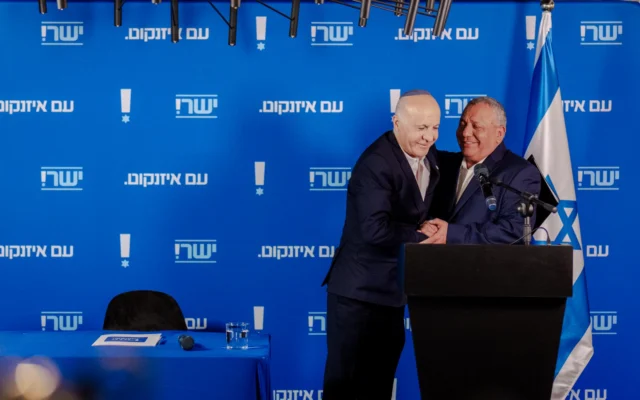
On the night of September 13, on Channel 12, Yoram Cohen said the sentence that may end up mattering more than any of the five polls published the next morning. Cohen — former Shin Bet chief, now the number-two name on Gadi Eisenkot’s Yashar list was asked whether his party could ever sit with Likud. His answer wasn’t a refusal. It was a term sheet. “They won’t be the ruling party,” he said, “but they’ll be in the coalition.” Netanyahu, he added, would almost certainly reject the arrangement, though Cohen also noted, almost in passing, that Netanyahu is barred from serving as a minister anyway while under indictment, which makes the objection somewhat beside the point.
I’ve written twice now about this election’s structural story: first, the religious-Zionist right consolidating out of necessity as Smotrich merged with Feiglin to avoid the threshold; then the opposition doing the opposite, splintering as Bennett and Eisenkot chose separate lists rather than one. Cohen’s interview is the piece that was missing. It isn’t Netanyahu, Bennett, or even Eisenkot who is currently defining the terms of the next government. It’s a former intelligence chief, speaking in the register of conditions and vetting rather than ideology, drawing the actual lines a coalition will have to cross.
The polls explain why anyone is listening to him. Five surveys published on September 13 show a genuine dead heat: Kan has Yashar at 25 seats to Likud’s 21; Channel 12 puts it at 24-22; Maariv at 24-23; and Channel 13 at 22-19. Only i24NEWS/Direct Polls has Likud ahead, 27-22. In every one of the five, Ofer Winter’s “People of Israel” clears the threshold, taking four or five seats that used to belong to someone else. No single poll gets either bloc to 61. That is the environment in which a vice-chairman’s conditions on a Tuesday-night interview become the closest thing to a governing plan either side has produced.
What makes Cohen’s position sharper than it first appears is where he actually draws the line, and it isn’t where the peg on this election has assumed all year. Cohen was equally conditional about Smotrich’s Religious Zionism: “When it comes to Likud, and also Smotrich, I would approach them if they accepted our principles.” The line he refused to soften at all was Ben Gvir’s. Otzma Yehudit doesn’t get a set of terms to meet; Cohen called Ben Gvir a “racist” and closed the door outright. Read carefully, Cohen isn’t sorting Israeli politics into left and right. He’s sorting it into parties he’ll negotiate with and one man he won’t sit near, which is a very Shin Bet way of drawing a map and a preview of how a security-credentialed coalition negotiator behaves when he’s setting terms instead of taking orders.
Eisenkot’s own theory of the path to power runs on the same logic, just wider. His list is stocked with people built for exactly this kind of transactional coalition-building: Shaul Meridor, son of the old Likud minister Dan Meridor, sits alongside Blue and White defectors Matan Kahana, Chili Tropper, and Orit Farkash-Hacohen, a slate assembled to look, as one analysis put it this week, like “the Likud of old,” before the party organized itself around personal loyalty to one man and dependence on the Haredi parties. Eisenkot has also left the door open to Shas and, more quietly, to Mansour Abbas’s Ra’am — giving him more paths to 61 than Netanyahu currently has, even while trailing him in some polls.
None of this guarantees Yashar governs. Coalitions assembled purely around who a kingmaker will tolerate have a way of falling apart once the tolerating is done and the governing has to start, Israel has been here before, more than once, in this same decade. But the shape of the bargaining has changed in a way worth naming precisely: it is no longer a contest between Netanyahu’s brand and an opposition brand. It’s a negotiation being run in the language of conditions, disqualifications, and accepted principles, the vocabulary of a man who spent a career deciding who gets past a checkpoint, not who wins an argument. Whether Netanyahu, or Smotrich, or anyone else meets Cohen’s terms is a question five more weeks of campaigning will sharpen. Whether meeting them is even enough to govern is the one October 27 won’t answer by itself.
—
Aaron T. Walter is a political scientist at Mykolas Romeris University and a fellow at ISGAP.