
The Kushner-Netanyahu Meeting: Advancing Phase Two of Trump’s Gaza Vision
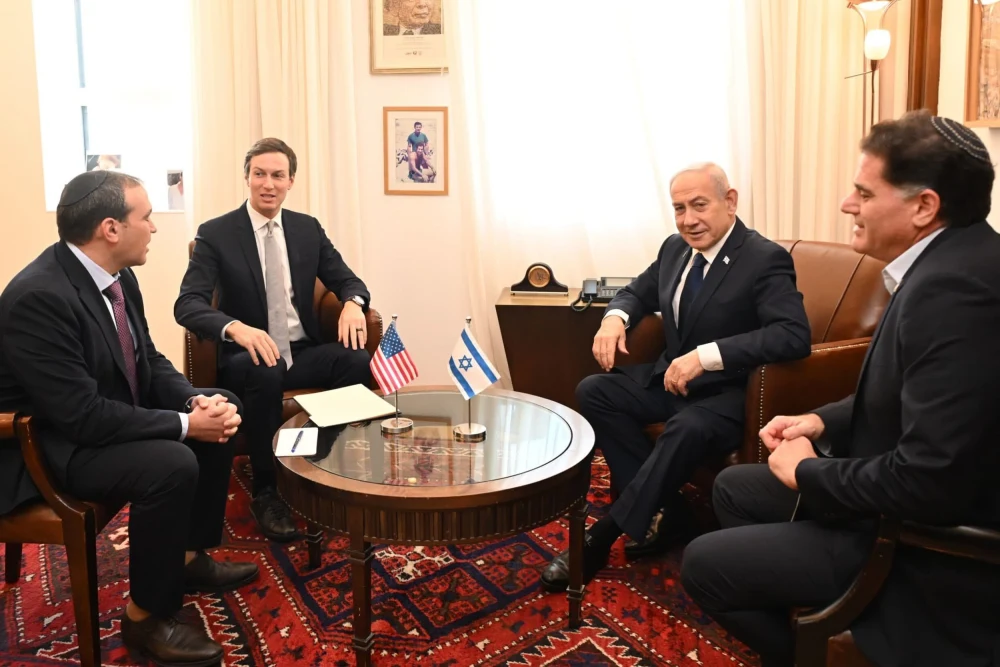
This week, Jared Kushner met with Israeli Prime Minister Benjamin Netanyahu to discuss the next stages of the fragile Gaza ceasefire, as Washington steps up efforts to keep the truce on track.
Netanyahu said Israel would uphold the ceasefire in Gaza and the parallel truce with Lebanon with what he called an “iron fist.” The Gaza truce, now one month old, has effectively paused the fighting that began after Hamas launched its deadly attack on Israel on October 7, 2023.
The first phase of the agreement has seen multiple exchanges of prisoners and hostages in recent weeks. Kushner, who played a central role in brokering the ceasefire and is the son-in-law of US President Donald Trump, met Netanyahu as part of renewed American efforts to stabilise the current pause in hostilities and prepare for the next stage of the arrangement.
At the heart of the discussion was the next phase of President Donald Trump’s 20-point peace plan, a draft that aims to demilitarize Gaza, remove the vestiges of Hamas’s militant control, and replace violence with governance rooted in stability and cooperation. Phase two, as Netanyahu’s spokesperson Shosh Bedrosian outlined, envisions a Gaza without weapons — and more importantly, without despair. “This is about ensuring Hamas will have no role in the future of Gaza ever again,” she said, echoing a goal shared by much of the region.
An Israeli government spokesperson said that Netanyahu and Kushner discussed disarming Hamas, demilitarizing Gaza, and ensuring Hamas does not have a future role in Gaza — all central components of the second phase of US President Donald Trump’s Gaza peace plan.
Strategic Affairs Minister Ron Dermer and Aryeh Lightstone, a senior adviser to US Mideast envoy Steve Witkoff, also participated in the Jerusalem meeting with Kushner, which took place ahead of an expected visit by Witkoff to Israel as part of continued efforts to advance Trump’s plan.
Speaking in front of the Knesset on Monday, Netanyahu said that Israel is determined to enforce the ceasefire agreements in Gaza and Lebanon “with an iron fist.” He added that Israel “is determined to bring back the four slain hostages left in Gaza,” crediting “diplomatic pressure to isolate Hamas that was applied by the US” alongside Israeli military efforts with bringing everyone else home.
He stressed that the war “has not ended,” promising that Hamas “will be disarmed. Gaza will be demilitarized. It will either happen the easy way, or it will happen the hard way. But it will happen.”
Yet what distinguishes this effort from previous ones is not only its strategic clarity but also its moral dimension. Buried deep within the peace plan is a point often overlooked — a call for interfaith dialogue between Israelis and Palestinians. It recognizes that political arrangements alone cannot secure peace; hearts must change alongside borders. This renewed emphasis on understanding and coexistence seeks to heal wounds that decades of conflict have left on both sides.
“The region remains fragile, yet there is reason for cautious optimism,” UAE Presidential Adviser Anwar Gargash said, emphasizing that sustainable peace must rest on dialogue, coexistence, and cooperation — the very principles that shaped the Abraham Accords. That optimism now finds new meaning as Arab and Israeli officials once again engage under US mediation, this time with a shared understanding that the pathway to stability is also the pathway to mutual respect.
For President Trump, the plan represents an opportunity to tie together the threads of his earlier diplomacy — the normalization of relations between Israel and its Arab neighbors — into a wider vision for a secure and cooperative Middle East. His administration’s efforts to sustain the month-old Gaza ceasefire, encourage demilitarization, and support economic reconstruction reflect a recognition that peace cannot be imposed; it must be cultivated.
Across the region, there is a growing realization that stability and prosperity are interdependent. The UAE’s conversation with the United Kingdom this week, where both sides reaffirmed their commitment to the two-state solution and humanitarian access for Gazans, demonstrates that the diplomatic momentum extends beyond Washington and Jerusalem. Regional leaders are quietly converging on a shared goal: a Middle East defined not by enmity, but by enduring partnership.
According to an analysis published by Peter Mandaville at the Atlantic Council, interfaith dialogue, long sidelined in formal diplomacy, may prove to be the missing piece. Religious leaders possess the moral authority to shape the social fabric where peace either takes root or fails. As faith communities in Israel and Palestine begin to engage one another — through dialogue, joint initiatives, and mutual education — they can help replace fear with familiarity, and division with empathy.
The meeting in Jerusalem, therefore, was not just about military arrangements or border controls; it was about reintroducing the language of understanding into the vocabulary of peace. The revival of that language — the spirit of the Abraham Accords — could yet serve as the catalyst for a new regional order grounded in cooperation, trust, and faith in a shared future.
As history has shown, peace in the Middle East rarely arrives in sweeping gestures. It comes quietly, through patient effort, honest dialogue, and the willingness to see the other not as an enemy, but as a neighbor. In that sense, the Kushner–Netanyahu meeting is a reminder that diplomacy is not merely about power — it is about persistence, vision, and the enduring belief that even in a region scarred by conflict, peace remains possible.
Hours after Kushner wrapped up his meeting with Netanyahu, US President Donald Trump was already hosting another critical conversation—this time with Syrian President Ahmed al-Sharaa at the White House. Monday’s visit marked a historic first: no Syrian head of state had ever set foot in the Oval Office before.
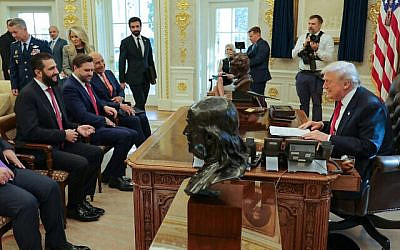
The discussion covered substantial ground. Syria’s potential participation in the US-led coalition against ISIS was on the table, along with sanctions relief and plans for economic reconstruction. But the broader strategic aim was clear—realigning Syria away from Tehran’s orbit and toward Washington and its Gulf allies. If successful, that shift could pave the way for a security arrangement with Israel, something unthinkable just months ago.
“We want to see Syria become a country that’s very successful, and I think this leader (Sharaa) can do it. People said he’s had a rough past. We’ve all had rough pasts, but… if you didn’t have a rough past, you wouldn’t have a chance,” Trump tells reporters in the Oval Office, referring to Sharaa’s previous position as the head of an Islamist rebel group affiliated with Al-Qaeda.
The timing matters. After the Iran-backed Assad regime collapsed in December 2024, Israel moved troops into a UN buffer zone along the Syrian border to prevent instability from spilling over. Damascus wants those forces out. Israel, on the other hand, is insisting on the demilitarization of southwestern Syria and stronger guarantees for the Druze minority living under al-Sharaa’s administration.
It’s a delicate balance—Syria needs sanctions lifted and economic support, while Israel needs assurances that its northern border won’t become another front. The White House meeting suggests both sides are at least willing to explore whether those competing interests can be reconciled.
If Syria and Israel were to agree on even a limited security pact — something unimaginable for decades — it could change the calculus across the region. Trump’s advisers, including Jared Kushner, reportedly see this as a stepping stone to a “post-Iran regional order” that might eventually fold Syria into the extended Abraham Accords framework.