
The last days of the perfect ‘fruit gem’
Some years ago, my spouse and his best friend opened a kosher candy store in our neighborhood shopping center. On some level, they were living out a childhood fantasy, especially since my father-in-law was a dentist. I imagine sugar had been in somewhat shorter supply.
The store was aptly called The Candyman.
The premise was simple: any kid who walked in with a quarter could walk out with candy. But the offerings also skewed decidedly high-end. From vintage-brand finds to the latest in kosher candy couture, there was a sweet (and sour, and savory, and chocolate) treat for every palate.
The store eventually closed, but the Candyman never really retired.
All these years later, that is still exactly who my spouse is in shul. Kids seek him during and after services because they know what he has in his pockets: Ring Pops, lollipops, Oodles and Zillions, and, of course, Sunkist Fruit Gems.
Candy occupies a funny little place in Jewish communal life. Walk into virtually any kosher grocery store, and candy is a mainstay: licorice, jelly beans and gummies, sour sticks and taffy, chocolates and hard candies in every imaginable flavor. Candy gets tossed at aufrufs and bar and bat mitzvahs, handed out in shul, tucked into bags for children, and distributed at celebrations. Somehow, sugar has become part of the landscape of Jewish joy.
We’ve even turned candy into an educational tool, a very literal way of sweetening Torah. Generations of teachers and parents have dreamed up Torah- and holiday-themed projects made from sweets: edible sukkot, miniature Torah scrolls tied from Fizzers, and parsha-themed treats that make the weekly Torah portion memorable. Long before anyone talked about “experiential Jewish education,” Jewish educators understood that a lesson accompanied by candy had a pretty good chance of sticking.
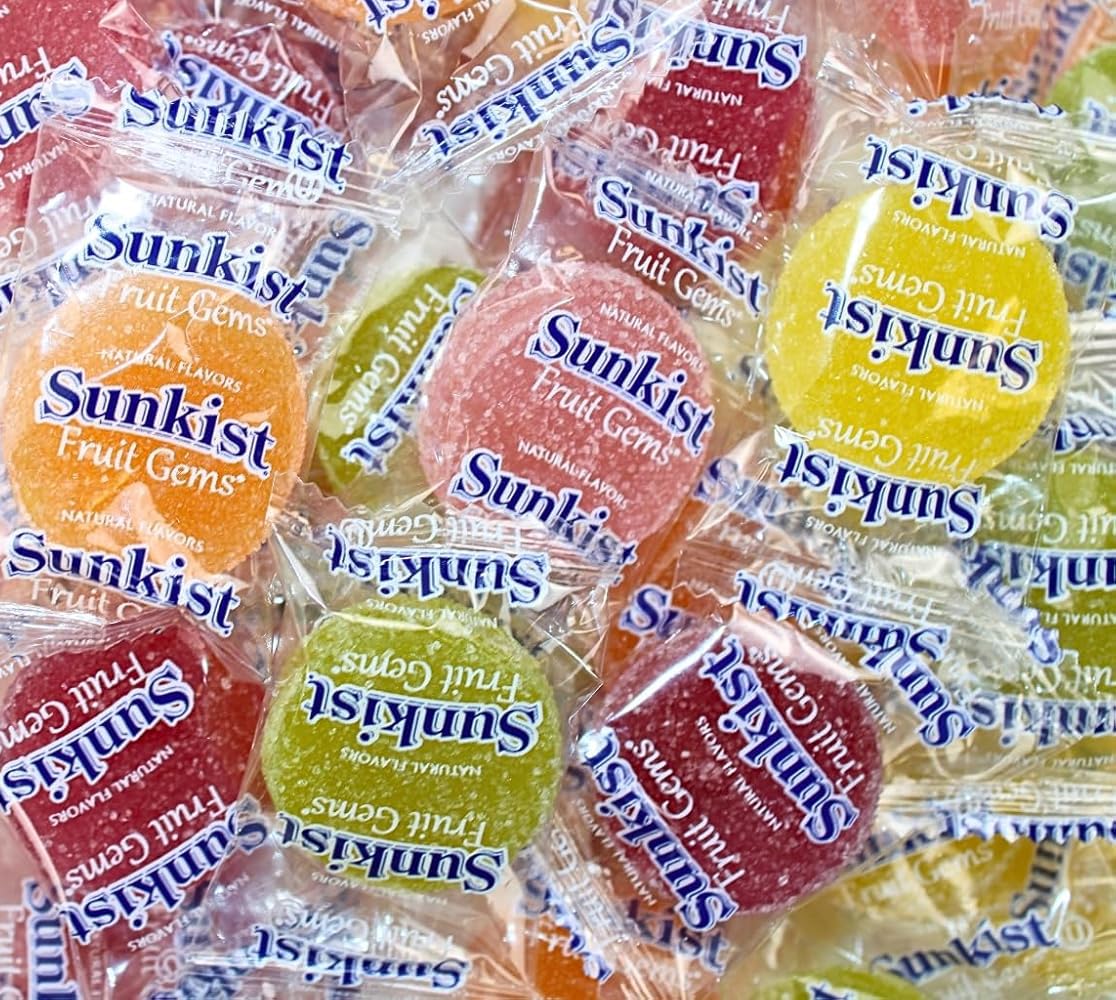
Which brings me to some genuinely sad candy news: Sunkist is discontinuing its individually wrapped Fruit Gems.
If you know, you know.
These little sugar-coated jewels have appeared at decades of life cycle celebrations, kiddushim, shul celebrations, and candy throws. They are pareve. They are kosher. They are individually wrapped. They don’t melt in your pocket. They can survive indefinitely in a coat pocket or tallit bag. And importantly for any shul candy designated to be hurled across a sanctuary, or from the women’s balcony, they aren’t too hard when they hit you. They may, in fact, be the perfect synagogue candy.
There are foods we eat because we love them, and then there are foods that become part of the scenery of our lives. You don’t realize they matter until someone tells you they’re going away.
For generations of Jewish kids, a Sunkist Fruit Gem flying through the air meant something good had just happened, likely a bar/bat mitzvah or an aufruf celebration.
It meant that a room full of people had gathered to mark a life, a milestone, with blessings. It meant that someone had remembered the children at the edges of the celebration and had saved a little sweetness for them. It meant that, for one bright second, joy could be caught in midair and unwrapped with your teeth.
And somewhere nearby, there was probably a candyman, someone with candy in his tallit bag, a smile ready, and an instinct for the small gesture that turns a weekly gathering into a sweet memory.
The Fruit Gems may disappear from the shelves, but the moments they sweetened will remain: gathering at the bimah, the children waiting, the candy arcing above the crowd, and Jewish joy passing from one generation to the next.
Maybe the company will have a last-minute change of heart. In the meantime, we will be stocking up.