The Letter My Grandfather Will Never Read
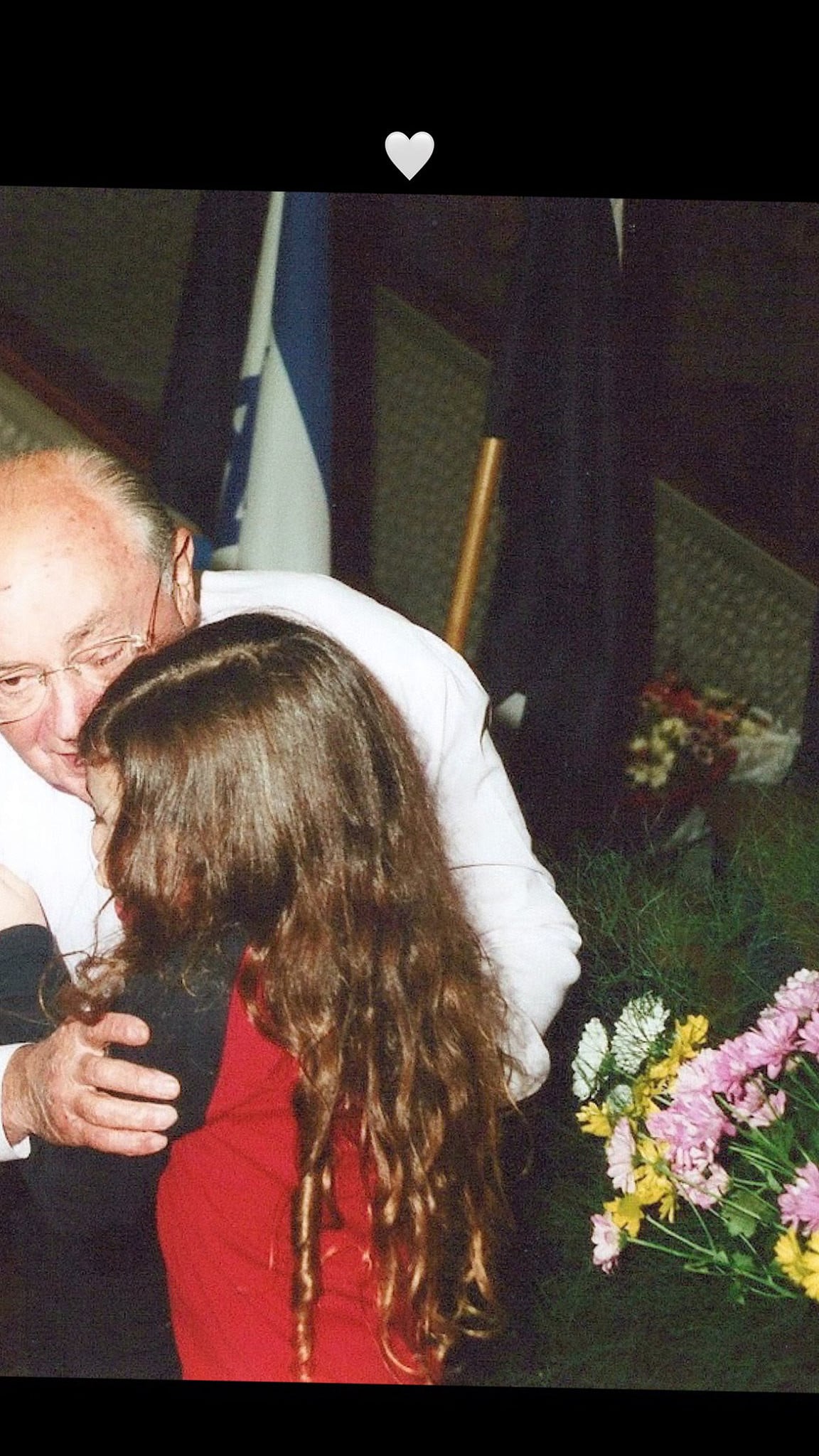
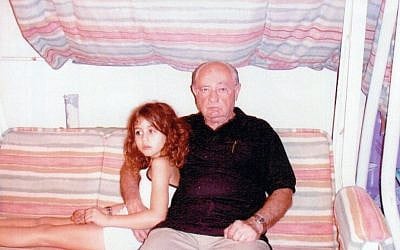
In loving memory of my grandfather, Brig. Gen. Zvi Amid
“I will never be Prime Minister, because I don’t want to get killed.”
I was only four years old when I said that to my parents. I grew up in an unapologetically Zionist home—one where civic duty, basic decency, and public engagement were the very air we breathed. Yet I also grew up in the bleeding shadow of Yitzhak Rabin’s assassination, and that national trauma left an indelible scar on my childhood. The urge to speak up and fight for change took root in me early on. As a young girl, I sat down and penned an impassioned letter to our mayor, demanding a new home for the animal rescue non-profit Let the Animals Live as it faced imminent closure—and it worked.
That was the devotion, grit, and stubbornness I inherited at home, for better or worse; a stubbornness never meant for personal gain, but driven by a deep inner imperative for justice, to act on behalf of others so life here could be better for everyone. Only as an adult, when my family and I happened to bring up that very same sentence again, did the sheer absurdity truly sink in: What kind of reality drives a four-year-old child to utter such words? Perhaps simply the reality of growing up here, in the State of Israel.
Habit, it turns out, dies hard. We lurch from crisis to crisis, convincing ourselves we have built up immunity, thickened our skin, and that nothing can shock us anymore. But an honest look at how our reality has unraveled over the past three years proves the exact opposite: the toll keeps mounting, and the fractures run deeper into every sphere of our lives.
The holidays are behind us. Another cycle of the High Holy Days has passed—days that now carry a chilling weight, suspended between Simchat Torah and that date carved into our living flesh: October 7. We marked three years since the atrocities. Over 1,200 victims: infants, young girls and boys, women and men, soldiers and servicewomen whose lives were brutally stolen. This week also marked two years since we lost my grandfather, Brigadier General Zvi Amid. True to form, he was laid to rest on October 7, 2024, the first anniversary of that devastation. It was the heaviest day we had ever known; tears fogged my glasses until I could see nothing at all.
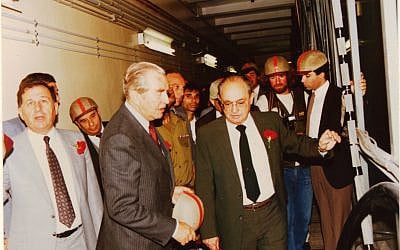
The truth is, whenever I used to mention that he passed away on this day, I didn’t truly grasp it. Only in hindsight, through an ironic twist of fate, do I now understand just how fitting it was for him to depart on that exact date—so as not to draw too much attention to himself, so we wouldn’t weep over him alone, and so our grief would not center on his loss at a time of such overwhelming collective anguish. At the funeral, standing over his open grave, I asked myself: Who am I to wish for a little more time with him? He passed away at an old age and earned his peaceful rest after a long, extraordinary life filled with purpose and rich days. Thinking back, I can vividly picture him saying: “Enough, I don’t want to be remembered like this.” That quiet Polish pride and deep sense of dignity were unmistakable; he refused to let himself be defined or remembered by the illness and decline that took hold at the very end. For years, on every visit to my grandmother’s grave, he would quietly gaze at the empty plot waiting beside her, leaving me to wonder what one feels as the years slip by while staring toward the end. Who was I to mourn an elder passing in old age while an entire nation wept over shattering eulogies for children, teenagers, and soldiers whose whole lives lay ahead?
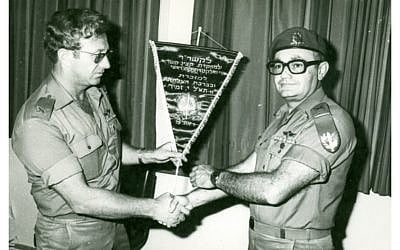
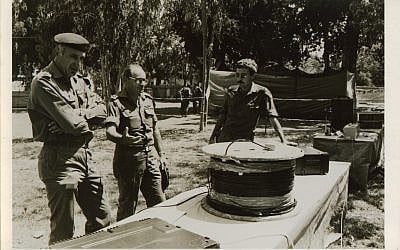
My grandfather was the embodiment of the generation that built this country from the ground up. A combat soldier, paratrooper, and Chief Signal and Electronics Officer, he fought in every war and campaign from the Six-Day War to the First Lebanon War. Decades after hanging up his uniform, it hung crisp and impeccably pressed in his closet, waiting with disciplined pride for the enlistment day of each of his 10 grandchildren to take that traditional portrait. Whenever he spoke of the IDF and the country, an unmistakable spark lit up in his eyes; he didn’t just love this land, he revered its very existence. He never held a shred of doubt that we have no other home.
He brought that same absolute devotion to my grandmother, Yona. Theirs was a love story straight out of The Notebook: even when her memory faded and the world slipped away from her, he never abandoned her. He sat by her side, holding her hand, wrapping her in tenderness, and caring for her until her final day.
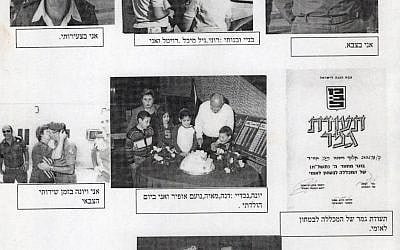
He was never a man of grand speeches, but beneath that disciplined exterior beat an immense warmth. He had an insatiable sweet tooth—especially for chocolate croissants—and drank his coffee with an absurd amount of sweeteners. And then there were our Sunday movie dates. I would run breathlessly straight from base in my Class-A uniform, knowing nothing mattered more to him than punctuality. There he would be, a sheepish smile on his face, waiting with a tub of popcorn and two tickets in hand, proudly walking hand-in-hand with me into the theater, beaming in every direction. Above all, he loved capturing life through a lens. He spent endless hours in his old study assembling slideshows and documenting every smile, desperate to preserve fleeting moments. Perhaps that is part of what we lost: the appreciation for the moment, for what we had, for the security and solidarity we eventually took for granted. He never needed words to make me feel unconditionally loved—even if, until his final days, he never quite understood whether working in music and culture counted as a real profession, or what that career actually
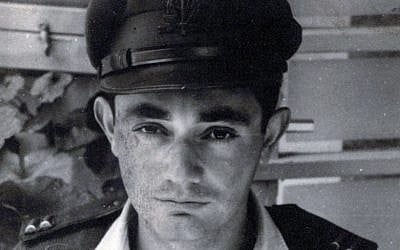
In September 1982, when the state called on him to trade his uniform for civilian service, he answered the Minister of Communications’ call without hesitation, retiring from the IDF to establish Bezeq as its founding director general. Years later, Ran Guron, then the CEO of Bezeq, came to my father for clinical treatment. Upon discovering that my father was Zvi Amid’s son, he asked if he knew his father’s greatest legacy. My father replied immediately: “Of course. Before him, Israelis waited up to 12 years for a landline. He turned it into an overnight installation—long before the cellular era.” Guron smiled and replied: “That is what the public remembers. But his real historical achievement was his uncompromising insistence on encasing the underground copper cables inside protective plastic ducting. It was vastly more complex and expensive back then. But today, when we deploy nationwide fiber optics, we don’t have to tear up the streets; we simply pull out the old copper—selling it off at immense value—and thread the fiber-optic lines directly through those very same conduits.” A man of quiet, stubborn vision whose foresight laid the hidden infrastructure for human connection decades before the technology even existed. Who would have guessed that after his passing, he would not only connect an entire country, but reconnect our own family with such profound strength?
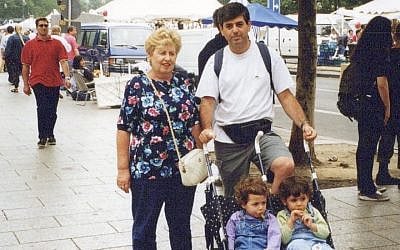
Over the past year—the most unhinged year this country has ever known—I found myself working inside the halls of the Knesset. My baptism by fire placed me directly alongside the Minister and the Ministry of Communications, the very institution where my grandfather left an enduring mark of statesmanship, decency, and nation-building. Time and again, looking around that building, I searched for his presence and wondered: What would he say about what we have become? Would he be proud of me? What would the man with that spark in his eyes think of a nation torn and bleeding, where instead of building infrastructure for the future, leaders deliberately deepen polarization and malice?
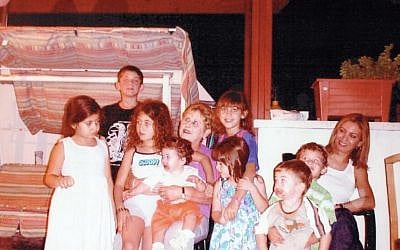
Now, with the holidays over and reality setting in against a cold iron wall, where are we headed? What comes next?It brings me back to the question that shakes me every single day: What will we leave behind? What will our legacy be?
My grandfather left behind a safer country, infrastructure built to endure for generations, and a bedrock of mutual responsibility. But us—what are we handing down to the children growing up after us? What will this country look like in one decade, two, or three? Doesn’t that question keep you up at night?
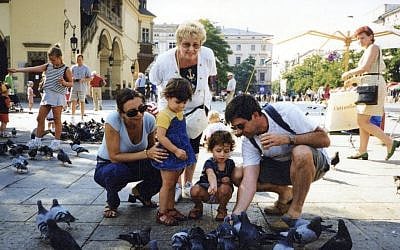
Pause the survival race for a moment and look inward. Who were we as a people, and who do we want to become? Will we continue bowing our heads to a reality that governs us through fear and dread, or will we choose to be a nation that knows how to build, to connect, to love, and to respect one another?
My grandfather taught me never to fall, never to give up, never to fail, and always to give everything we have. Amid—written with an Ayin, meaning resilient—was a man who lived up to his name.
At the funeral, through a choked voice, I closed my eulogy with the words of Shlomo Artzi’s Melech HaOlam (“King of the World”). Today, those lyrics take on an entirely new meaning—one that you yourself carved into them:
“Just rise up and be anything your heart desires, because to us, you will always be the king of the world.”
And now, it is our turn. Our turn to prove worthy of the legacy that you, alongside so many heroes and heroines, left behind for us here.Let us not wait for miracles—because this is not about miracles. It is about sanity, decency, mutual responsibility, and waking up.
Rise up.