
The Lion: King of the Animal Kingdom, Symbol of Jerusalem and Moshiach’s Tribe
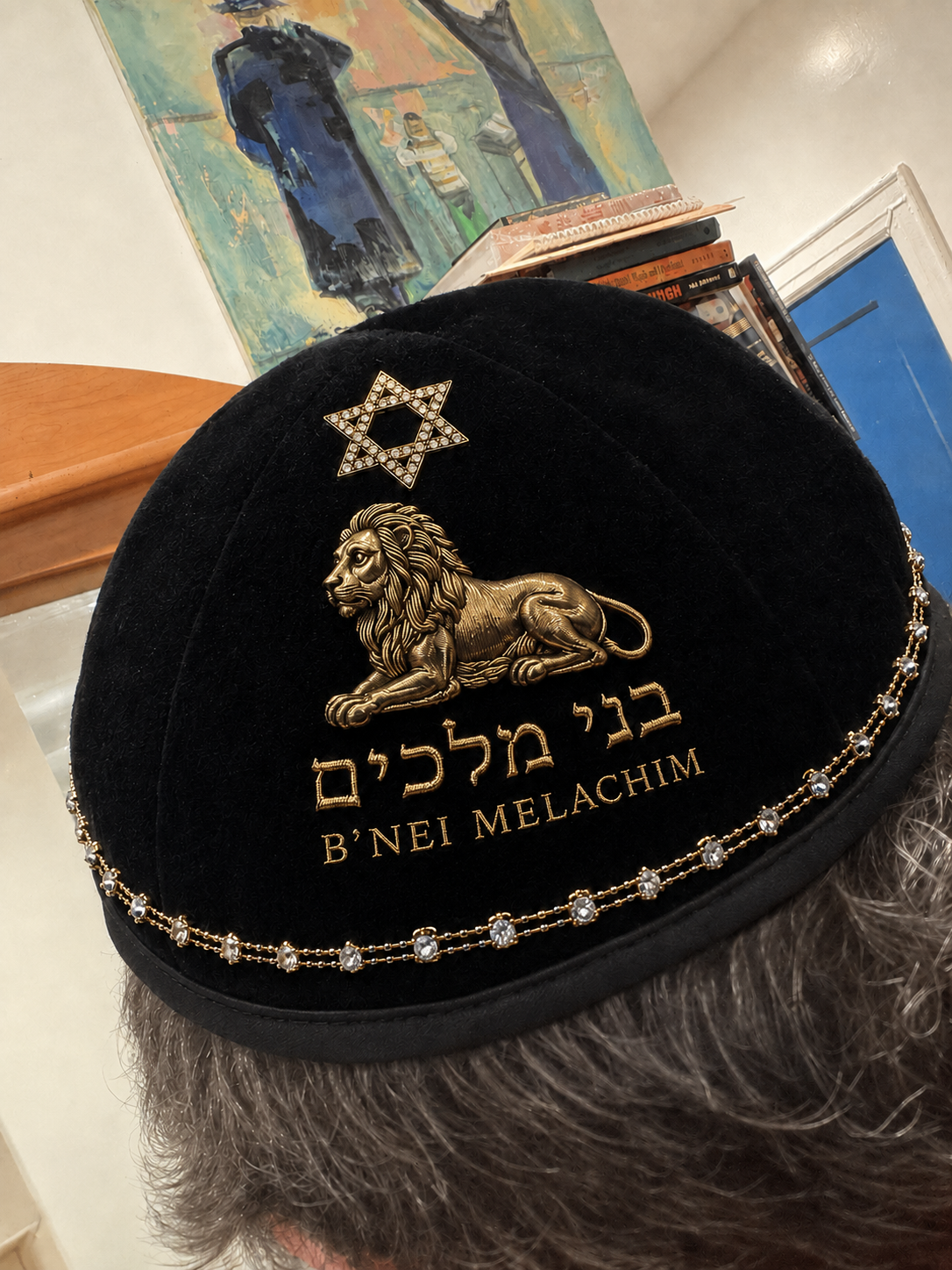
The lion is called the king of the animal kingdom. The Talmud does not dispute this ancient image: “The king of the beasts is the lion” (Chagigah 13b).
But Jewish wisdom rarely leaves a royal title unquestioned.
Why the lion?
If kingship were measured by a fight inside a cage, the answer would not be obvious. A large Amur tiger may outweigh a lion. A grizzly bear—and especially a polar bear—is considerably heavier. An elephant, rhinoceros, or hippopotamus possesses far greater physical power. The outcome of any encounter depends on size, age, health, and circumstance, but one thing is clear: a lion is not guaranteed to defeat every opponent one-on-one.
And yet the lion remains the king of the animal kingdom.
Because a king is not an MMA champion.
A champion proves individual superiority. A king creates order out of many different forces. A champion needs an opponent. A king needs a kingdom.
Our sages ask, “Who is mighty?” and answer: “One who conquers his inclination” (Pirkei Avot 4:1). Strength is already no longer a simple matter of muscle. True gevurah is the ability to master oneself, accept responsibility, and direct power toward a worthy purpose.
The lion’s kingdom is its pride.
When Strength Becomes a Kingdom
The tiger is a formidable hunter, but it is primarily solitary. Most adult bears also live and forage alone. Their individual strength may exceed that of a single lion, but they do not form a lasting community comparable to a lion pride.
Lions are exceptional among the great cats. A pride is not a random gathering of animals around a carcass. It is a stable social community. Lionesses hunt together. Adult males defend the territory. The pride protects its cubs and the land on which the next generation depends.
One lion can be defeated. Within a pride, however, its strength joins the strength of others and becomes organized power.
Spotted hyenas also form large and socially complex clans. With a substantial numerical advantage, they can sometimes drive a group of lionesses away from a kill. But when they face a complete pride that includes adult males, the balance generally changes. Hyenas understand the cost of confronting the lions’ united strength, and they often retreat.
Even African buffalo can gather as a herd, repel an attack, and at times kill a lion. But the buffalo does not hunt the lion for food. It defends itself. The initiative belongs to the predator: lions choose the target, coordinate their attack, and together can bring down an animal far heavier than any one of them.
The lion is not king because nothing ever resists it. A true king also faces resistance. The lion is king because it combines the formidable power of the individual with the organized strength of a community.
The lion is strong in body. The pride is strong in unity.
And unity transforms strength into a kingdom.
“Judah Is a Lion’s Cub”
This is where nature meets Torah.
Before his death, our patriarch Jacob blesses his sons and declares, “Judah is a lion’s cub.” He then adds, “The scepter shall not depart from Judah” (Genesis 49:9–10).
The lion and the royal scepter appear side by side for a reason.
King David descends from the tribe of Judah. According to Jewish tradition, Moshiach will come from the House of David. The Lion of Judah also became a symbol of Jerusalem—the City of David and the heart of Jewish kingship.
The Torah does not explain its image of Judah through the biology of the lion pride. It would therefore be wrong to attribute such an interpretation to the ancient sages. But we may see here a contemporary midrash: a new reading that does not replace Scripture, but allows us to hear another echo within it.
The Lion of Judah represents more than courage. It represents the power to gather a kingdom around itself. One lion is a mighty animal. A united pride is already authority, order, and the continuation of life.
This is also the calling of a king from the House of David: not to exalt one tribe at the expense of the others, but to unite all the tribes into one Israel.
The prophet Ezekiel expresses this through the image of two sticks. One belongs to Judah, and the other to Joseph and the tribes associated with him. God commands the prophet to join them in one hand and promises: “I will make them one nation in the land, on the mountains of Israel, and one king shall be king over them all; never again shall they be two nations” (Ezekiel 37:22).
The royal power of Judah does not erase the others. It gathers what has been divided.
The Mystery of Malchut
Here a deeper, Kabbalistic dimension begins.
In the language of Kabbalah, kingship is called Malchut. It is the last of the ten sefirot—the spiritual modalities through which the Divine will is revealed within creation. Malchut does not exist as a solitary force sealed within itself. It receives the light of the preceding sefirot, gathers their different qualities, and allows them to become manifest in the world.
Wisdom without Malchut remains an idea. Lovingkindness without Malchut remains a feeling. Discipline without Malchut remains hidden power. Malchut transforms the invisible into presence, multiplicity into order, and intention into a kingdom.
In Kabbalistic tradition, Malchut is associated with the Shekhinah—the Divine Presence dwelling among the people—and with Knesset Yisrael, the spiritual community of Israel. Here the word Knesset means more than the modern parliament. It means an assembly: the collective soul in which many separate people become one Israel.
This is not an equation in which twelve tribes are reduced to one faceless tribe. It is the mystery of a unity that does not destroy difference. Reuben remains Reuben, Joseph remains Joseph, and Judah remains Judah. Each preserves its name, its blessing, and its task. Yet together they become parts of one living body.
We might say that the pride is the lion’s kingdom in nature, while Knesset Yisrael is the kingdom of the Jewish soul in history.
The Talmud adds an astonishing detail about the name Judah. Because Judah sanctified the Name of Heaven publicly, he merited to have all four letters of God’s name contained within his own (Sotah 10b). The name Yehudah therefore carries a hidden message: authentic Jewish kingship does not belong to a human being in his own right. A king becomes a king only when he acknowledges the King of kings above him.
A Jewish king must never say, “Power belongs to me.” He must say, “Power has been entrusted to me so that I may serve the people and fulfill the will of God.”
The Heart of a Lion
Why was David chosen to establish the royal dynasty?
When the prophet Samuel came to the house of Jesse, David’s older brothers appeared far more suitable. They were grown, tall, and impressive. David was the youngest, and he tended sheep. But God told Samuel: “Man sees what appears to the eyes, but the Lord sees into the heart” (I Samuel 16:7).
David possessed the heart of a lion: gentle toward those who needed protection and fearless before danger.
When a lion or bear carried off a sheep, David did not say, “It is only one sheep.” He pursued the predator and rescued it. His kingship revealed itself long before he possessed a palace or a crown. A true king does not use the weak to elevate himself. He uses his strength to protect those who cannot protect themselves.
David’s encounter with Goliath was therefore more than a contest between a small man and a giant. It was a collision between two understandings of power.
Goliath trusted in physical size, armor, weapons, and the terror inspired by his name. David went out without Saul’s armor, carrying a sling, five stones, hard-earned skill, and faith. In modern sport, they would never have been allowed into the same contest; they belonged to entirely different weight classes.
But David said: “You come against me with sword and spear and javelin, but I come against you in the name of the Lord of Hosts.” He then revealed the meaning of the battle: “Not by sword or spear does the Lord deliver, for the battle is the Lord’s” (I Samuel 17:45–47).
Goliath was larger than David. But David was not alone.
That does not mean he remained passive and waited for a miracle. David chose the weapon he knew, took aim, and did what had to be done. Faith did not replace preparation, courage, or responsibility. It freed him from becoming a prisoner of another man’s fear.
The people saw the size of Goliath. David saw the One to whom the battle belonged.
When the Fracture Begins Within
The image of the pride offers not only a promise, but also a warning.
As long as a pride remains whole and acts in concert, an adversary will find it exceedingly difficult to break. But when the pride fragments—when its adult lions are separated from its lionesses and its common purpose disappears—the enemy gains an opportunity to push back those whom it could never have overcome together.
The enemy’s strength grows wherever the lions’ unity weakens.
This offers one way of reading one of the most painful chapters in Jewish history. Roman legions destroyed Jerusalem and the Second Temple. That catastrophe had military, political, and historical causes. But the sages also sought its spiritual root. The Talmud teaches that the generation of the Second Temple studied Torah, observed the commandments, and performed acts of kindness—and nevertheless the Temple was destroyed because of sinat chinam, baseless hatred among Jews (Yoma 9b).
Rome struck from the outside. But the fracture had already begun within.
In tractate Gittin, the story of Kamtza and Bar Kamtza shows how personal enmity, public humiliation, and the silence of bystanders can open the gates to national catastrophe (Gittin 55b–56a). The Temple did not begin to burn only when Rome set it on fire. First, the relationships between people caught fire.
Here the comparison must stop before it becomes an insult. We are not calling the Romans—or any people—hyenas. The purpose of the image is not to dehumanize an adversary, but to demand honesty from ourselves. An external enemy is dangerous. Internal hatred makes that danger devastating.
A fortress often falls not when its enemy becomes invincible, but when its defenders cease to recognize one another as brothers.
Unity Is Not Uniformity
Does this mean that all disagreement must disappear from Israel? Must every member of the Knesset vote the same way? Must religious and secular Israelis, right and left, Sephardim and Ashkenazim, native-born Israelis and new immigrants surrender their own convictions?
No. That would not be unity. It would be spiritual impoverishment.
The Mishnah distinguishes between a dispute for the sake of Heaven and a dispute that is not for the sake of Heaven. The first is exemplified by the debates between the schools of Hillel and Shammai; the second by Korach’s rebellion, driven by power and division (Pirkei Avot 5:17).
Jewish tradition is not afraid of questions. The entire Talmud is built from voices, objections, and answers. But a sacred argument searches for truth rather than the destruction of the other person. It allows one to say, “You are mistaken,” without crossing the line into, “You are no brother of mine.”
The unity of Israel therefore does not require silence in the Knesset. It requires that debate not degenerate into sinat chinam; that a political opponent not be transformed into an enemy of the people; and that a party’s victory not matter more than the country’s future.
A pride is not strong because all its lions are identical. It is strong because, at the decisive moment, they remember where they belong and act as one.
Israel, too, becomes unconquerable not when difference disappears, but when a shared destiny rises above faction, ego, and resentment.
“How good and how pleasant it is for brothers to dwell together,” says the psalmist. It is upon this unity that blessing descends (Psalms 133).
Bnei Melachim
Our sages made a remarkable declaration: Kol Yisrael bnei melachim hem—“All Israel are children of kings” (Shabbat 111a).
We are Bnei Melachim. Children of kings.
This is not a claim of superiority over other nations, nor a license to demand that others serve us. It is an obligation to preserve our dignity, protect the vulnerable, and accept responsibility for one another. The Talmud expresses this through another teaching: Kol Yisrael arevim zeh bazeh—all Israel is responsible for one another (Shevuot 39a).
To be a child of kings is to remember that my actions do not affect me alone. My hatred weakens the entire pride. My courage strengthens it. When I humiliate another Jew, I leave another fracture in the walls of Jerusalem. When I stand up for another Jew, I help bring those walls closer to restoration.
We are not required to agree about everything. But we are required to remember that we share one people, one memory, one land, one destiny, and one God.
When the Lion Becomes a Herald of Peace
The story of the Lion of Judah, however, does not end with the defeat of Goliath. Its highest purpose is not endless war, but a transformed world.
The prophet Isaiah speaks of a future descendant of Jesse, David’s father: “A shoot shall grow out of the stump of Jesse… and the spirit of the Lord shall rest upon him.” He then describes a world in which “the wolf shall dwell with the lamb,” while “the lion, like the ox, shall eat straw” (Isaiah 11:1–7).
The lion does not cease to be a lion. It does not lose its dignity or strength. But its power no longer requires killing. The fearsome lion becomes peaceful not because it has grown weak, but because the world has been healed. The strong no longer need to devour the vulnerable.
This is the ultimate tikkun—the repair and redemption—of strength. Courage remains, but cruelty becomes unnecessary. Authority remains, but is transformed into service. Differences remain, but cease to be a cause of hatred.
Isaiah completes the vision: “They shall not hurt or destroy in all My holy mountain, for the earth shall be filled with knowledge of the Lord as the waters cover the sea” (Isaiah 11:9).
Then Malchut will be revealed not as the power of one person over others, but as the revelation of the Divine Presence within a world that has finally learned to become one.
The Lion’s Kingdom—and Israel’s
Now everything comes together.
A king is not a solitary fighter. A king needs a kingdom.
The lion’s kingdom is the pride.
David’s kingdom is a united Israel.
Malchut is the mystery of many different powers gathered in service of one sacred purpose.
Moshiach from the House of David must do more than sit upon a throne. He must gather the dispersed, reunite Judah and Joseph, restore the wholeness of the people, and lead the world toward knowledge of the one God.
When we say that a united Israel is unconquerable, we do not mean that Jews will never suffer defeat, pain, or loss. Our history is far too honest for such a promise.
Our invincibility lies deeper. As long as we remain one people, no empire can finally erase us, take away our memory, or force the Lion of Judah to disappear from history. We were exiled, and we returned. Our Temple was destroyed, and we continued to pray toward Jerusalem. Borders separated us, but Torah preserved an invisible bond among us.
Today, however, we are called to do more than survive. We are called to become worthy of our own symbol.
The religious Jew must see in the secular Jew not a threat, but a brother. The secular Jew must see in the religious Jew not a stranger, but the guardian of part of our shared memory. Right and left must argue over Israel’s path without denying one another’s place within Israel. The twelve tribes must not become twelve hostile camps.
One lion can be defeated.
But when lions gather, the pride becomes a kingdom.
One Jew may find himself standing before Goliath. But a united Israel carries within it the courage of David, the memory of generations, the light of Torah, and the blessing of the one God.
The Lion of Judah is not merely a symbol of strength.
It is a symbol of the strength born from unity.
The pride is the lion’s kingdom.
Unity is Israel’s kingdom.
And we are Bnei Melachim—children of kings!
We are the heirs of King David.
We are warriors of his spirit: guardians of Israel, its unity, and its hope!