This Way Up: Spiritual Means to Psychological Ends
The Long Road…Through Another Civilization
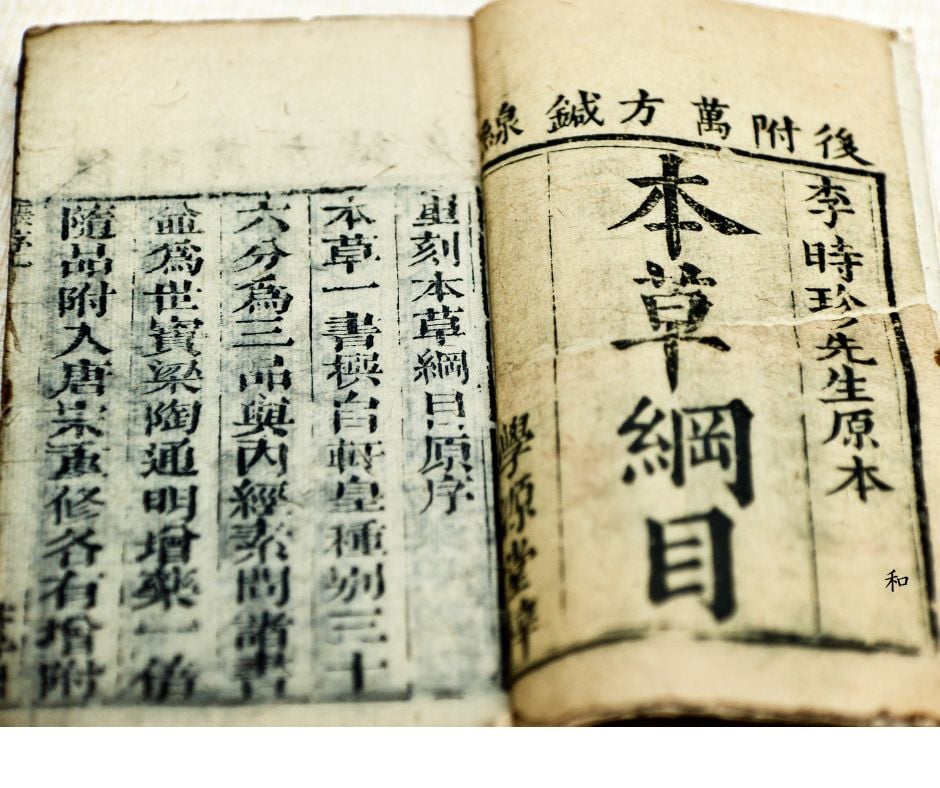
Courtesy of Canva.com
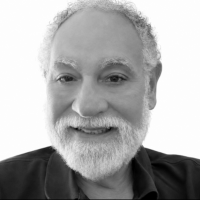
For decades, Jack M. Daniel immersed himself in one of the world’s great civilizational knowledge systems.
As a practitioner and scholar of Traditional Chinese Medicine, he devoted years to studying a worldview shaped by pattern, polarity, movement, balance, symbolism, and the close observation of nature. Chinese medicine was not merely a clinical discipline. It represented an intricate intellectual architecture refined across thousands of years.
At the same time, Judaism occupied a far smaller role in his life. Raised Jewish, Daniel did not initially think of Torah as a layered and sophisticated wisdom tradition akin to the knowledge system he had devoted his life to. That changed unexpectedly later in life, when he began one-on-one Jewish learning after years immersed in Chinese medicine.
What began as an intellectual curiosity evolved into a life-altering pursuit, reshaping not only his thinking, but his own patterns of Jewish observance. Beneath what he had once assumed was primarily religion or inherited ritual, he discovered a vast interpretive universe: psychologically rich, structurally intricate, philosophically demanding, and cultivated across centuries of sustained inquiry.
And then something even more surprising began to happen.
Certain themes and patterns he had spent decades encountering through Chinese cosmology began resurfacing, in very different form, within Torah itself.
Not as simplistic one-to-one correspondences. Not as evidence that the traditions were secretly identical. Rather, as recurring structures of thought emerging across two ancient civilizations separated by enormous distances of geography, language, and history.
What fascinated Daniel was not isolated similarities, but the recurrence of deeper civilizational questions, many of them tied to the unfolding of Creation in Genesis itself. How does order emerge from undifferentiated potential? Why does creation proceed through distinction and relationship rather than sameness? What is the connection between cosmic structure and human life? How do movement, balance, separation, rhythm, and harmony participate in the unfolding of reality itself?
The more seriously he studied Torah, the more he began to recognize another immense architecture of meaning.
That recognition eventually transformed his life, while ultimately finding expression in his book, A Universe Made for Two: The Genesis of Creation through the Lens of Torah and Nature. The book reflects years spent exploring resonances between Torah, Chinese cosmology, and the natural world.
His journey may be unusual, but it is not entirely unique.
Historian Vera Schwarcz described a strikingly similar trajectory during a recent lecture for the Canadian Antisemitism Education Foundation. The daughter of Holocaust survivors and one of the leading Western scholars of Chinese intellectual history, Schwarcz reflected on how her immersion in Chinese civilization initially functioned almost as an escape from Jewish life. Yet over time, that very journey unexpectedly brought her back toward her own Jewish heritage and religious observance.
Her memoir, Long Road Home: A China Journal, traces this paradoxical path: a deep engagement with another ancient civilization that ultimately became a return to her own.
There is something profoundly moving in that pattern.
We often assume that immersion in another culture weakens attachment to one’s roots. Yet for some serious seekers, the opposite occurs. Entering deeply into another ancient civilization can cultivate the very capacities needed to recognize the sophistication, depth, and wisdom embedded within one’s own inheritance.
Perhaps this is because ancient civilizations are not merely collections of customs. They are repositories of accumulated human insight, built over centuries through sustained reflection on morality, meaning, suffering, order, memory, and transcendence.
Sometimes it takes the long road through another civilization to recognize the richness waiting at one’s own doorstep.
Readers interested in exploring these themes further can watch Vera Schwarcz’s recent lecture and register for Jack M. Daniel’s upcoming online presentation examining the first two days of Genesis through the lens of Chinese cosmology. The programs are part of a broader series hosted by the Canadian Antisemitism Education Foundation exploring resonances between Jewish and Chinese wisdom traditions during Asian Heritage Month and Jewish Heritage Month.
Related Topics
Related Posts