
The Loophole
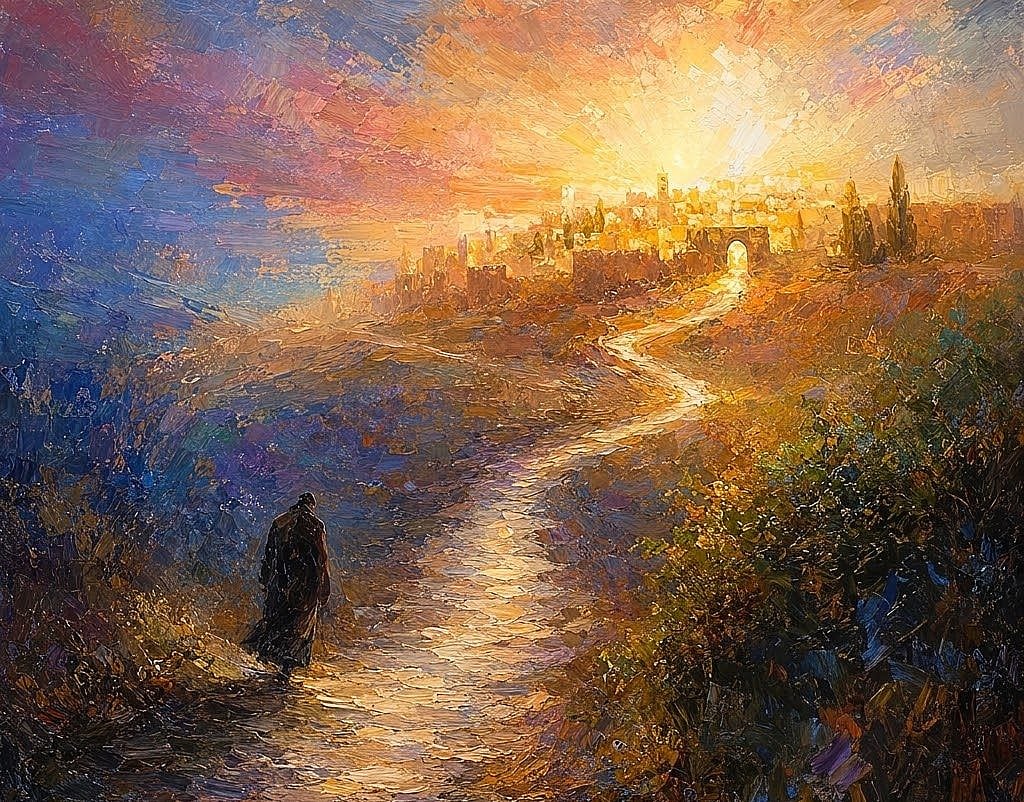
It is a chilling prophecy. The brutality of its truth is written across the tear-stained pages of Jewish history.
All nations will ask, “Why did God do this to this land? Why the (sheer) wrath of this great anger?” They will say, “Because they forsook the covenant that The Lord, God of their ancestors, made with them upon freeing them from the land of Egypt.” (Devarim 29:23-24)
This week’s parasha begins where last week’s ended. The Jews are entering a covenant with God. Its terms are simple: keeping God’s word will lead to great blessings. Ignoring it, to divine curse. Jewish history will testify to the reality of these terms. When the Jews sin, and Israel undergoes destruction, it will be on a scale that astonishes the world.
The tone changes. In a small but beautiful paragraph, the Torah describes that the Jewish story will not end that way. They may be scattered to the four corners of the earth, but within the depths of their hearts, a small but sacred flame will burn. They will long for God, to make right all the wrong:
When all these things befall you – the blessing and the curse that I have set before you – and you take them to heart amidst the various nations to which The Lord your God has banished you. You will return to The Lord your God, and listen to His voice, as I am commanding you today, you and your children, with all your heart and soul. Then The Lord your God will return your captivity and have mercy on you, and will bring you together again from all the nations where The Lord your God has scattered you. (Devarim 30:1-3)
The Torah continues this account of the spiritual return of the Jews to God, and their physical return to their homeland. This is known as Parashat HaTeshuva, the portion of the Torah that describes repentance. Immediately afterwards, the Torah begins a new paragraph, whose meaning, and connection to Parashat HaTeshuva is unclear:
For the mitzvah that I command you today, is not beyond you, nor is it distant. It is not in heaven, that you (would have to) say, “Who will go up to heaven for us? Take it for us, make us hear it, and we will do it.” Nor is it on the other side of the sea, that you (would have to) say, “Who will cross the sea for us to the other bank of the sea, take it for us, make us hear it, and we will do it.” For this thing is very close to you; it is within your mouth and heart to do it. (Devarim 30:11-13)
This text is hard to decipher. What is the mitzvah being referenced? There is no explicit mention of any mitzvah before, during or after this paragraph. In fact, the main section of Sefer Devarim (Chapters 12-26) which lists the mitzvot has already finished. Ramban[1] makes two suggestions: First, it may be talking about the whole Torah in general. It is, after all, no longer something in heaven, but something that had been given to Man. His second, and preferred, suggestion, is that it is talking about the mitzvah of teshuva. This fits well contextually, as it appears directly after the paragraph foretelling that the Jews will repent. It also fits with the description of this mitzvah being performed by the mouth and heart: Teshuva requires confession done verbally, and contrition and commitment to change, that are seated in the heart. This would also explain why this mitzvah is described as not being “beyond you”. Teshuva is so easy because it is totally dependent on you. Teshuva is also so hard because it is totally dependent on you. But it is all in your hands, not on the distant side of a sea.
This gives rise to a question: If this is indeed a specific mitzvah, why mention it now? As aforementioned, that section of Sefer Devarim that includes the mitzvot has finished. This is structurally coherent. All the mitzvot are mentioned before the covenant is sealed between God and the people. The mitzvot are the extended terms of that agreement. They would need to be detailed before it is concluded. There are only two more mitzvot mentioned after the covenant before the end of the Torah, and they both fit well as appendix-like mitzvot. The first is the mitzvah of Hak’hel, in which the Jews are to gather in the Beit HaMikdash, once every seven years, to hear the King read the Book of Devarim. Leaving this, an event designed to re-enact the experience of receiving the Torah at Mount Sinai[2], to the very end of the Torah, makes sense. It is a way of ensuring that the giving of the Torah never really ends. It is given again every seven years. The second and final mitzvah in the Torah is the mitzvah to write a Sefer Torah. This, obviously, can only be commanded when the book is complete. Why is the mitzvah of teshuva left so late? Why is it not even included in the mitzvot which precede the covenant with God?
Teshuva is unlike any other mitzvah. Almost by definition, it cannot be contained within any agreement or covenant. There is no contract which allows for one party to break their word, feel contrition, and commit to not doing it again. Covenants and contracts are bound by terms and unbound by the breaking of them. No agreement can stand if there is a loophole in which one side can fail to meet their obligations, apologise, and declare that they will try again. Actions have their outcomes. You cannot separate cause from consequence. Teshuva is a God-given gift which allows just that: God grants us the opportunity to break the iron grip of time and redefine ourselves, effectively escaping the inescapable fact that we have broken our part of the deal.
How does it work? That requires a long and complicated explanation.
How do we do it? It is very close to you: it is within your mouth and heart to do it.
–
[1] Devarim 30:12
[2] See Rambam, Hilkhot Hagiga 3:6