The lost grandfather
My husband Sam never knew his grandfather.
There are no stories of being bounced on Avraham’s knee.
No memories of his voice, his laugh, the way he smelled of tobacco or sawdust or whatever fathers smelled of in 1930s Warsaw.
No photographs. Not of grandfather and grandson together. Not of Avraham at all. Not even a single image of his face.
Avraham Szurek was erased before Sam existed.
Avraham would have been 56 when Sam was born.
Young enough to hold his grandson.
Young enough to watch him grow.
Young enough to make memories that would last a lifetime.
What we have instead is a piece of paper.
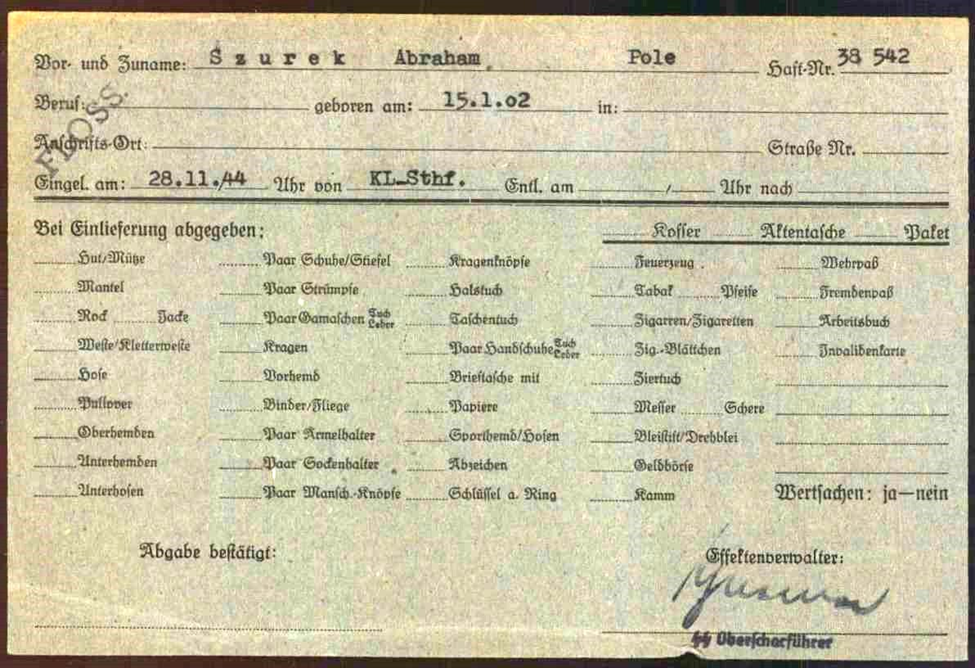
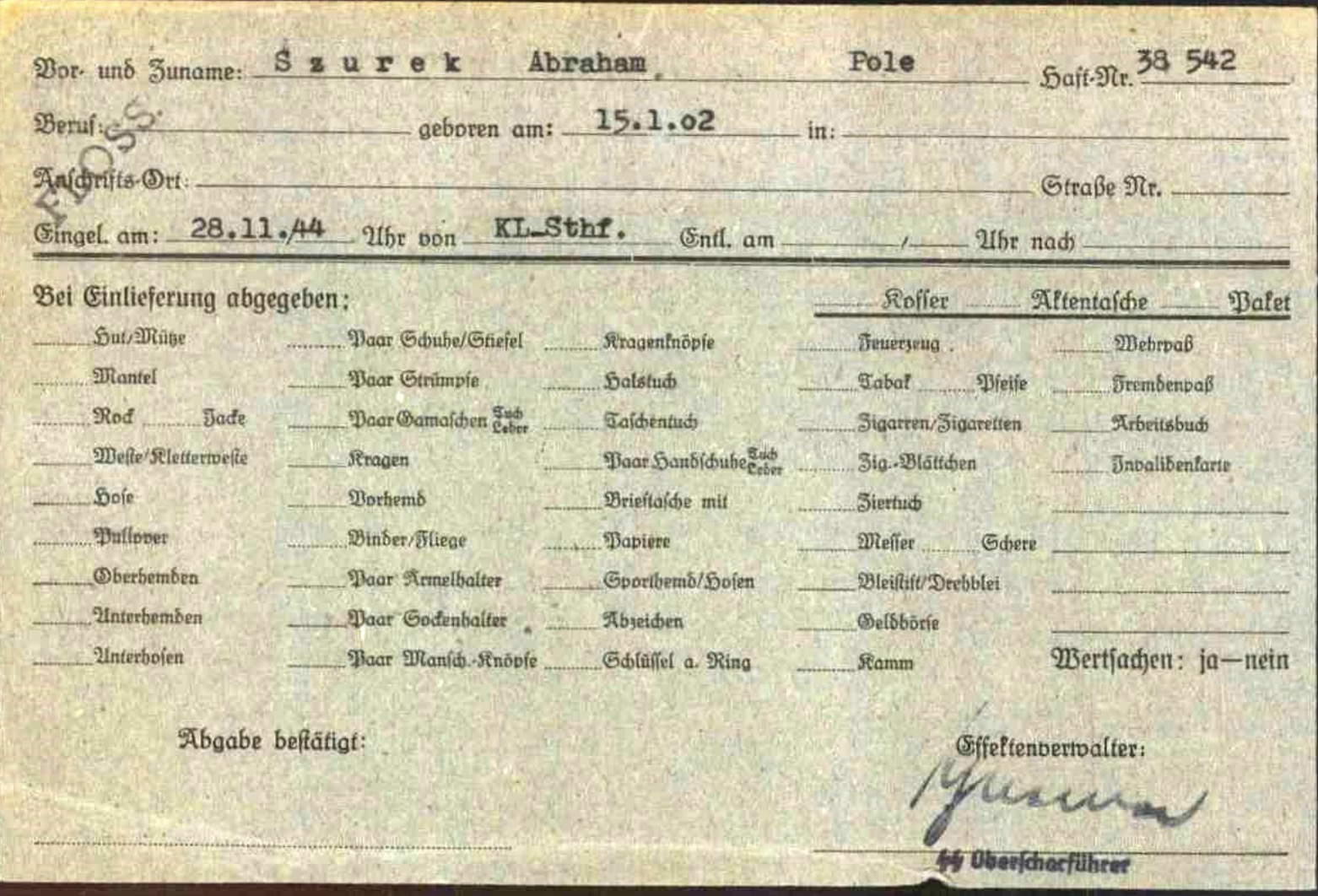
A Nazi intake form from Stutthof concentration camp, dated November 28, 1944.
His name typed in a box: Szurek Abraham.
Nationality: Pole.
Prisoner number: 33542.
Born:January 15, 1902.
He was 42 years old.
A father.
A husband.
A man who had once owned a small factory, who had watched the Nazis take his city, take his business, take everything.
A man who believed a promise because he had no other choice.
Avraham went to the Judenrat, desperate to save his starving family. They made him a promise: “Go to Lublin. Work there. Send money home.”
No money ever came.
He was sent to build Majdanek — forced to construct the very machinery of death.
Then transferred.
Camp to camp.
Łódź.
Terezín.
Stutthof.
At Stutthof, a clerk typed his name into a box.
Prisoner #33542.
Then a handwritten notation in the corner: “FLOSS.”
Flossenbürg.
The end of the paper trail.
The end of Avraham.
Two documents survive.
Two pieces of paper cataloguing a man like a commodity, in cold pen and ink.
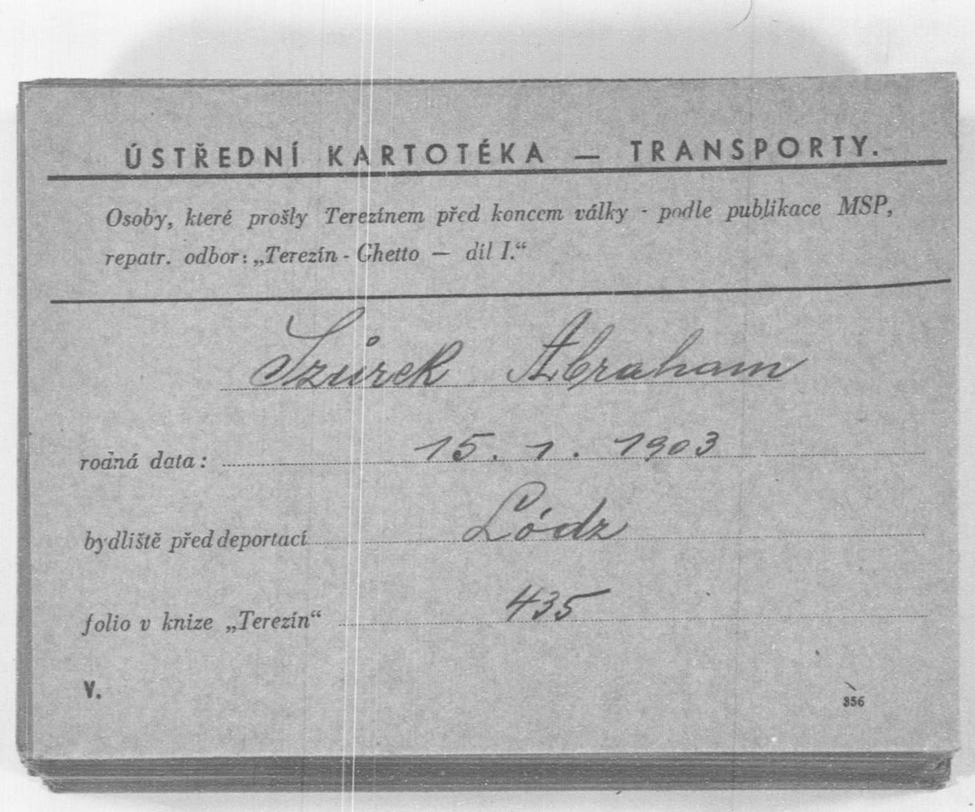
The Stutthof intake form is a property confiscation record. When Avraham arrived, a clerk typed his name, nationality, prisoner number, and birthdate into boxes. Then catalogued what was taken:
Hat.
Coat.
Jacket.
Trousers.
Shoes.
Shirt.
Underwear.
Socks.
Every item stripped. Checked off.
Signed by an SS Oberscharführer — an official signature confirming the theft was complete.
The Terezín transport card is a postwar Czech index card documenting who passed through the camps.
Name.
Birthdate.
Residence before deportation.
A folio number pointing to a ledger.
That’s it.
Two pieces of paper.
One catalogues his belongings as they were taken.
One catalogues him as he was moved.
Inventory management.
The Nazis processed human beings the way a warehouse processes goods: intake, transfer, disposal.
Cold pen and ink.
No box for “devoted father of eight.”
No line for the man who believed the Judenrat’s promise and left to save his family.
No column for the father who never knew what his youngest daughter would become.
She was 7 when she smuggled food.
A child who fooled the Gestapo.
A courier for the Polish Home Army.
Decorated for bravery — twice — before the age of 10.
His kochanie.
His darling.
One of the most courageous little girls in history.
And he never knew.
When I hold these documents, I’m not holding history.
I’m holding Sam’s grandfather.
The man who should have been there.
At our wedding.
At the birth of his grandson.
At birthday parties and holiday dinners and ordinary Tuesday nights.
Edna carried this loss her whole life. She never spoke of her father without her voice catching — the man who left for Lublin and never came back. The promise that was a lie. The silence where letters should have been.
She survived.
She built a beautiful life.
She became a mother, a grandmother — the woman who welcomed me into her family with open arms and announced to Sam, “If you don’t marry her, I will.”
But there were always empty chairs.
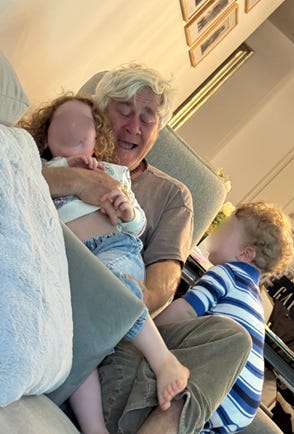
I watch Sam with our grandchildren now.
The way his face transforms when they run toward him. “Baba! Baba!”
The way he scoops them up like they weigh nothing.
The endless patience for one more story, one more game, one more minute before bedtime.
This is what Avraham was denied.
This joy.
This completion.
The simple miracle of holding your child’s child.
Now I understand what these papers are.
Not just evidence.
Not just documentation.
They are the only physical proof that Avraham Szurek existed.
That he walked into Stutthof on a November day in 1944.
That someone took his coat, his shoes, his trousers.
That someone typed his name in a box and filed him away.
They are all we have left of Baba’s grandfather.
So I hold them carefully.
And I tell his story.
Because the paper trail ends at Flossenbürg—
but the remembering doesn’t have to.