
The Man Who Lost Washington: How Bibi’s Deceptions Broke the Bipartisan Bedrock
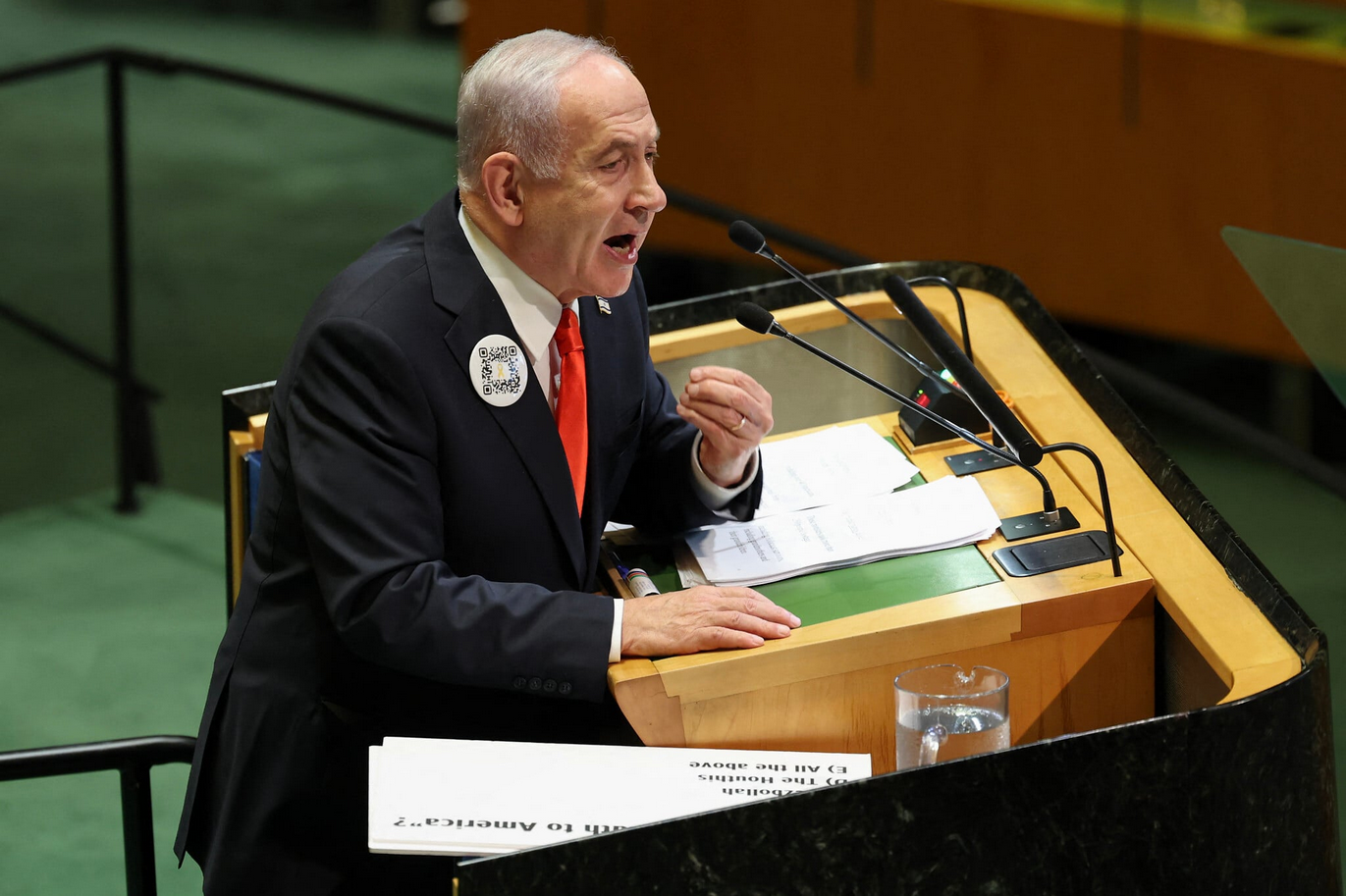
For decades, the “Special Relationship” between Jerusalem and Washington was treated like a natural law—immutable, gravitational, and beyond the reach of partisan gravity. But as of April 2026, the law has been repealed. The bedrock of bipartisan support that once made Israel the only issue capable of uniting a fractured Congress has not just cracked; it has collapsed.
The catalyst is no longer just the “Palestinian issue” or the expansion of settlements. It is the growing, chilling realization among American policymakers that Benjamin Netanyahu’s government has transitioned from a strategic partner into a strategic liability. By attempting to maneuver the United States into a high-stakes military confrontation with Iran through a mixture of authoritarian bravado and calculated deception, Netanyahu has achieved the unthinkable: he has made the Democratic Party—and a growing segment of the American public—view Israel not as a fellow democracy in peril, but as an unpredictable actor that threatens American national interests.
The Iran Trap and the Deception of the White House
The current joint military intervention in Iran, launched in February without Congressional approval, has become the “breaking point” for the U.S.-Israel alliance. For years, Netanyahu’s strategy was built on the premise that he could bypass the nuanced diplomacy of the State Department by appealing directly to the most radical impulses of the American Right.
However, recent reports—including allegations from regional mediators in Oman—suggest that the White House was led into this escalation under false pretenses regarding Iranian nuclear timelines and “red lines” that were intentionally blurred by Netanyahu’s cabinet. This perceived “deception” has poisoned the well. U.S. Senator Mark Kelly (D-AZ), traditionally a stalwart supporter of Israel, recently voiced the frustration echoing through the halls of the Senate:
The United States and Israel are fighting a war against Iran without a clear strategy or goal… Netanyahu has destroyed the bipartisan nature of support for Israel.
The Data of Disillusionment: A Statistical Freefall
To understand the depth of this crisis, one only needs to look at the devastating numbers. According to the Pew Research Center’s April 2026 survey, the American public’s perception of Israel has reached a historic nadir, reflecting a total collapse of the old consensus:
-
Total U.S. Adults: 60% now hold an unfavorable view of Israel—a staggering 20-point increase since 2022.
-
Democrats: Hostility has reached a fever pitch at 80% unfavorable, marking a massive 27% surge in opposition.
-
Republicans Under 50: The generational firewall is breaking, with 57% unfavorable (up 15%), signaling that even the GOP’s youth are drifting away.
-
U.S. Jews (Low Confidence in Netanyahu): Disillusionment is hitting home, with 56% unfavorable—an 18% jump as the diaspora’s relationship with the current cabinet turns toxic.
The most alarming figure for any Israeli patriot is the 80% unfavorability rating among Democrats. This is no longer the fringe “Squad” making noise; this is the mainstream. When eight-in-ten Democrats view the State of Israel negatively, the concept of “unquestioned support” is dead. Even more striking is the erosion among Republicans under 50. The “America First” isolationism that defined the post-Trump era has merged with a deep skepticism of foreign entanglements, leaving Netanyahu’s “authoritarian internationalism” without a domestic base in the U.S.
The Siege on the Corridors of Power
The shift in public opinion has finally translated into legislative action. Just days ago, on April 15, 2026, the U.S. Senate witnessed a watershed moment: all but seven Senate Democrats voted to block offensive weapons sales to Israel.
This was not a symbolic protest. Moderate heavyweights like Elissa Slotkin (D-MI) and Adam Schiff (D-CA)—politicians who have built their careers on pro-Israel credentials—joined the vote. Their reasoning? A fundamental lack of trust in Netanyahu’s radical cabinet and the belief that American taxpayer dollars are being used to finance an “expansionist and reckless” war policy.
Furthermore, the liberal pro-Israel lobby J Street has officially shifted its stance to oppose direct U.S. funding for even defensive systems like the Iron Dome, arguing that Israel should be treated as a “wealthy ally” that must purchase its own defense rather than receiving subsidies. This represents a total reconfiguration of the financial and military pipeline that has sustained Israel’s qualitative military edge (QME) for fifty years.
The Post-Trump Reality
The Trump years offered Netanyahu a temporary, intoxicating illusion: that he could trade the friendship of the American people for the loyalty of a single political movement. But in the post-Trump era, the bill has come due. By aligning Israel so closely with a specific brand of American populism and authoritarianism, Netanyahu has turned the Jewish state into a “wedge issue.”
In the eyes of the rising generation of American leaders, Israel is no longer seen through the lens of 1948 or 1967. It is seen through the lens of Netanyahu’s judicial overhaul, his alliance with extremists like Ben-Gvir and Smotrich, and his perceived manipulation of American military power for his own political survival.
A Warning to Jerusalem
We must be clear: the “guaranteed dominance” of Israel over the corridors of power is over. The American public no longer views support for Israel as a moral imperative, but as a transaction—one that is currently yielding a poor return.
If Israel wishes to remain a reliable partner to its most important ally, it cannot do so under a leadership that views the White House as a target for manipulation and the U.S. Congress as a rubber stamp. The path back to stability requires more than just better “Hasbara”; it requires a fundamental return to the liberal-democratic values that once made the two nations inseparable. Without a radical change in Jerusalem, the “Special Relationship” will soon be nothing more than a historical footnote.